
Introduction
You're quoting a new job, or maybe evaluating whether to bring machining in-house, and the term "CNC milling machine" keeps popping up in supplier conversations and spec sheets.
You know it's a machine tool. But what exactly separates it from the manual mill sitting in the back of the shop?
Many buyers struggle to translate marketing language like "5-axis" or "machining center" into a real understanding of what the equipment does and whether it fits their parts.
CNC milling machines are computer-controlled tools that remove material from a workpiece to create precise components. They power everything from aerospace brackets to injection molds.
This guide breaks down what a CNC mill is, how it actually works, the main machine types, their key components, and how to choose one that matches your production needs.
Key Takeaways
- G-code programs guide the mill's rotating cutting tool through the workpiece
- A mill rotates the tool over a fixed part; a lathe rotates the part itself
- VMCs, HMCs, and 5-axis machines suit different complexity and volume needs
- Computer control delivers tighter repeatability and fewer errors than manual machining
- Machine choice depends on part geometry, material, volume, and floor space
What Is a CNC Milling Machine?
A CNC milling machine is a computer-controlled machine tool that uses rotary cutting tools to remove material from a workpiece, following pre-programmed digital instructions. CNC stands for Computer Numerical Control — it's the automated control method. Milling is the specific cutting process it controls.
That distinction matters because CNC also controls lathes, EDM machines, and grinders. Milling just describes how material gets removed: a rotating cutter feeds along or into a part's surface.
Milling vs. Turning
The easiest way to tell milling and turning apart is to look at what's spinning:
- Milling: The cutting tool rotates. The workpiece is typically stationary or repositioned between cuts.
- Turning (lathe work): The workpiece rotates in the spindle. The cutting tool stays fixed or moves linearly against it.
What Materials Can It Cut?
CNC mills work across a wide range of materials, which is part of why they show up in so many industries:
- Aluminum and mild steel
- Titanium (common in aerospace applications)
- Engineering plastics
- Composites
- Graphite (used heavily in mold and electrode work)
That versatility is why CNC milling shows up across mold and die making, aerospace, automotive, and medical device manufacturing. CNC hasn't fully eliminated manual milling. The Bureau of Labor Statistics reports that many machinists still use both manual and CNC equipment, depending on the job. But for production runs requiring consistency, CNC is the default choice.
How Does a CNC Milling Machine Work?
Getting from a design file to a finished part involves a defined sequence. Here's how it actually plays out on the shop floor.
Programming: CAD to CAM to G-Code
- Model the part in CAD, defining the geometry digitally
- Generate toolpaths in CAM software, building cutting parameters, feed rates, and tool selections around that geometry
- Run the postprocessor, which converts the CAM toolpaths into code specific to your machine and control, since not every CNC speaks the same dialect

Setup and Execution
Once the program is ready, the operator secures the workpiece, loads tools into the spindle or automatic tool changer, and sets work offsets so the machine knows the part's exact position on the table.
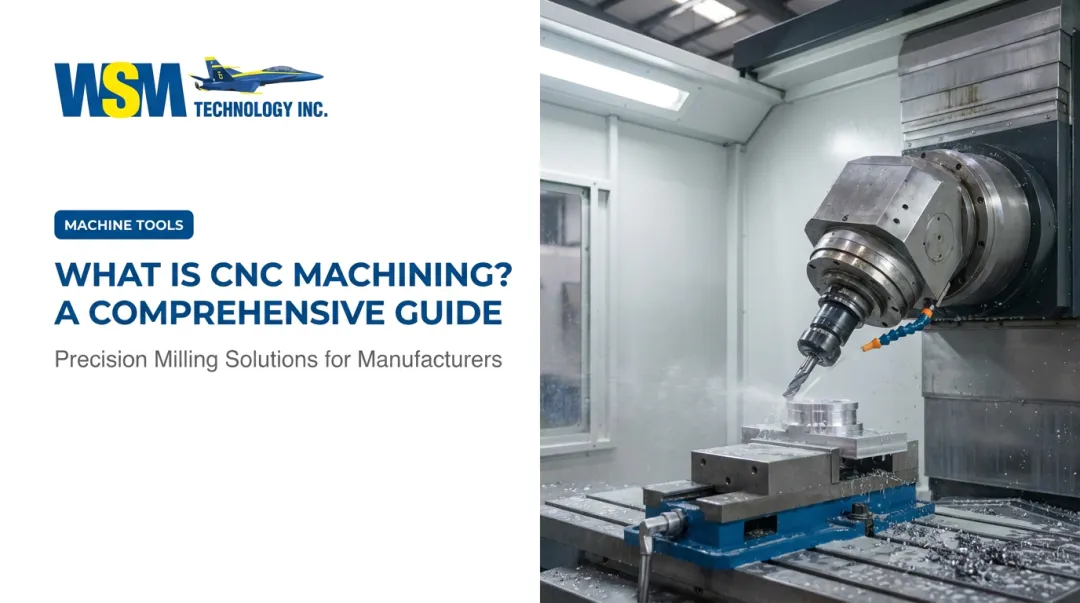
From there, the CNC controller takes over. It converts the program into precise motor and spindle movements across the machine's axes: X, Y, Z on a basic 3-axis mill, plus rotary axes on multi-axis machines. The cutting tool engages the workpiece along the programmed path, removing material layer by layer until the geometry matches the model.
In-process monitoring matters here too. Sensors track tool position and spindle load, letting the controller (or operator) catch tool wear or material inconsistencies before they turn into scrap.
Once the cycle finishes, the part moves to inspection: calipers, micrometers, or a CMM, depending on tolerance requirements. Documented cases show just how tight things can get: one horizontal machining center project achieved 0.0005-inch perpendicularity across a 72-inch cube, a level of consistency that's difficult to hold manually across repeated parts.
Types of CNC Milling Machines
Not every mill is built for the same job. Picking the right architecture starts with understanding what each one does well.
Vertical Machining Centers (VMC)
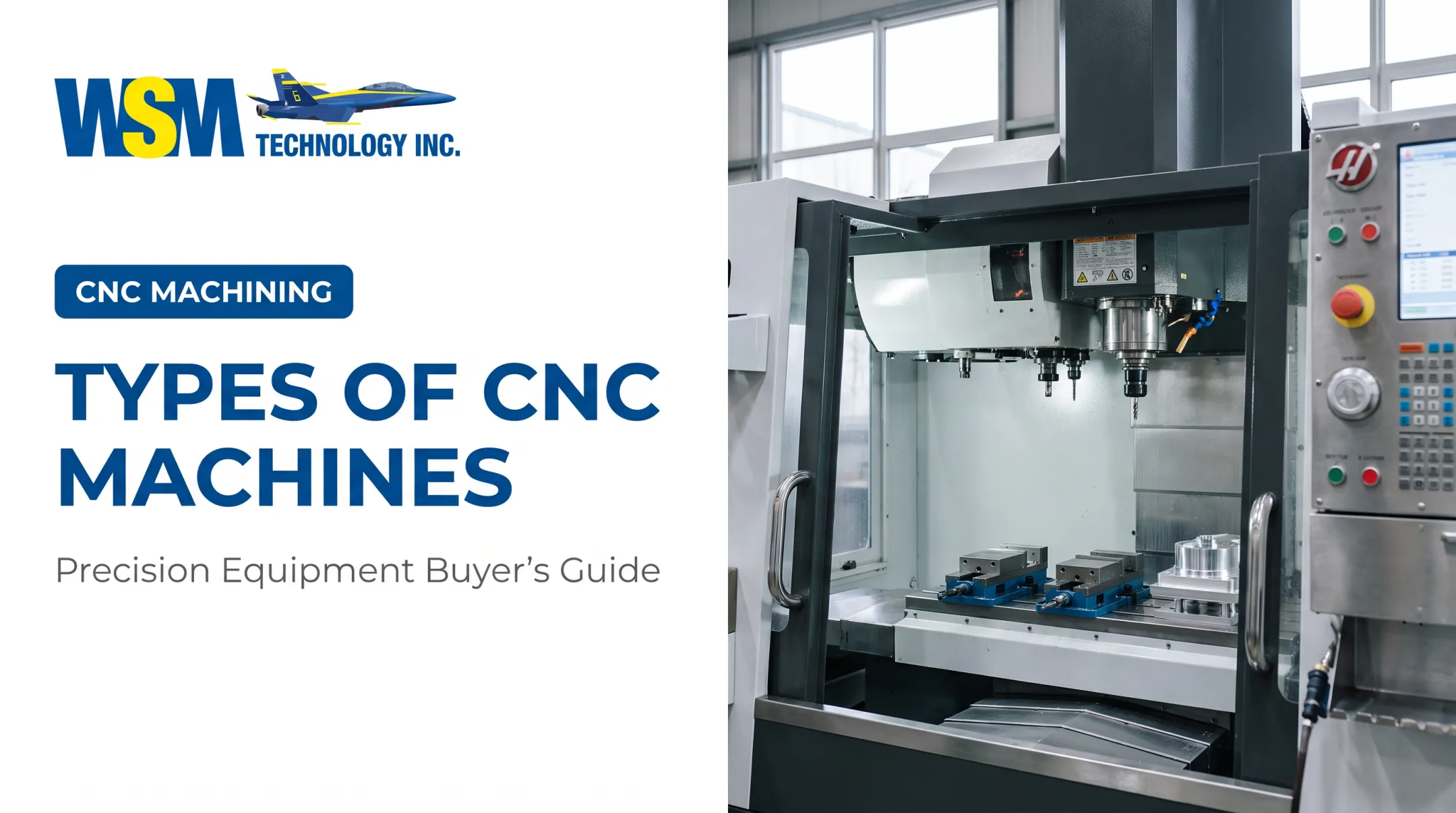
The spindle sits vertically, which gives operators direct visibility into the cutting area and makes setup straightforward. VMCs are the most common and versatile mill type, handling face milling, drilling, and contouring for general-purpose shops.
Horizontal Machining Centers (HMC)
Here, the spindle is oriented horizontally, often paired with rotary pallet systems. That layout helps chips fall away from the cutting zone instead of piling up, and it supports multi-face machining without repositioning the part.
The efficiency gap between the two architectures is real. Okuma's own manufacturer white paper reported average spindle utilization of 85% for HMCs compared to just 25% for VMCs, largely because pallet systems let operators load the next part while the machine keeps cutting. That makes HMCs a strong fit for heavier parts and higher-volume production.
5-Axis and Multi-Axis Mills
Adding two rotary axes to the standard three linear ones lets the tool approach a part from nearly any angle in a single setup. That's a big deal for aerospace brackets, medical components, and mold cavities with complex contours: geometries that would otherwise require multiple repositionings and introduce alignment error each time.
Adoption has grown fast among top-performing shops. A Modern Machine Shop survey of 277 U.S. manufacturers found five-axis positioning in use at 44% of Top Shops versus only 18% of other shops. Five-axis adoption reflects a broader trend: leading operations consolidate setups wherever the part justifies it.

WSM Technology carries several multi-axis platforms built for exactly this kind of work. These include the JINGDIAO High Speed Mill in both 3- and 5-axis configurations. The Cheto 7-Axis Milling and Gun Drilling machine combines multi-directional milling with deep-hole gun drilling for aerospace, defense, and tooling applications. Both are available to shops across Northern Ohio, Western Pennsylvania, and West Virginia.
Specialized Configurations
A couple of other formats round out the field:
- Gantry mills: built for oversized parts that won't fit under a standard column
- Drilling and tapping centers: optimized for high-speed, high-throughput small-part production
Key Components of a CNC Milling Machine
Every mill, regardless of type, relies on the same core building blocks working together.
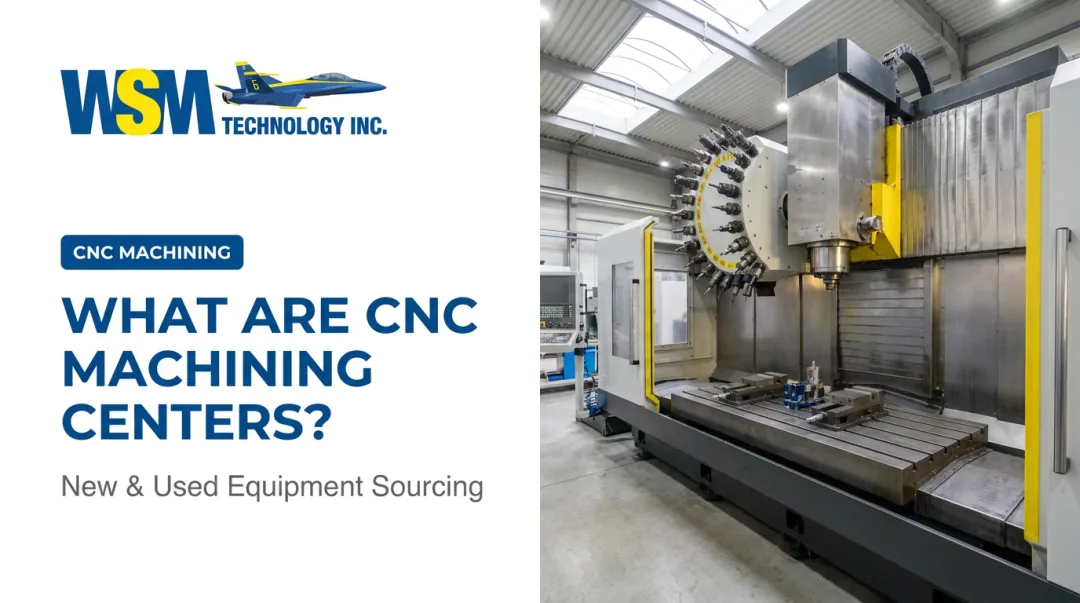
- Bed and column — the rigid structural base that absorbs vibration and cutting forces, keeping tolerances tight even under heavy cuts
- Spindle — holds and drives the cutting tool at variable speeds, with rigidity and RPM range determining which materials and finishes are achievable
- Table — secures the workpiece and moves it along the programmed axes
- Automatic tool changer (ATC) — stores multiple tools and swaps them in seconds, cutting downtime between operations
- Control panel — where operators load programs, adjust parameters, and watch the cycle run in real time
No single component guarantees accuracy on its own. Structural rigidity, spindle behavior, and workholding all have to work together, which is why machine build quality matters as much as the spec sheet numbers.
Benefits of Using a CNC Milling Machine
Once a program is validated, a CNC mill can produce identical parts run after run. That level of repeatability is essential for regulated industries like aerospace and medical device manufacturing, where every part needs to trace back to the same tolerance band.
Beyond precision, the efficiency gains stack up in a few ways:
- Reduced cycle times through optimized toolpaths and multi-tool operations
- Automatic tool changes that eliminate manual swap-out delays
- Unattended running capability, letting one operator oversee multiple machines
- Lower scrap and rework, since computer-guided paths remove the variability that comes with manual operator judgment
Documented case results back this up. A five-axis setup-consolidation project cut a large-part cycle from 12.5 hours to 6 hours by eliminating repositioning. A separate horizontal machining center project reduced four operations down to two, cutting machining time by 20%.
These aren't universal numbers, since every part is different. They do show the kind of gains that come from matching the right machine to the right job.
Choosing the Right CNC Milling Machine for Your Shop
Start with the part, not the machine. Three questions should drive the first pass:
- What's the part geometry? Simple faces and pockets fit a 3-axis VMC. Complex contours or five-sided access point toward 5-axis.
- Which material and tolerance are you holding? Titanium and tight tolerances demand more rigidity and spindle control than aluminum prototypes.
- How much volume are you producing? Low-mix, general-purpose work suits a VMC. High-volume or oversized parts often justify an HMC or gantry mill.

Floor space matters too. HMCs and gantry mills need more room for pallets and automation, while VMCs fit tighter footprints.
Once you've narrowed the field, test before you buy. WSM Technology's Demonstration Center in Rootstown, Ohio gives manufacturers a chance to run test cuts and time studies on candidate machines before committing capital.
That hands-on step, paired with turnkey installation and training, helps shops across Northern Ohio, Western Pennsylvania, and West Virginia avoid guessing on a six-figure decision.
Frequently Asked Questions
What is computer numerically controlled milling?
It's a subtractive manufacturing process where a computer-controlled rotating cutting tool removes material from a workpiece based on pre-programmed digital instructions. The result is a finished part built to exact, repeatable dimensions.
What does a CNC machinist do?
A CNC machinist sets up, programs, and operates CNC machines. That includes loading tools and workpieces, running test cuts, monitoring feeds and speeds, and inspecting finished parts for accuracy.
What is the difference between a CNC mill and a CNC lathe?
A mill rotates the cutting tool against a mostly stationary part. A lathe rotates the workpiece against a fixed or linearly moving tool. The two processes suit different part geometries.
How much does a CNC milling machine cost?
Cost varies widely based on axis count, machine size, brand, and whether it's new or used/refurbished. For a quote tailored to your production needs, contact a dealer like WSM Technology directly.
What materials can a CNC milling machine cut?
Common materials include aluminum, mild steel, titanium, engineering plastics, composites, and graphite. The right spindle and tooling setup depends on which material you're running.
How many axes does a CNC milling machine have?
Machines range from basic 3-axis (X, Y, Z) setups to 5-axis systems that add rotary movement for complex angles. Specialized platforms, like Cheto's 7-axis mill/gun-drill combination, go even further for niche applications.