
Introduction
Walk into any mold, die, or precision tooling shop and you'll likely find a ram sinker EDM machine working on a cavity no end mill could ever reach. It's the go-to process for cutting hardened, conductive materials that demand tight tolerances and complex 3D geometry.
The numbers back up its staying power. Die-sink EDM alone generated $1.5 billion in 2024, making it the largest segment of the entire electrical discharge machining market, according to Global Market Insights.
Yet plenty of shop owners run sinker EDM equipment without fully understanding the spark-erosion sequence happening inside the machine. That gap leads to poor electrode choices, mismatched parameters, and machines that never hit their real capability.
This guide breaks down exactly how ram sinker EDM works, step by step, and where it fits into modern manufacturing.
Key Takeaways
- Ram sinker EDM erodes metal using electrical sparks, not mechanical force
- Dielectric fluid submerges the electrode and workpiece, cooling and flushing debris
- Servo-controlled gap regulation stabilizes thousands of sparks per second
- Ideal for hardened tool steels, deep cavities, and geometries wire EDM can't reach
- Mold and die shops, aerospace suppliers, and medical manufacturers rely on it daily
What Is Ram Sinker EDM?
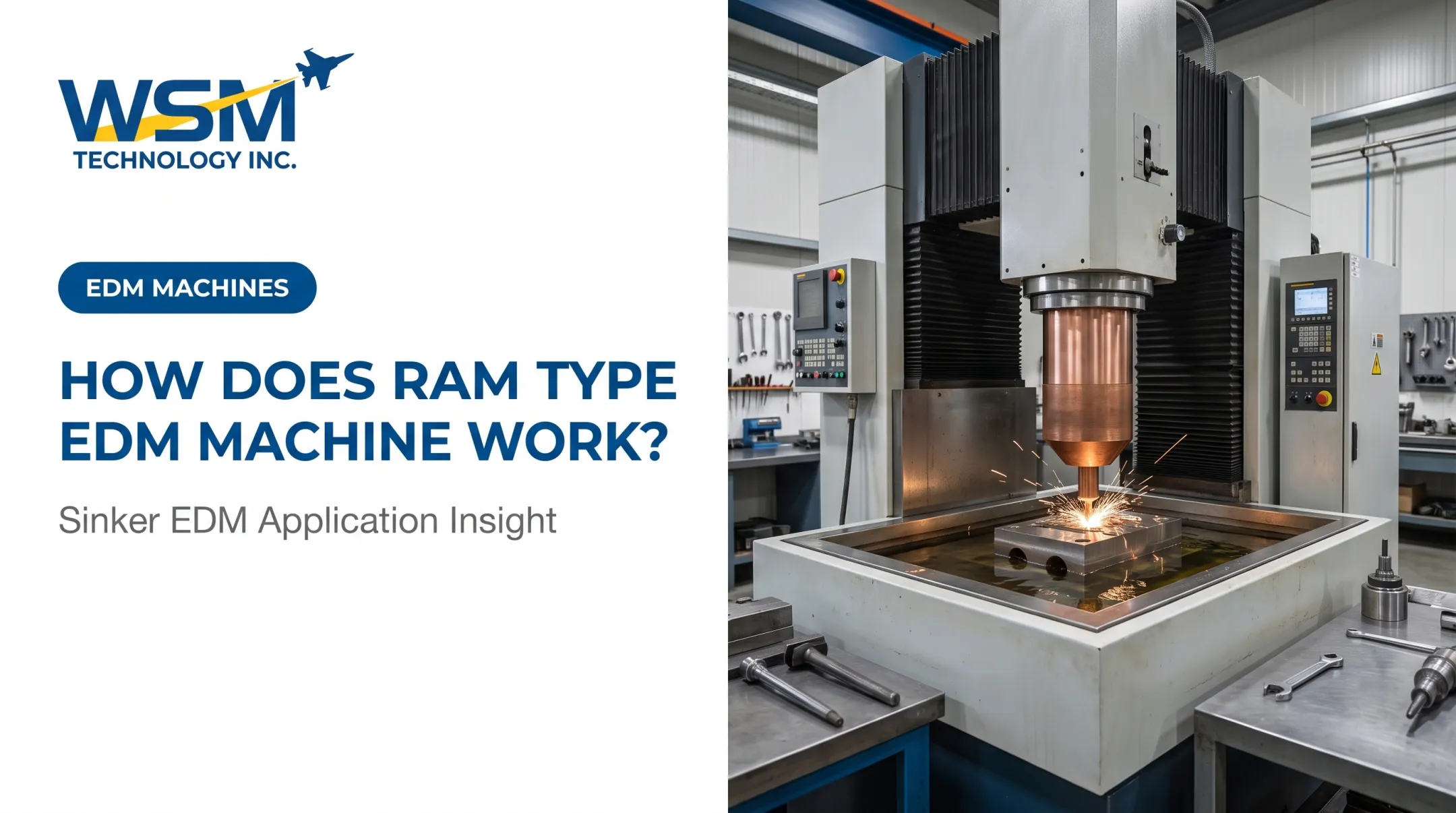
Ram sinker EDM, also called die-sinker or plunge EDM, is a non-contact electrothermal process. A custom-shaped electrode advances toward a conductive workpiece, and controlled electrical discharges reproduce the electrode's inverse shape as a finished cavity.
Manufacturers developed the process specifically to machine hardened, hard-to-cut conductive materials and to produce deep, blind, or complex cavities that rotating cutting tools can't reach without deflecting or breaking.
Sinker EDM vs. Wire EDM vs. Milling
It's easy to lump EDM processes together, but they solve different problems:
- Wire EDM uses a continuously fed wire to cut through-profiles, similar to a bandsaw with electrical erosion instead of teeth
- Ram sinker EDM uses a shaped electrode to form blind cavities, sharp internal corners, and 3D detail
- CNC milling relies on mechanical cutting force and rotating tools, which introduces deflection and vibration on hardened materials
Despite newer additive and CNC alternatives, sinker EDM remains relevant because nothing else holds tight tolerances on hardened tool steel while producing intricate 3D cavities without tool wear from cutting force.
Graphite vs. Copper Electrodes
Electrode material selection shapes speed, wear, and finish quality:
| Factor | Graphite | Copper |
|---|---|---|
| Machining speed | 2-3x faster to machine | Slower, prone to tearing/burrs |
| Wear rate | Under 1% wear possible in roughing "no-wear" conditions | Higher wear at aggressive current settings |
| Best use | Roughing, steels, Inconel, titanium | Fine detail, dust-free environments |
Shops evaluating equipment don't have to guess which electrode material fits their application. WSM Technology's Demonstration Center in Rootstown, Ohio lets shops run test cuts on Mitsubishi sinker EDM machines before committing to a purchase.

How Does Ram Sinker EDM Work?
The process unfolds in a defined sequence: gap setup, spark erosion, gap regulation, and final cavity output. Each stage directly influences the accuracy and finish of the final part.
Initiation: Setting Up the Spark Gap
Before any spark fires, the electrode (machined into the inverse of the desired cavity) and the workpiece are submerged in dielectric fluid. A controlled gap is established between them. This initial spacing determines how consistently the process performs once erosion starts.
This setup is CNC and servo-controlled, not manual. The machine positions the electrode automatically and applies voltage once alignment is confirmed.
Common bottleneck: Improper electrode alignment or unstable dielectric flow at this stage can delay spark initiation entirely, or lead to poor finish once erosion begins. Getting this alignment right the first time also reduces costly rework later in the machining cycle.
Core Operation: Spark Erosion
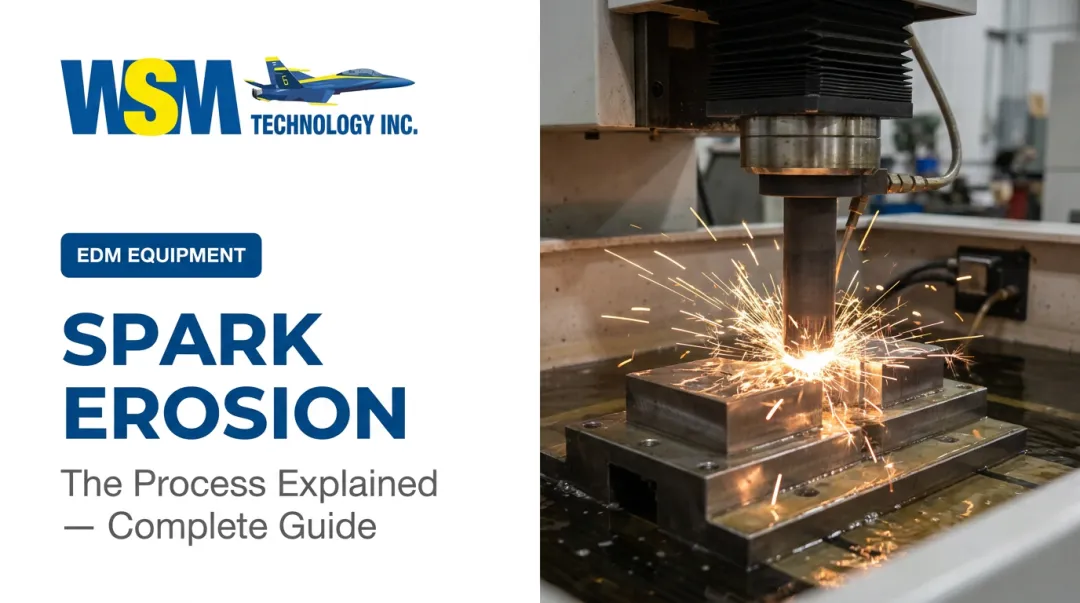
Once the applied voltage exceeds the dielectric fluid's insulating strength, a rapid, controlled spark discharges across the gap. That spark generates intense, localized heat.
Here's what happens physically:
- Each discharge melts and vaporizes a microscopic amount of workpiece material
- A tiny crater forms at the point of contact
- Thousands of discharges occur per second, gradually reproducing the electrode's shape
Three settings drive performance at this stage:
| Control | Effect |
|---|---|
| Peak current | Higher current increases removal rate but roughens finish |
| Pulse on-time | Longer pulses melt more material per spark, creating deeper craters |
| Duty cycle | Higher duty cycle raises removal rate but can destabilize the gap if pushed too far |
Regulation: Maintaining the Gap
As material erodes, the gap between electrode and workpiece changes. A closed-loop servo system continuously monitors and adjusts electrode position to keep that gap stable.
Dielectric fluid circulation and filtration matter just as much here. Fluid cools the discharge zone and flushes eroded debris away, preventing short-circuiting or arcing.
According to Canadian Metalworking, a typical spark gap runs around 0.008 to 0.009 inch (roughly 0.2 mm), though this varies by application and machine settings.
Poor gap control or weak flushing causes inconsistent erosion, rough surface finish, or damage to the electrode and workpiece alike.
Output: The Finished Cavity
The final result is a cavity that mirrors the electrode's shape, accounting for slight overcut and electrode wear over the course of the cut. That cavity then feeds into downstream work like polishing, assembly into a mold base, or integration into a finished die.
Surface finish quality varies by machine and settings. Some high-precision sinker EDM systems can achieve finishes as fine as 0.05 to 0.1 micron Ra, though production averages depend heavily on discharge energy, flushing strategy, and the number of finishing passes run.

How Accurate Is Ram Sinker EDM?
Because the process removes material without mechanical cutting force, sinker EDM avoids tool deflection and vibration errors common in conventional machining. That absence of physical contact translates into high repeatability, cut after cut.
That consistency, however, depends on how well operators manage the process variables, not on the hardness of the material itself:
- Spark gap regulation
- Electrode wear over the cutting cycle
- Pulse parameter settings
- Dielectric flushing consistency
High-precision sinker EDM equipment can achieve position accuracy and repeatability in the range of 1 to 2.5 microns, according to specifications reported for systems like the GF Machining Solutions Form P 350. That's a practical capability benchmark for high-precision systems, not a guarantee across every sinker operation.
CNC and servo control push precision further by automating electrode positioning and gap distance. That automation is exactly why sinker EDM remains a go-to choice for tight-tolerance mold and die work where manual adjustment simply isn't precise enough.
Where Is Ram Sinker EDM Used?
Sinker EDM typically enters the workflow after rough machining is complete. It handles the finishing work: complex internal cavities, blind holes, and fine details that rough machining can't touch.
It performs best under specific conditions:
- Deep, enclosed geometries with limited tool access
- Hardened tool steels that resist conventional cutting
- Sharp internal corners that wire EDM or milling tools can't reach
Usage varies across industries, though the underlying need stays consistent:
- Mold and die making: cavity finishing on hardened tool steel
- Aerospace: precision tooling for dies, molds, and fixtures on hardened materials
- Automotive: tooling and general parts production
- Medical device manufacturing: fine-detail mold tooling, including applications like pipette molds
WSM Technology serves mold and die, aerospace, automotive, and medical device manufacturers across Northern Ohio, Western Pennsylvania, and West Virginia with Mitsubishi sinker EDM equipment, supported by application engineering and hands-on training.

Conclusion
Ram sinker EDM transforms electrical energy into precise, controlled erosion. Servo regulation keeps that erosion stable, spark after spark, producing cavities that mechanical cutting alone can't achieve.
Understanding that sequence, from gap setup through final output, leads to better electrode choices and smarter parameter settings on the shop floor. If you're evaluating equipment, WSM Technology's Demonstration Center offers test cuts and time studies so you can see performance firsthand before making a purchase decision.
Frequently Asked Questions
How does ram sinker EDM work?
A shaped electrode and conductive workpiece sit submerged in dielectric fluid, separated by a controlled gap. Applied voltage triggers thousands of controlled sparks per second that erode the workpiece into the electrode's inverse shape.
What is ram sinker EDM?
It's a non-contact electrothermal machining process that uses a shaped electrode to form a mirror-image cavity in a conductive workpiece through controlled electrical discharges, with no mechanical cutting force involved.
How accurate is ram sinker EDM?
Because there's no cutting force, sinker EDM avoids deflection and vibration errors, giving it high repeatability. High-precision systems can hold position accuracy in the 1 to 2.5 micron range.
What materials can be machined with ram sinker EDM?
Any electrically conductive material works, including hardened tool steels, tungsten carbide, titanium, and Inconel. Hardness isn't the limiting factor; conductivity is.
What's the difference between ram sinker EDM and wire EDM?
Ram sinker EDM uses a shaped electrode to form blind cavities and 3D detail. Wire EDM feeds a continuous wire through the workpiece to cut through-profiles, similar to a contour cut.
What electrode materials are used in sinker EDM?
Graphite and copper are the two main choices. Graphite machines faster and wears less during roughing; copper often delivers finer detail in stationary finishing applications.