
Introduction
Every shop hits this crossroads eventually: a customer needs hardened parts held to grinding-tight tolerances, and the quote for a new cylindrical grinder just landed on your desk. Six figures, easy. Before you sign, there's a question worth asking.
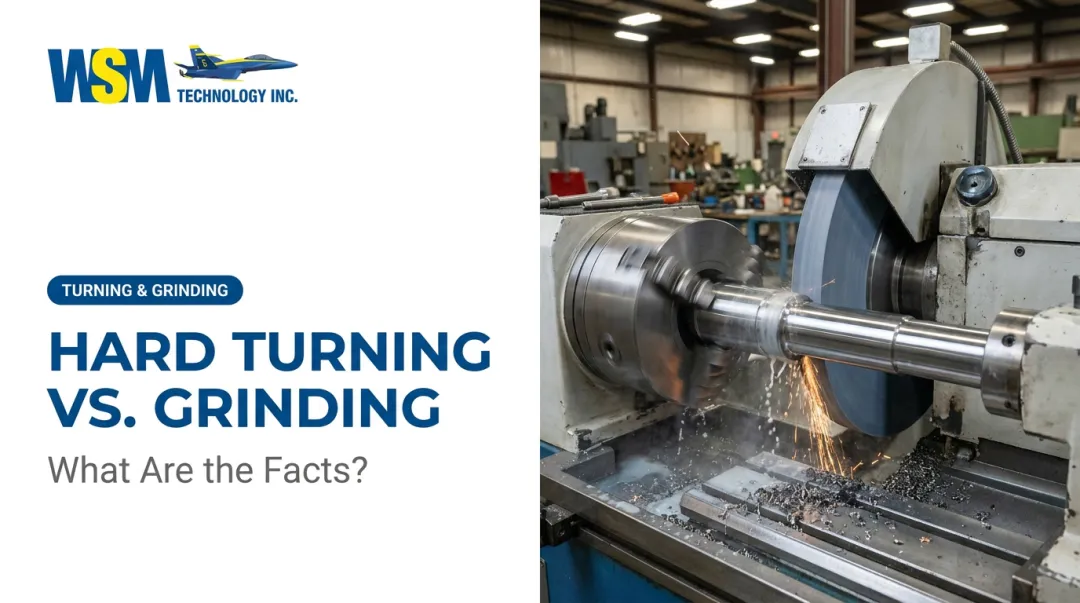
Hard turning might already solve the problem. It's single-point CNC machining of steel hardened to 45 HRC or higher, and in many applications it replaces grinding entirely.
This article breaks down how the process works, the tooling and machine rigidity it demands, and how the economics stack up against grinding. It also covers where hard turning fits best and how to tell if your shop is ready to try it.
Key Takeaways
- Hard turning handles steel at 45+ HRC, often up to 60-68 HRC with CBN inserts
- Modern processes hold tolerances near ±0.0002 inch, rivaling grinding precision
- A single chucking can replace multiple grinding setups, cutting cycle times
- Not every lathe qualifies: rigidity, spindle condition, and toolholding must be verified first
What Is Hard Turning? Understanding the Basics
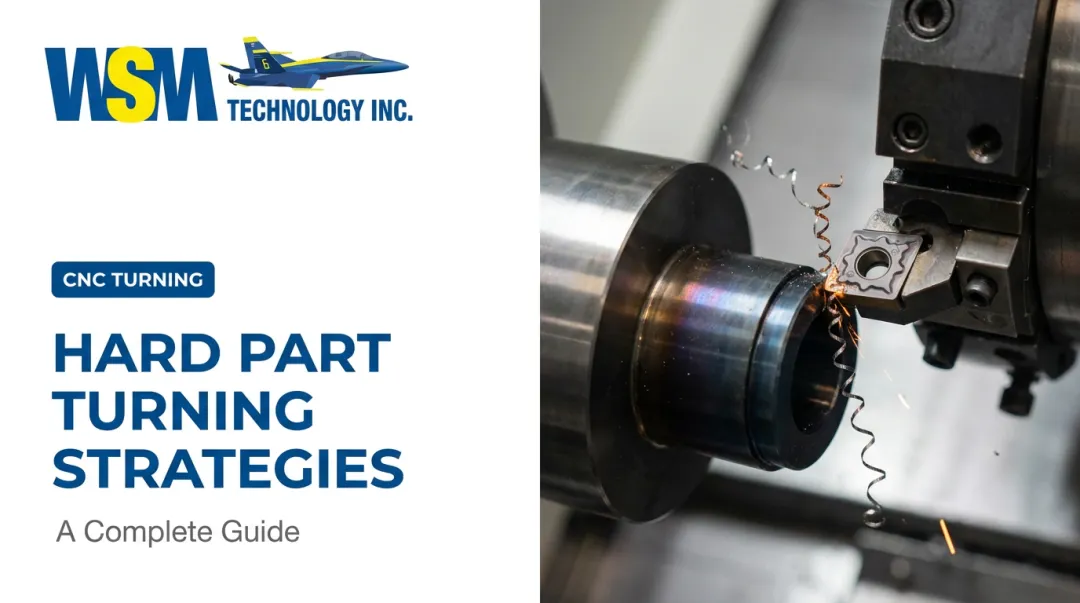
Hard turning is a single-point CNC turning operation performed on steel that's already been heat-treated to a hardness of roughly 45 Rc or above.
Reported industry ranges vary somewhat by source: Production Machining cites a typical window of 58-68 Rc, while Sandvik Coromant defines hard-part turning more narrowly at 55-65 Rc. Either way, this is finish-grade machining on steel that would previously have gone straight to a grinder.
How It Differs From Soft Turning
Three things separate hard turning from conventional turning:
- Material hardness: soft turning works annealed or normalized steel; hard turning starts where that process ends
- Insert material: carbide handles soft steel fine, but hardened steel demands ceramic or CBN
- Achievable finish: hard turning can deliver near-grinding surface quality directly off the single-point tool, something soft turning inserts simply can't match
The process gained real traction in the early 1990s as CBN tooling matured and CNC lathe builders started producing genuinely rigid machines capable of standing up to the cutting forces involved. Before that, grinding was the only realistic option for hardened parts.
Materials and Components
Shops commonly hard turn these steel grades:
- 5120 (around 62 Rc): pinion gears, bearing races
- 1050 (around 62 Rc): shafts
- 9310 (around 60 Rc): gears
- 4320 (60-62 Rc): axle shafts and gear components
One clarification worth making directly: hard turning cuts material that's already hardened, at high surface speed, with a hard cutting edge doing the work. It does not require heating the workpiece before the cut — some sources online muddy this point, but the hardening happens well before the part ever reaches the lathe.
How the Hard Turning Process Works
The workflow itself is straightforward, even if the tolerances demanded are anything but:
- Prepare the hardened workpiece: the part arrives already heat-treated to its final hardness
- Secure it to a rigid lathe: chucking method matters as much as the machine itself
- Select the correct insert: matched to hardness range and cut type
- Perform single-point material removal: one or two passes, depending on strategy
- Inspect for tolerance and finish: verifying roundness, diameter, and surface Ra before the part leaves the machine

Two sub-decisions drive most of the process quality: machine rigidity and insert selection.
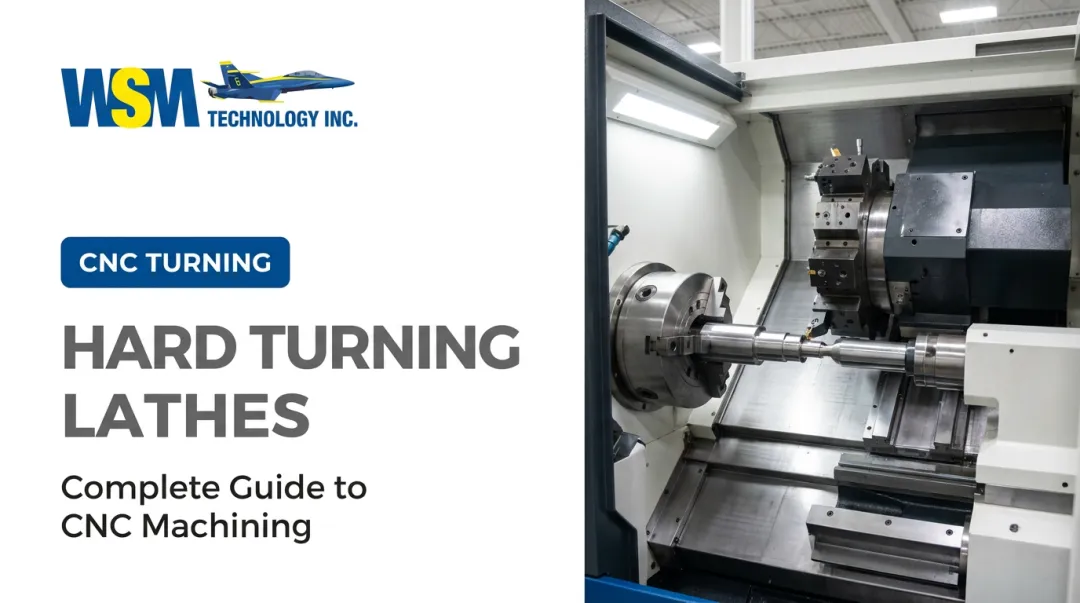
Machine Requirements for Successful Hard Turning
CBN inserts are hard, but they're also comparatively brittle. That means the machine absorbing the cutting forces has to do most of the work in keeping vibration away from the edge.
- Rigidity and vibration damping in the machine base and turret construction are what separate a grinding-like micro-finish from a mediocre one
- Toolholding with minimal overhang matters just as much: as a rule of thumb, OD tool overhang shouldn't exceed 1.5x the toolholder's shank height
- Workpiece support counts too: unsupported extension should stay under 4x the diameter, or 8x with tailstock support
Skip any of these and the finish suffers, no matter how good the insert is.
Selecting the Right Cutting Tool
Insert selection tracks pretty closely with hardness range, though the boundaries overlap depending on cut continuity and finish requirements:
| Hardness Range | Typical Insert Material |
|---|---|
| Below ~50-55 Rc | Carbide or ceramic |
| 50-60 Rc, light continuous cut | Ceramic |
| 60 Rc and above | CBN |
CBN grades themselves vary by binder ratio, and that ratio tracks with cut condition rather than a fixed formula. Lower-CBN-content grades with TiC binders suit continuous, high-speed cuts; higher-CBN grades with TiCN or TiN binders hold up better against interrupted cuts and impact.
There's also a strategy choice to make: one cut versus two.
| Approach | Speed | Tolerance Control |
|---|---|---|
| One cut | Faster cycle time, single tool position | Drifts as the insert wears |
| Two cuts | Roughing pass plus finishing pass, extra tool change | Tighter roundness, more consistent finish |
For parts with generous tolerance bands, one cut often wins on throughput. For anything approaching grinding-tier specs, the two-cut approach earns its keep.
Hard Turning vs. Grinding: Which Should You Choose?
Grinding has long been the default answer for hardened parts. That's changing.
Accuracy. Grinding still holds the edge at the tightest tolerance bands. But Modern Machine Shop reports controlled hard turning processes holding diameter accuracy around ±0.0002 inch, with Ra values near 7 microinches on straight passes and total roundness error around 0.0001 inch. For a large share of applications, that's plenty.
Capital cost. Grinding machines commonly run 2-3 times the cost of a CNC lathe capable of hard turning, according to Production Machining. Shops that switched reported capital investment averaging roughly a third of what a comparable grinding setup would have required.
Efficiency. A turning center can complete facing, turning, and boring in a single chucking. Grinding, in contrast, typically needs separate setups per contour and periodic wheel redressing along the way. That difference compounds fast in multi-feature parts.

Where grinding still wins:
- Extremely complex contours
- Ultra-fine surface finish specs beyond hard turning's reach
- Dedicated high-volume production lines already optimized around grinding
Despite those exceptions, hard turning holds another advantage: it's frequently run dry. CBN and ceramic inserts tolerate the heat generated at the cutting edge, so many shops skip coolant altogether.
That eliminates the purchase, filtration, and disposal costs grinding operations carry as a matter of course. Because WSM Technology stocks both hard-turning-capable lathes and precision grinding machines, our team helps shops weigh these tradeoffs against their actual part specs before committing capital.
Key Benefits of Hard Turning
- Cost savings: no dedicated grinding equipment to purchase, house, or maintain, freeing up both capital and floor space
- Productivity gains: Production Machining documented a shouldered-shaft job where cycle time fell from 3.5 to 1.5 minutes, cutting batch time from 20 hours to 8
- Machine utilization: the same CNC lathe handles soft turning and hard turning, so equipment doesn't sit idle between job types
This flexibility pays off most for shops running mixed hard and soft parts, since they avoid dedicating separate machine categories to different corners of the floor.
Common Applications and Industries for Hard Turning
Three sectors lean on hard turning heavily:
- Automotive — gears, shafts, and bearings, often in high-mix production runs
- Aerospace — high-strength precision components where tolerance and material integrity both matter
- Tool & die — hardened dies, molds, and punches, sometimes up to 64 Rc
The components showing up most often are shafts, bearings, gears, and dies: parts that need both tight tolerances and long service life.
That mix of tight tolerances and long service life also explains why hard turning fits particularly well into small and medium production runs. The flexibility of a CNC lathe setup beats dedicating a whole grinding line to a job that might only run a few dozen or a few hundred pieces at a time.
Is Hard Turning Right for Your Shop? Getting Started
Not every lathe on your floor is ready for this. Rigidity, spindle condition, and toolholder integrity all need a hard look before you start feeding it CBN inserts on 60 Rc steel. A machine that's fine for soft turning can chatter badly the moment hardness and cutting forces climb.
Before committing capital, run the numbers on your own parts:
- Test cut the actual geometry you'd be producing, not a generic sample
- Time-study the result against your current grinding cycle
- Compare tolerance and finish to your print requirements before assuming feasibility
WSM Technology's Demonstration Center in Rootstown, Ohio gives shops across Northern Ohio, Western Pennsylvania, and West Virginia a place to do exactly this. The center's CNC turning lineup includes Schaublin precision lathes and Hembrug dedicated hard turning machines. Shops can run test cuts and evaluate hard turning capability with application engineering support on hand, before making any purchase decision.

Frequently Asked Questions
What are the types of turning?
Common types include straight and taper turning, facing, and contour turning. Hard turning fits alongside these as a specialized finishing operation for hardened steel, rather than a distinct geometric motion.
Is CNC turning hard?
CNC turning has a learning curve like any machining skill, but it's manageable with training. That's separate from "hard turning," which refers to machining hardened materials, not the difficulty of the operation itself.
What is the process of hard turning parts?
A rigid lathe holds the hardened workpiece while a CBN or ceramic insert, chosen based on hardness, machines it to final tolerance in one or two passes. No grinding step follows.
What hardness range is required for hard turning?
Industry sources generally place the range at 45-70 Rc, though CBN inserts become necessary above roughly 55-60 Rc. Below that, carbide or ceramic inserts often suffice.
How does the cost of hard turning compare to grinding?
Hard turning typically requires lower equipment investment (often a third of a comparable grinding setup) plus fewer setups and less coolant and waste handling. Actual savings depend on part geometry and volume.
Can any CNC lathe be used for hard turning?
No. Only lathes with sufficient rigidity, spindle precision, and toolholder integrity can hold the tolerances hard turning demands. Shops should evaluate existing equipment, since some may need to upgrade.