
Shops across Ohio, Pennsylvania, and West Virginia run everything from older FA-series machines to current MV and VX platforms. Each series has its own interface layout, programming syntax, and maintenance schedule. When operators grab whatever manual happens to be sitting in the office drawer, small mismatches turn into scrap parts, wasted wire, and unplanned downtime.
This guide breaks down the three types of Mitsubishi wire EDM manuals, what's inside each one, how to use them more effectively on the floor, and where to turn when your documentation is missing, damaged, or simply outdated.
Key Takeaways
- Mitsubishi wire EDM documentation covers three core functions: operation, programming, and maintenance/service.
- Model-specific manuals matter: an FA-series guide won't map onto an MV or VX interface.
- Bookmarking key sections and keeping a digital PDF on hand speeds up daily troubleshooting.
- An authorized regional dealer like WSM Technology can source replacement documentation and provide hands-on training.
What Is a Mitsubishi Wire EDM Manual?
A Mitsubishi wire EDM manual is the reference documentation that ships with your machine, covering setup, day-to-day operation, CNC programming, and ongoing maintenance. It's the primary resource for understanding how your specific machine's control, interface, and mechanical systems function together.
These manuals are not interchangeable across series. Mitsubishi's MV Series, for example, documents features like manual input positioning, an electronic instruction manual built into the control, and subprogram nesting up to 30 levels deep. Older FA-series machines handle these capabilities differently, or don't include them at all.
Because of these differences, most shops source their manuals one of three ways:
- Included with machine purchase: new and many used machines come with printed or digital documentation
- Through authorized service partners: regional dealers can supply replacements or updates
- Directly via Mitsubishi/MC Machinery support channels for OEM-verified documentation
If your shop bought a machine secondhand or inherited one from a previous owner, there's a real chance the manual on hand doesn't match the control version installed. Verifying model and control compatibility before relying on any manual saves headaches later.
The Three Types of Mitsubishi Wire EDM Manuals
"Manual" is really an umbrella term. On the shop floor, it breaks down into three distinct documents, each built for a different role and a different reader.
Operator's Manual
This is the manual every new hire should read cover to cover before touching the control panel unsupervised. It covers:
- Safety protocols and lockout procedures
- Startup and shutdown sequences
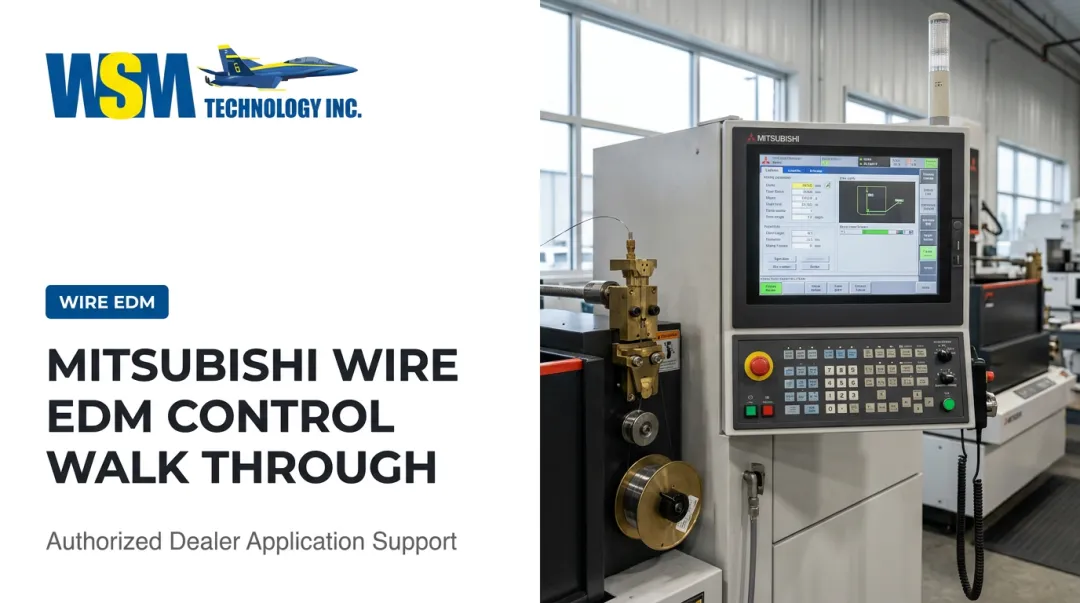
- UI navigation specific to your control (M800, for instance, on current MV platforms)
- Tool setup and electrode alignment
- Routine maintenance schedules
Daily machine operators, technicians, and floor supervisors rely on this document most. It's the foundation. Everything else builds on top of it.
Programming Manual
Once an operator moves beyond basic cuts, the programming manual becomes essential. It details:
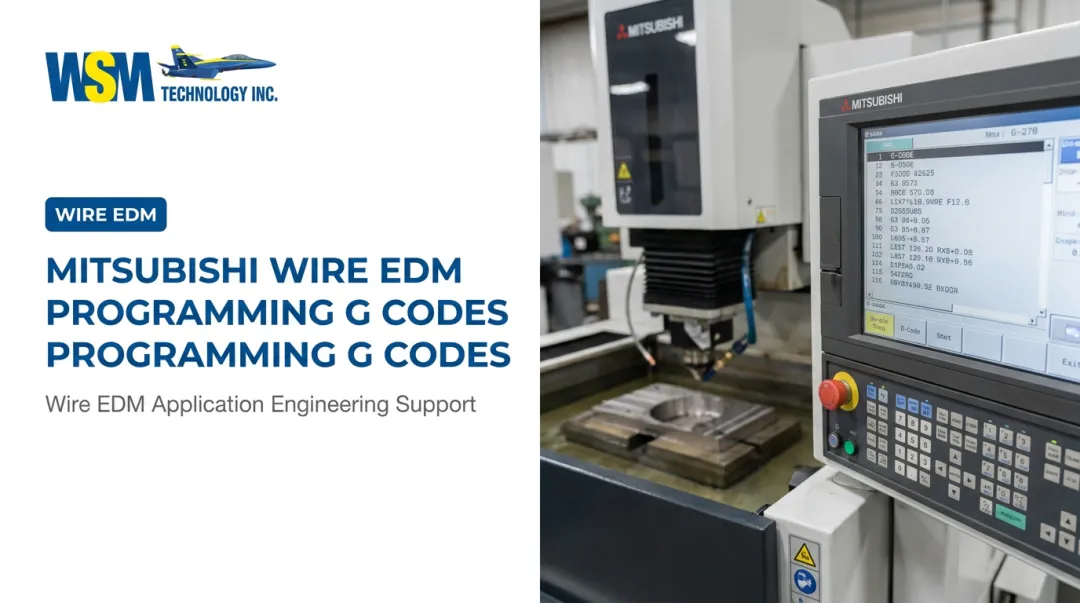
- G-code formats and EDM-specific commands
- Threading and re-threading sequences
- Offsets and cutting parameters
- Corner control and taper cutting techniques
CNC programmers and advanced machinists lean on this manual constantly. Mastering it is what separates shops running strictly manual, attended cuts from those achieving true lights-out machining.
Mitsubishi's MV4800-ST, for example, uses an annealing and insertion system to rethread the wire automatically after a break — a feature that only pays off once the programmer understands how to configure it correctly.
Maintenance or Service Manual
This is the technician's bible. It contains:
- Electrical schematics and wiring diagrams
- Hydraulic and pneumatic circuit diagrams
- Diagnostic and alarm code tables
- Sensor calibration procedures
- Disassembly instructions for major components
Service engineers and maintenance staff depend on this manual to keep machines running long-term. Following a preventive maintenance schedule links service directly to planned downtime and reduced overall repair costs, rather than letting failures happen unexpectedly on the shop floor.

Why Your Mitsubishi EDM Manual Matters for Shop Performance
A manual isn't paperwork you file away after installation. It directly shapes four things that determine whether your EDM operation runs profitably.
Accuracy. Wire EDM tolerance capability varies by model, wire, and material thickness. Mitsubishi's FA30V Advance, for instance, is documented to achieve pitch and shape accuracy of ±5 µm (0.0002 in.) or less.
Hitting numbers like that requires understanding parameter fine-tuning documented in your specific manual, not generic settings borrowed from a different machine.
Safety. Wire EDM machines combine high-voltage electrical systems with fine wire held under tension. The ANSI B11.27-2020 standard specifically addresses safety requirements for EDM equipment, and your manual translates those broader standards into exact lockout, de-energization, and handling steps for your machine.
Efficiency. Clear setup and programming instructions cut down on trial-and-error cutting. Fewer failed test cuts mean less scrapped material and lower wire consumable costs.
Troubleshooting. When something goes wrong, alarm code tables and circuit diagrams in the service manual shorten the path from "machine is down" to "machine is fixed." Written procedures and repair histories narrow that guesswork, shortening repair time.
How to Get the Most Out of Your Mitsubishi Wire EDM Manual
Owning the right manual is step one. Actually using it efficiently on a busy shop floor is a different challenge entirely.
Two habits make the biggest difference:
- Bookmark or flag frequently used sections (programming code tables, maintenance intervals, alarm references) so operators aren't flipping through 200 pages mid-shift.
- Keep a searchable digital PDF at the workstation in addition to any physical copy. A quick keyword search beats scanning a printed index every time.
Everyday Best Practices for Operators
- Start with simple test cuts using sample programs from the manual to see how parameter changes affect cut quality
- Perform calibration checks on the schedule the manual recommends, not just when something seems off
- Keep a running log of parameter settings by material type to build on the manual's baseline data
- Work through the troubleshooting charts systematically when diagnosing wire breakage, taper inaccuracies, or flushing problems
Advanced Techniques for Experienced Machinists
Once operators are comfortable with the basics, the manual's deeper sections unlock real efficiency gains:
- Subprogram calls and macros automate repetitive operations, cutting programming time on similar parts
- Threading and re-threading procedures allow lights-out runs across longer part queues, since reliable automatic threading is what makes unattended wire EDM operation practical
- Advanced taper cutting techniques support die and mold applications requiring compound angles and precise draft
Missing or Outdated Manual? Here's What to Do
If your manual is lost, coffee-stained beyond recognition, or simply doesn't match your machine's current control software, don't rely on forum posts or unofficial PDFs circulating online. Start with your authorized Mitsubishi/MC Machinery dealer.
WSM Technology serves as the official Mitsubishi/MC Machinery dealer for Northern Ohio, Western Pennsylvania, and West Virginia. Beyond sourcing documentation, the team supports shops with:
- OEM replacement parts
- On-site and advanced training programs
- Application engineering support for real-world machining challenges
Documentation gaps often show up alongside other questions — a parameter that doesn't behave as expected, or an alarm code nobody in the shop recognizes.
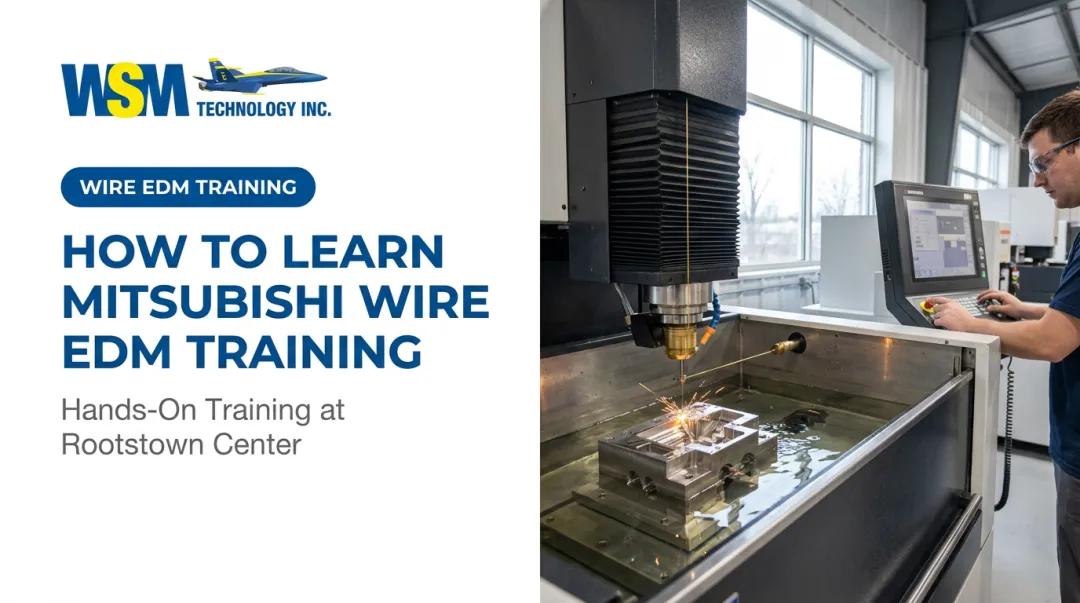
That's where hands-on time helps. WSM's Demonstration Center in Rootstown, Ohio lets shops run test cuts and get direct instruction on Mitsubishi platforms like the MV1200S, pairing what's written in the manual with actual machine time.

Shops needing manual sourcing, replacement parts, or training support can reach WSM Technology at sales@wsmtechnology.com or 330-962-8308.
Frequently Asked Questions
Where can I get a copy of my Mitsubishi wire EDM manual if I've lost mine?
Contact your authorized regional Mitsubishi/MC Machinery dealer, such as WSM Technology, for digital or replacement copies. Reach out to sales@wsmtechnology.com or 330-962-8308 to start the process.
What's the difference between an operator's manual and a programming manual for Mitsubishi EDM?
The operator's manual covers daily operation, safety procedures, and setup basics. The programming manual focuses on G-code, cutting parameters, offsets, and advanced techniques like taper cutting.
How do I find alarm code explanations for my Mitsubishi wire EDM machine?
Alarm and error code tables live in the maintenance or service manual. If a code doesn't match anything documented, your dealer can help interpret it and point to a fix.
Do older Mitsubishi EDM models like the FA series have different manuals than newer MV or VX series machines?
Yes, manuals are model-specific because interfaces, control systems, and available features differ significantly between series. Always verify you have the manual matching your exact model and control version.
Can I get hands-on training to better understand my Mitsubishi wire EDM manual?
Authorized dealers often provide on-site or demonstration center training that pairs manual content with real machine time, helping concepts click faster than reading alone.
Does WSM Technology provide manuals, parts, or training support for Mitsubishi EDM machines?
Yes, WSM Technology is the official Mitsubishi/MC Machinery dealer for Northern Ohio, Western PA, and West Virginia, offering manual sourcing, OEM parts, and training through its Rootstown demonstration center.