
The global EDM machine market was valued at $3.3 billion in 2024, a sign of just how embedded this process has become in precision manufacturing. Yet plenty of shops still describe wire EDM as "cutting with electricity" without understanding the stage-by-stage mechanics behind it — and that gap leads to wire selection mistakes, wrong machine purchases, and unrealistic tolerance expectations.
This guide breaks down exactly how wire EDM works, stage by stage, so you know what's actually happening in the tank.
Key Takeaways
- Wire EDM erodes conductive metal with electrical sparks, never touching the part
- The process runs through four stages: threading, erosion, dielectric control, output
- Tolerances as tight as ±0.0002 in are achievable with the right settings
- It's the top choice for hardened steel, titanium, and carbide in mold, aerospace, medical work
- Understanding each stage helps shops pick the right wire, settings, and partner
What Is Wire EDM?
Wire EDM is a non-contact machining process. A thin brass or coated wire acts as an electrode, eroding conductive material through controlled electrical discharges while submerged in a dielectric fluid, typically deionized water.
There's no cutting force involved. No chip formation, no tool pressure, no deflection. That's precisely why it exists. Traditional cutting tools deform, dull, or simply can't reach the geometry that wire EDM handles routinely:
- Hardened tool steel that would destroy an end mill
- Sharp internal corners no rotating tool can produce
- Thin, brittle walls that would crack under mechanical stress
- Complex profiles requiring micron-level repeatability
Wire EDM is not sinker EDM. Sinker (or ram) EDM uses a custom-shaped, solid electrode that gradually wears down as it burns a cavity into the workpiece, usually submerged in oil-based dielectric. Wire EDM instead uses a continuously fed wire that never wears in the same way, since fresh wire is constantly spooling through the cut.

Why It's Still Essential Despite 5-Axis Milling
Five-axis milling and laser cutting have advanced, but neither solves the core problem wire EDM addresses: material hardness is irrelevant to the process. A wire EDM machine cuts fully hardened D2 tool steel with the same ease as soft aluminum, because the mechanism is thermal and electrical, not mechanical.
That independence from hardness, paired with the ability to hold tolerances on delicate geometries, keeps it essential in mold and die shops decades after its introduction.
That wire-versus-sinker distinction is just one layer of a broader family. EDM splits into three main types (wire, sinker, and hole-drilling), each shifting its working principle based on the electrode: wire feeds continuously, sinker electrodes are shaped and consumed, and hole-drilling uses a rotating tube electrode for fast, small-diameter holes.
How Does Wire EDM Work?
The process runs through a defined sequence: setup and positioning, spark-based material removal, real-time process control, and final part output. Each stage feeds into the next, and a mistake early on ripples through the entire cut.
Initiation
Everything starts with clamping the workpiece and correcting its alignment. The wire threads through a pre-drilled start hole, or from the edge of the material, before any power is applied.
On modern CNC wire EDM machines, this step is largely automated:
- Auto-threading feeds the wire without operator intervention
- Contact-sensing edge detection locates the workpiece boundary
- Manual verification still happens routinely in job shops, especially on tight-tolerance work
Improper clamping is the most common bottleneck at this stage. If perpendicularity or flatness is off before power gets applied, the entire cut path shifts — and there's no fixing that after the fact. Correcting alignment here is cheap. Correcting it after a bad cut means scrapping the part.
Core Operation
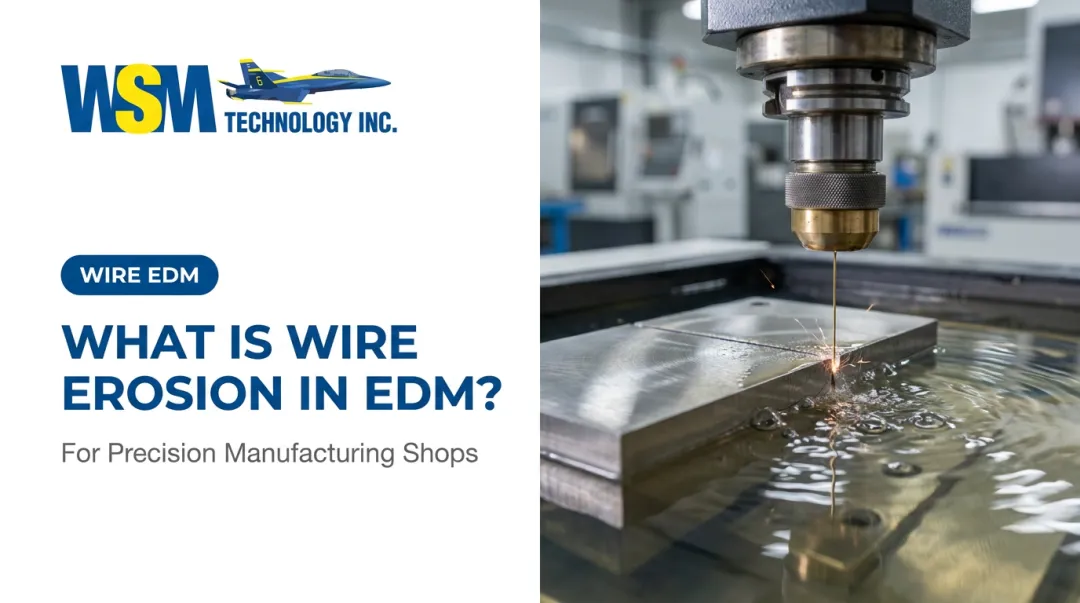
Once the wire is positioned, rapid voltage pulses fire between the wire and the workpiece. Each pulse causes the dielectric fluid to break down momentarily, creating a spark that melts and vaporizes a microscopic amount of metal.
The spark-zone temperature runs between 8,000°C and 10,000°C — hot enough to vaporize tool steel instantly, but so localized and brief that the surrounding material barely feels it. Material comes off in tiny craters as the wire follows the CNC-programmed path, never once touching the part.
This stage carries a real tradeoff:
- Slower speeds and lower power tighten tolerances and improve finish
- Higher speeds boost throughput but slightly bend the wire under flushing pressure, affecting accuracy
- Rough passes prioritize speed first, with finishing passes dialing precision back in afterward
That's why the first cut on a job is rarely the last one, especially on tight-tolerance work.

Regulation and Control
While sparks erode metal, the machine is simultaneously managing several variables in real time. Servo-controlled wire feed constantly adjusts to maintain a consistent spark gap, keeping the wire from ever contacting the workpiece.
The dielectric fluid system does the heavy lifting here. Deionized water:
- Cools the cutting zone
- Flushes eroded debris out of the kerf
- Gets continuously filtered to hold consistent electrical resistivity
Resin plays a supporting role too, maintaining the water's conductivity level so the sparking stays consistent throughout the cut. Without proper flushing, tension control, and monitoring, debris builds up fast, leading to short circuits, wire breakage, or inconsistent cuts that require expensive rework.
Shops running wire EDM daily know this is where machine quality separates itself. A well-maintained filtration and resin system prevents most of the headaches operators associate with the process, and consumables matter more than most expect: filters and resin tanks aren't an afterthought, they're what keeps the spark gap stable pass after pass.
Output and Result
The finished result is a precisely contoured part with clean, burr-free edges and a smooth surface. On a well-tuned machine, this comes with little to no secondary finishing required.
The numbers back this up. Wire EDM has demonstrated finished-part accuracy of ±0.0001 in on a 3-inch-thick carbide workpiece, with a 5-microinch Ra surface finish. Skim passes, additional lighter passes run after the initial rough cut, refine that surface finish further and reduce or eliminate the need for polishing.
That precision carries downstream: parts move straight into mold assembly or tooling integration, since dimensional accuracy holds even after heat treatment.
Where Wire EDM Is Used
Wire EDM typically shows up as a finishing or primary cutting step for mold and die components, precision tooling, and prototype parts, often run right after heat treatment when material hardness would otherwise stop conventional tools cold.
It performs best under specific conditions:
- Thick or hardened conductive materials
- Tight tolerance requirements measured in tenths of a thousandth
- Intricate internal geometries mechanical cutters can't reach
- Delicate parts that can't tolerate cutting forces
Industry applications vary in the details but follow the same logic:
- Mold and die shops use it for punches, stripper plates, and cavity inserts
- Aerospace relies on it for turbine components and fuel system parts
- Medical manufacturers cut surgical tools and implant components
- Automotive shops use it for precision gears and stamping dies
Across these industries, shops share the same hesitation: nobody wants to commit to a machine sight unseen. That's the reasoning behind WSM Technology's Demonstration Center in Rootstown, Ohio.
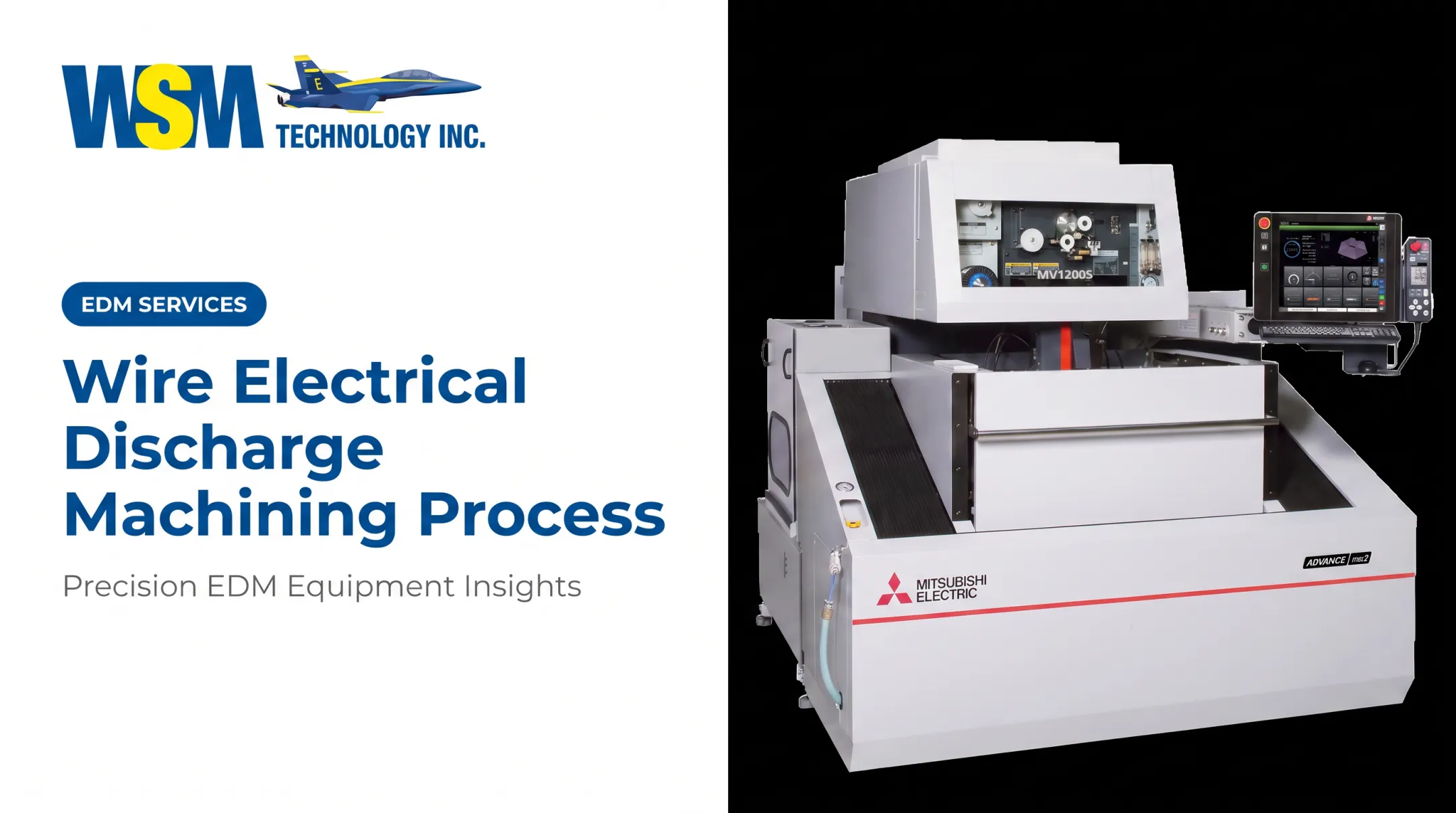
There, manufacturers across Northern Ohio, Western Pennsylvania, and West Virginia can run test cuts on Mitsubishi wire EDM equipment before buying. Seeing your own material cut on the machine you're considering tells you more in an afternoon than a spec sheet ever will.

Conclusion
Wire EDM's precision comes from a closed loop of controlled spark erosion, constant wire feed, and tightly regulated dielectric flushing working together, each one correcting for the others in real time.
Knowing how each stage affects speed, tolerance, and surface finish changes how a shop selects wire, settings, and even the machine itself.
WSM Technology's application engineers help shops work through that evaluation with test cuts and time studies before any equipment changes hands. That guidance draws on founder Blaise Buholzer's background as an application engineer on wire and die-sinker EDM machines, dating back to his years at Charmilles.
Frequently Asked Questions
How much does wire EDM machining cost per hour?
Hourly rates vary based on machine type, material, and tolerance requirements, along with regional labor costs. Shops should request a direct quote for an accurate estimate on their specific job.
How does wire EDM machining differ from other EDM processes?
Wire EDM uses a continuously fed wire electrode for through-cuts and 2D or tapered profiles. Sinker EDM instead uses a shaped, wearing electrode to burn 3D cavities and blind holes.
What are the main types of EDM machining?
The three primary types are wire EDM for through-cuts and profiles, sinker/ram EDM for 3D cavities and blind holes, and hole-drilling EDM for fast, small holes using a rotating tube electrode.
What materials can be cut with wire EDM?
Any electrically conductive material qualifies, including hardened tool steel, titanium, carbide, and stainless steel. Hardness doesn't limit the process the way it does with mechanical cutting.
How accurate is wire EDM machining?
Under optimal settings, wire EDM can hold tolerances as tight as ±0.0002 in (0.005 mm). Typical production tolerances land closer to ±0.001 in for most job shop work.
Can wire EDM cut hardened steel and thick materials?
Yes. It's commonly run on hardened tool steel after heat treatment and can cut plates roughly up to 12 inches thick, depending on the specific machine's capacity.