
Introduction
Precision manufacturers grinding tight-tolerance parts face a familiar set of problems: thermal drift that shifts dimensions mid-run, vibration that leaves chatter marks on finished surfaces, and inconsistent geometry across long production cycles. Most of the time, the machine itself is the source — not the setup.
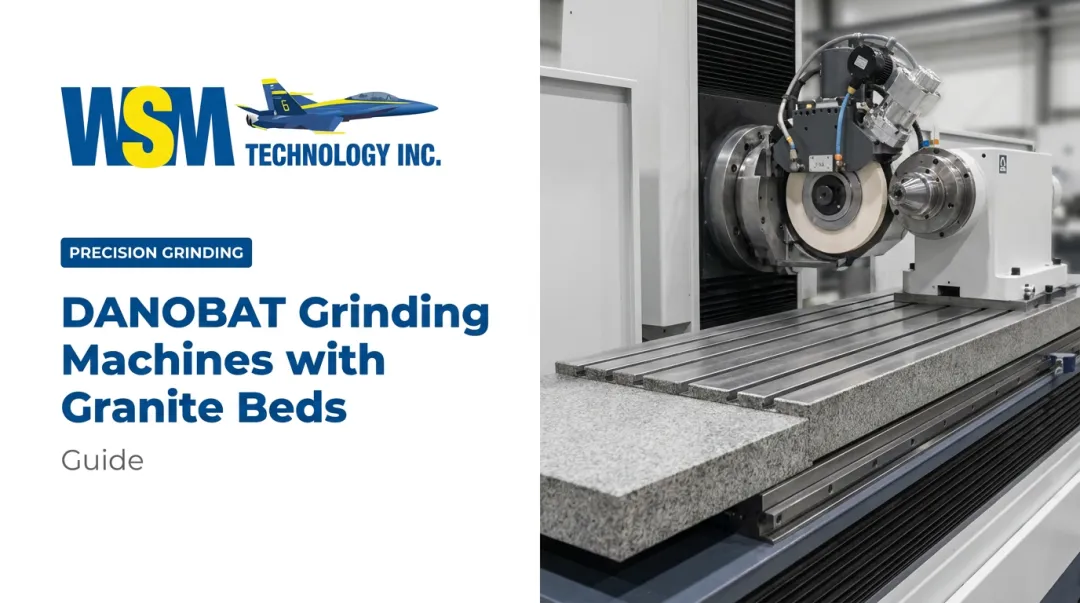
The Danobat LG series addresses those structural problems directly. It's a horizontal external and internal cylindrical grinding machine available in three sizes — the LG-400, LG-600, and LG-1000 — with a natural granite bed as its defining design feature and the foundation of every precision claim Danobat makes about the platform.
What follows is a detailed look at the granite bed, the electro-spindle system, the B-axis and linear drive architecture, and the applications where the LG is a genuine fit.
Key Takeaways
- Natural granite offers roughly half the thermal expansion of grey cast iron, keeping the machine structure stable across temperature fluctuations
- Water-cooled electro-spindles reach 120 m/s peripheral wheel speed, covering both conventional and CBN/diamond high-speed grinding
- A direct drive torque motor B-axis indexes multiple wheels with zero backlash, completing multiple grinding operations without re-clamping
- Linear motors and glass scales eliminate ball screw errors for sub-micron axis positioning accuracy
- The LG handles non-round geometries — cams, eccentric diameters — not just cylindrical OD/ID work
Danobat LG Series Overview
The LG range is designed for high-production grinding of complex parts where standard cylindrical grinders run out of capability. Danobat positions it explicitly for cutting tools, hydraulic precision components, automotive parts, and non-round geometries including cams and components with eccentric diameters.
Model Range and Capacities
Three core models cover a wide workpiece spectrum:
| Model | Between-Centres Distance | Notes |
|---|---|---|
| LG-400 | 400 mm | Smaller workpiece capacity |
| LG-600 | 600 mm | Up to ~290–300 mm external grinding diameter |
| LG-1000 | 1,000 mm | Largest model; longest workpieces |
The LG-600's external grinding diameter is cited as approximately 290–300 mm; verify exact figures with Danobat or WSM Technology for your application. The LG-1000 is the largest in the family, suited for longer, more slender shafts and components.
Built for Customization
Danobat built the LG platform to fit into existing production environments, not force shops to work around it. Configurable options include:
- Multiple wheel head configurations for different grinding applications
- Optional B-axis accessories for non-round and eccentric geometries
- Automation-ready architecture for integration into production cells
- Multiple measurement system options to match process requirements
The Natural Granite Bed: Why It Matters for Precision Grinding
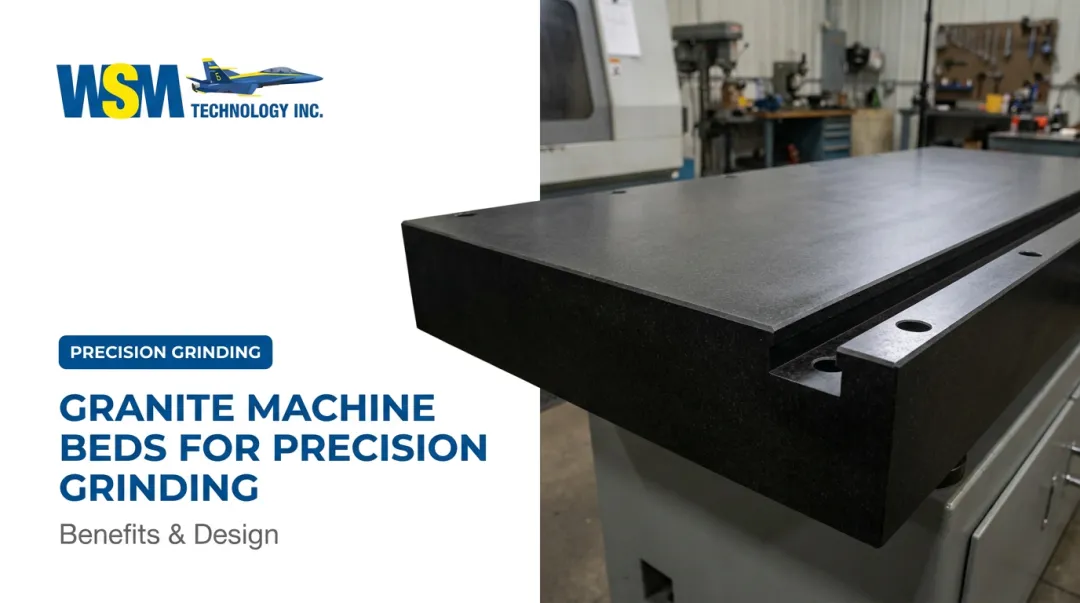
The LG's bed is machined from solid natural granite — not cast iron, not polymer concrete. For a precision grinding machine, that material choice has real engineering consequences.
Thermal Stability
Cast iron expands and contracts with temperature. According to the Engineering Toolbox's linear thermal expansion data, grey cast iron has a coefficient of thermal expansion (CTE) of approximately 10.8 µm/m·°C. Precision granite component manufacturer Planolith reports granite CTE values in the range of 5–7 µm/m·°C for machine construction applications — roughly half that of cast iron.
In a production environment, shop temperature fluctuates. Grinding itself generates heat. A cast iron bed absorbs those temperature changes and grows or shrinks accordingly, shifting the relationship between the wheel, the workpiece, and the machine reference surfaces. A granite bed stays closer to its original geometry throughout the shift.
Vibration Damping
Natural granite also dissipates vibration energy more effectively than cast iron or steel bases. Danobat specifically cites damping behavior as one of the granite bed's core contributions to the LG platform. Planolith, describing granite components for special machine construction, notes "maximum vibration damping" and stress-free dimensional behavior as key material properties.
For a grinding machine, this translates directly: less structural vibration reaching the grinding zone means fewer chatter marks, better surface finish, and the ability to push material removal rates without compromising part quality.

What This Means on the Production Floor
Both properties compound over a full production shift. The longer the run, the more the granite bed's behavior separates from what cast iron would deliver.
- Holds part geometry across long runs as shop temperature rises through the day
- Reduces mid-shift stops for re-qualification — the bed doesn't drift as cast iron would
- Maintains tight tolerances without the process fighting the thermal environment
The granite bed doesn't work in isolation. Its thermal and damping properties feed directly into what the machine's linear motors and glass scales can actually deliver — and that's where the accuracy story gets specific.
High-Speed Wheel Head and Electro-Spindle System
Water-Cooled Direct Drive Electro-Spindles
The LG wheel head uses water-cooled, direct drive electro-spindles. Water cooling isn't just a thermal comfort feature. It removes heat at the spindle source before it can cause thermal growth in the spindle shaft itself. Unchecked spindle thermal growth translates directly into dimensional drift at the cutting zone, even if everything else in the machine is holding steady.
Direct drive eliminates the belt or gear transmission between motor and spindle, removing a flex point in the drivetrain that would otherwise limit both speed consistency and positioning accuracy.
Speed Range: 35 to 120 m/s
The LG achieves a maximum peripheral grinding wheel speed of 120 m/s, with the LG-600 spec sheet citing a range of 35–120 m/s. To put that in context:
- Conventional abrasive grinding typically runs at 30–60 m/s
- High-speed grinding (HSG) with CBN or diamond wheels generally starts above 80 m/s
A single machine that spans both regimes means the same platform can run conventional aluminum oxide wheels for one job and switch to vitrified CBN for high-productivity hardened steel grinding on the next, without a different machine in the cell.
Torque Across the Full Speed Range
What makes the 120 m/s claim meaningful is that the LG delivers maximum torque across its full speed range. In belt-driven or geared spindle designs, torque typically drops as speed increases — meaning high-speed operation comes at the cost of material removal rate. A direct drive electro-spindle maintains torque output at the wheel regardless of where in the speed range it's operating.

For a machinist, that means consistent cutting pressure and surface finish whether you're running slow for a fine finishing pass or pushing 120 m/s for high-efficiency stock removal.
The LG-600 accommodates a 500 mm diameter grinding wheel on the wheel head. Confirmed wheel diameter specifications for the LG-400 and LG-1000 should be verified directly with Danobat or WSM Technology.
B-Axis Configuration and Linear Drive System
The B-Axis: Multiple Operations, One Setup
The B-axis is a rotary axis mounted on the wheel head that indexes multiple grinding wheels — and accessories — into position without manual changeover. In practice, this means a single machine setup can perform:
- External OD grinding
- Internal ID grinding
- Taper and shoulder grinding
- Additional operations using mounted accessories
The B-axis is driven by a water-cooled, direct drive torque motor — what Danobat refers to as a zero-backlash torque motor. With no gears or belts between the motor and the axis, there's no mechanical backlash, no compliance that would introduce positioning error between indexed positions. The B-axis can also incorporate laser measuring devices and super-finish stations, making the wheel head a true multi-function station rather than just a wheel carrier.
Linear Motor Drives: No Ball Screws
Machine axes on the LG are driven by CNC-controlled linear motors running on preloaded linear bearings. The difference versus ball screw drives is significant for precision grinding.
A ball screw converts rotary motor motion to linear motion through mechanical contact — introducing friction, backlash, and heat-related lead error. HEIDENHAIN's feed axis accuracy documentation notes that thermal expansion of the screw itself introduces positional error that a rotary encoder cannot capture in the feedback loop.
Linear motors eliminate that mechanical chain entirely:
- No screws, nuts, or mechanical transmission — drive force applies directly to the slide
- Faster axis response and more precise micro-positioning
- No wear-driven degradation that accumulates over machine life

Glass Scales for Direct Position Feedback
The LG uses glass scales (optical linear encoders) for position measurement directly at each axis. HEIDENHAIN explains that linear encoders measure axis position without intervening mechanical elements, eliminating error sources including ball screw thermal expansion, drive backlash, and mechanical transfer errors.
In a closed-loop system with glass scales, the CNC reads actual slide position rather than inferred position from a rotary encoder. For grinding operations where moves are measured in microns, that means positional errors don't accumulate — the control always knows exactly where the slide is, not where it should be based on motor rotation.
The CNC control platform referenced in Danobat LG documentation includes the Fanuc 31i paired with Danobat's proprietary DoGrind HMI software. Verify current control configurations across the LG model range with WSM Technology.
Industries, Applications, and Part Types
Where the LG Works
Danobat developed the LG for parts that push standard cylindrical grinders to their limits:
- Cutting tools — drills, end mills, and form tools requiring tight cylindricity and surface finish
- Hydraulic precision components — spools, pistons, and valve bodies with close OD tolerances
- Automotive drivetrain and transmission parts — shafts, gears, and bearing journals
- Aerospace components — where OD and ID grinding requirements are both tight and documented
- Cams and eccentric diameters — non-round grinding where the wheel head must follow a programmed contour
That last category is significant. The ability to grind cams and eccentric geometries on the same platform as cylindrical OD/ID work extends the LG's utility well beyond standard round parts.
CNC Follow-Up Steady Rest for Slender Workpieces
For long, thin parts — cutting tool blanks, precision shafts, hydraulic rods — workpiece deflection under grinding forces causes out-of-roundness. The optional CNC-controlled follow-up steady rest tracks the grinding zone along the part's length, providing continuous support exactly where the grinding force is being applied. This is particularly critical in cutting tool production, where a 10:1 or greater length-to-diameter ratio is common and any deflection shows up directly in the ground geometry.

WSM Technology's Regional Relevance
Manufacturers in Northern Ohio, Western Pennsylvania, and West Virginia working in hydraulics, automotive, aerospace, mold and die, and cutting tool production are squarely in the LG's target application space.
WSM Technology's team, led by founder Blaise Buholzer whose background covers precision mechanics, application engineering, and machine optimization, can provide application guidance, evaluate whether the LG fits a specific part family, and arrange test cuts at their Demonstration Center in Rootstown, Ohio.
Automation, Measurement, and Customization
Automation Integration
Danobat develops customized automatic loading and unloading systems for the LG, including integrated gantry systems and robot cell configurations. For production environments looking to reduce labor touchpoints or run lights-out shifts, automation-readiness is a key specification consideration from day one.
A grinding machine that can't accept a loader without a custom retrofit turns into a far more expensive automation project than one designed with integration in mind from the start.
In-Process vs. Post-Process Measurement
The LG supports pre-process, in-process, and post-process gauging, including Danobat's contactless laser measurement systems. The distinction between in-process and post-process gauging is practical:
- Post-process gauging measures the part after grinding is complete — you find out whether it's in tolerance after the fact
- In-process gauging measures the workpiece while grinding is happening, feeding size data back to the CNC in real time so the machine can adjust and stop at the target dimension
In-process capability means the machine corrects for wheel wear, thermal drift, and workpiece variation automatically — rather than producing out-of-tolerance parts that get caught at inspection.
DoGrind HMI and Customization Options
Beyond measurement, the control software shapes how operators interact with the machine day to day. Danobat's DoGrind is a grinding-specific HMI developed in-house, built from the ground up for the grinding workflow rather than adapted from a generic CNC interface. Additional customization options available on the LG include:
- Moving and synchronized tailstock configurations
- Taper adjustment
- Dressing devices
- Clamping systems
- Super-finish units
For manufacturers evaluating the LG, WSM Technology's Demonstration Center in Rootstown, Ohio provides the opportunity to see these configurations in context and run test pieces before committing to a machine specification.
Frequently Asked Questions
What is the purpose of a natural granite bed in a grinding machine?
Natural granite has a coefficient of thermal expansion roughly half that of grey cast iron, so the machine structure remains dimensionally stable as shop temperature fluctuates or heat builds during grinding. Granite also dissipates vibration energy more effectively than metallic beds, reducing chatter and improving surface finish.
What is the maximum between-centres distance on the Danobat LG-1000?
The LG-1000 accommodates a maximum between-centres distance of 1,000 mm, making it the largest model in the LG range. This capacity suits longer, more slender workpieces such as shafts and precision rods that shorter-capacity models cannot handle.
What types of parts can the Danobat LG grind?
The LG handles cylindrical parts for cutting tool production, hydraulic components, and automotive and aerospace applications. It also grinds non-round geometries — including cams and eccentric-diameter components — making it far more versatile than a standard round-part cylindrical grinder.
What is the maximum wheel speed of the Danobat LG electro-spindle?
The water-cooled electro-spindle reaches a maximum peripheral wheel speed of 120 m/s at full torque, covering everything from conventional abrasive grinding through high-speed CBN and diamond grinding.
How does the B-axis work on the Danobat LG wheel head?
The B-axis is a rotary wheel head driven by a direct drive torque motor that indexes multiple grinding wheels and accessories into position without manual changeover. Zero backlash means each indexed position is precise and repeatable, enabling multiple grinding operations — OD, ID, taper, shoulder — within a single workpiece clamping.
What CNC control system does the Danobat LG use?
The Danobat LG runs on the Fanuc 31i CNC platform paired with Danobat's proprietary DoGrind HMI software. Control configurations can vary by model, so contact WSM Technology to confirm the right setup for your application.