
Buyers and engineers frequently mix up OD grinding, ID grinding, and surface grinding. That confusion leads to bad equipment purchases and misread shop capability lists. It also slows down conversations with suppliers who assume everyone already knows the difference.
This guide breaks down what OD and ID grinding actually are, how the machines work, where they differ, and what factors matter most when selecting equipment for your shop.
Key Takeaways
- OD grinding shapes a rotating part's external diameter using centers or chucks
- ID grinding finishes internal bores, demanding tighter spindle stability in confined wheel space
- Universal/CNC cylindrical grinders combine ID and OD work in a single clamping, cutting handling time
- Tight tolerances in both processes matter most in aerospace, medical, and mold & die work
- The right machine choice depends on volume, tolerance needs, and material hardness
What Is OD Grinding? (Outer Diameter Grinding)
OD grinding, short for outer diameter grinding, removes material from the outside surface of a rotating cylindrical workpiece. The goal: precise diameter, roundness, and surface finish. Both the workpiece and grinding wheel rotate, typically in opposite directions, while the wheel feeds toward the part and traverses or plunges along its length.
This opposing rotation matters. It keeps the cut smooth and helps prevent jamming that would otherwise chew up a surface finish.
Common parts produced via OD grinding include:
- Shafts and axles
- Rollers and sleeves
- Pins
- Camshafts and crankshafts
Symmetry and concentricity aren't optional on these parts. A crankshaft that's slightly out-of-round translates directly into vibration, premature bearing wear, and noise complaints down the line. Automotive and hydraulics industries depend heavily on OD grinding for exactly this reason.

WSM Technology carries Danobat OD/ID Grinders and Overbeck external/internal grinders for shops that need this level of external finishing built into their production line.
Centerless vs. Centered OD Grinding
Not all OD grinding looks the same on the shop floor.
Centered ("between centers") grinding holds the part at fixturing points on each end. This method works well when precision and repeatability on a single part matter more than raw throughput.
Centerless grinding skips the centers entirely. The part rests on a work-rest blade, sandwiched between the grinding wheel and a regulating wheel that controls rotation speed. In this setup, the workpiece isn't mechanically constrained at all; the regulating wheel does the controlling.
Centerless grinding tends to win out for high-volume production runs where speed matters. Centered grinding takes over when a part's features make regulating-wheel support impractical, or when tolerance requirements are extremely tight on a low-volume job.
What Is ID Grinding? (Inner Diameter Grinding)
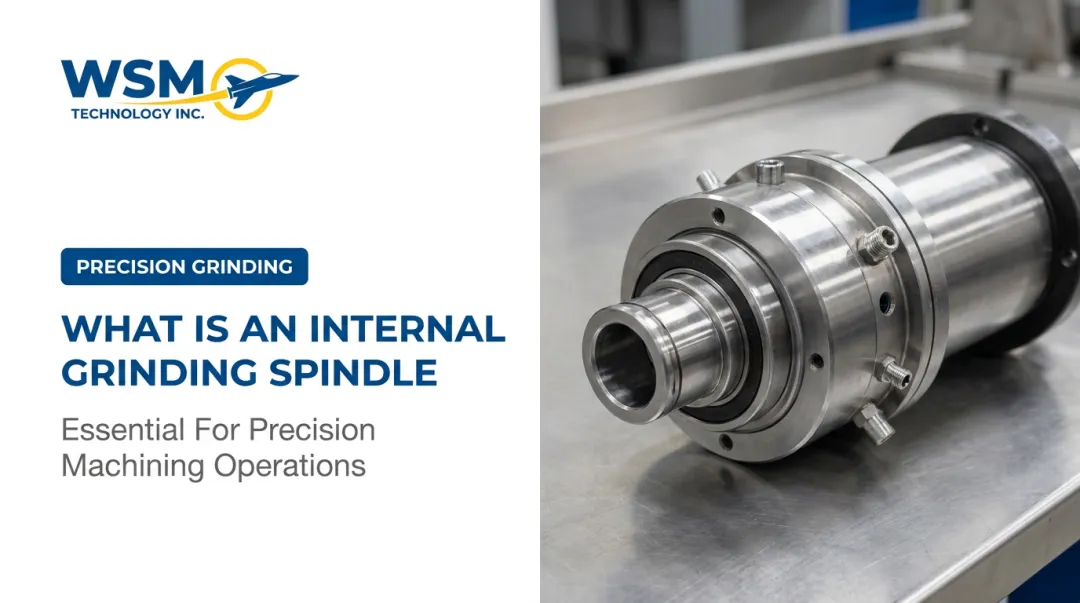
ID grinding, also called internal or bore grinding, removes material from the inside surface of a part to finish an internal diameter. The workpiece rotates while a smaller grinding wheel works inside it.
Fixturing typically happens one of three ways:
- Collet
- Chuck
- Magnetic drive shoe
Here's the catch: the grinding wheel must be smaller than the bore being finished. That single fact drives most of the difficulty in ID grinding. A smaller wheel means less rigidity, more deflection risk, and heat that concentrates in a tighter space instead of dissipating.
Common ID grinding applications include:
- Bushings
- Bearing races
- Hydraulic cylinders
- Gear bores
- Hydraulic lash adjusters
Reaching these internal geometries with consistent accuracy is genuinely harder than OD work, especially in bearing races, aerospace bores, and mold cavities where tolerances leave little margin for error.
Modern CNC ID grinders address this with advanced spindle designs and targeted coolant delivery that pulls heat away from the cut zone faster than older machines could manage.
STUDER's S121 universal internal cylindrical grinder brochure, for example, specifies a 0.0004 mm (0.000016 in) roundness accuracy during live-spindle grinding. That figure shows just how far spindle stability has advanced in this category.
Bearing manufacturing, aerospace, and mold & die shops all depend on this level of internal precision. A bore that's out-of-round by even a few microns can throw off an entire bearing assembly's fit and load distribution.

ID vs. OD Grinding: Key Differences at a Glance
Side by side, the two processes look related but behave quite differently in practice.
| Factor | OD Grinding | ID Grinding |
|---|---|---|
| Surface ground | External diameter | Internal bore |
| Wheel size | Larger, more rigid contact | Smaller than the bore, less rigid |
| Material removal rate | Higher, due to larger contact area | Lower, requires more precise control |
| Heat concentration | Dissipates more readily | Concentrates in confined space |
| Common parts | Shafts, rollers, pins, axles | Bushings, bearing races, gear bores |
OD grinding generally allows for faster material removal. The larger wheel contact area supports more aggressive stock removal without sacrificing finish quality. ID grinding, by contrast, needs a lighter touch. The confined space and heat buildup mean operators and CNC programs have to dial in feed rates more conservatively.
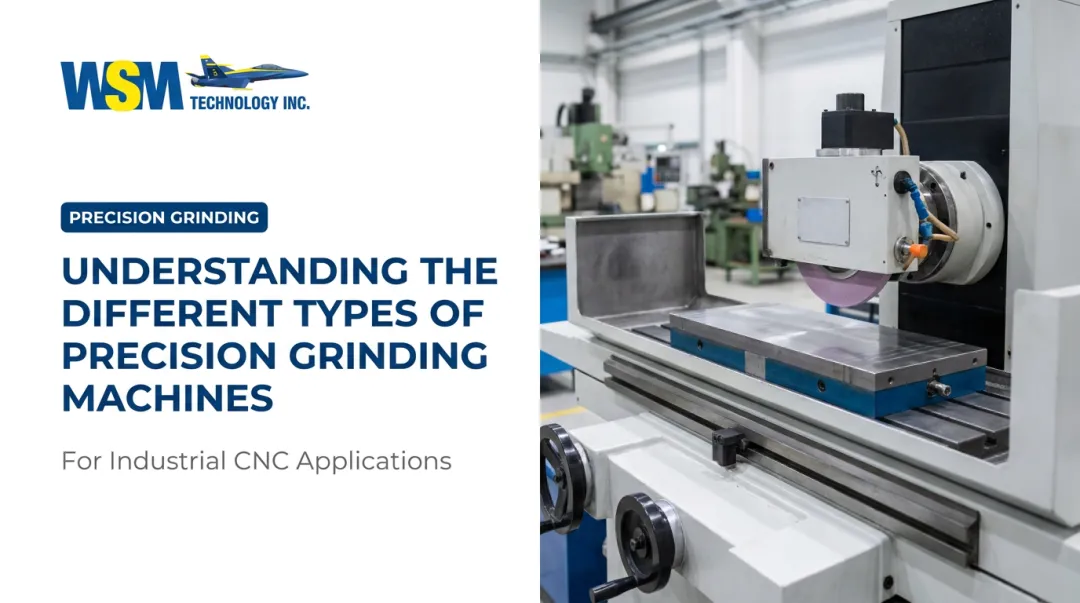
Both processes get confused with a third: surface grinding. Surface grinding flattens stationary or linearly-moving workpieces, such as mold plates or die blocks, rather than rotating cylindrical parts. If the part doesn't spin on a central axis during the operation, it's surface grinding, not ID or OD work. That distinction alone clears up most of the confusion buyers run into when comparing shop capabilities.
Universal & CNC Grinding Machines: Combining ID and OD in a Single Setup
Universal cylindrical grinders change the equation entirely. These machines carry multiple spindles — often two to four wheels — capable of performing internal, external, shoulder, taper, and face grinding within one clamping.
Why does that matter? Every time a part gets unclamped and repositioned, you introduce a chance for error. Reduced part handling means better repeatability and shorter cycle times, which is particularly valuable for high-mix, low-volume production common in mold & die and aerospace shops.
Cutting Tool Engineering's coverage of multiwheel grinders puts a real number on this. A manual wheel change can take 15 to 30 minutes, while indexing a turret to a different wheel takes seconds. The same article notes that one universal machine may replace four or five single-wheel grinders on a shop floor.
Automation is increasingly built into this category too, including:
- Robotic part loading
- In-process gauging and probing
- Barcode-based part tracking
These additions let CNC software hold tighter tolerance control, even when the operator running the machine is less experienced than a career grinder specialist.
Thermal stability matters just as much as automation here. Multi-spindle machines that run wheels simultaneously minimize temperature variation across the part, which matters when you're grinding a bearing's OD ring and ID race without ever unclamping it. Any temperature swing between operations can throw off concentricity between the two features.
WSM Technology represents Danobat's cylindrical, centerless, OD/ID, and vertical grinder lines alongside Overbeck's external/internal grinders, giving shops in Northern Ohio, Western Pennsylvania, and West Virginia a path to this consolidated setup approach.
Choosing the Right Grinding Solution for Your Application
Picking between a dedicated OD or ID grinder and a universal machine comes down to three factors.
- Production volume: Low-volume tool room work often suits universal grinders, since flexibility across job types matters more than raw speed. High-volume production usually favors dedicated OD or ID machines built for one repeated task.
- Material hardness: Harder materials demand more rigid setups and slower feed rates, which can push a shop toward a dedicated machine optimized for that hardness range.
- Required tolerance or surface finish: Tighter callouts need machines with proven roundness and rigidity specs.

On tolerance specifically: there's no single universal number that applies across every OD or ID job. Achievable tolerance depends on machine rigidity, wheel dressing quality, and process control. ISO 286 governs size limits for holes and shafts based on the specified tolerance class and nominal diameter, but it doesn't assign a fixed tolerance grade to grinding itself.
What you can trust are dated, machine-specific benchmarks. STUDER's S30 conventional universal cylindrical grinder, for instance, publishes a standard roundness accuracy of 0.0003 mm (0.000012 in) during live-spindle OD grinding, with tighter options available.
Ask any equipment supplier for the capability figure tied to the exact characteristic on your print. Roundness, diameter, and concentricity are separate specs, so a quoted number for one shouldn't be mistaken for another.
Many mold & die, aerospace, and precision mechanics shops need tightly toleranced ground parts before or after EDM, milling, or CNC turning work. Getting that sequence right matters as much as the grinding machine itself.
WSM Technology, based in Rootstown, Ohio, serves shops across Northern Ohio, Western Pennsylvania, and West Virginia with a demonstration center and application engineering support built to help shops evaluate grinding equipment alongside the rest of their production workflow, rather than in isolation.
Frequently Asked Questions
What is OD and ID grinding?
OD grinding shapes a rotating part's outer diameter, while ID grinding finishes its internal bore. Both are performed on rotating cylindrical workpieces to achieve precise dimensions and surface finish.
What is an OD grinder?
An OD grinder is a machine that rotates a cylindrical workpiece between centers or in a chuck while a grinding wheel removes material from its outer surface. The result is a precise diameter and roundness.
What is the tolerance of OD grinding?
Achievable tolerance depends on machine rigidity, wheel dressing, and part material rather than a fixed industry number. Modern CNC cylindrical grinders, such as those from Danobat, can hold roundness accuracy within a few ten-thousandths of a millimeter under optimal setup conditions.
What is the difference between ID/OD grinding and surface grinding?
ID/OD grinding works on rotating cylindrical parts, finishing internal or external diameters. Surface grinding flattens stationary or linearly-moving workpieces, such as mold plates, rather than rotating round parts.
What industries use ID and OD grinding?
Aerospace, automotive, bearing manufacturing, and mold & die industries all rely on ID/OD grinding for critical, tightly toleranced components like shafts, bearing races, and gear bores.
Can ID and OD grinding be done in the same machine setup?
Yes. Universal and CNC cylindrical grinders with multiple spindles can perform both ID and OD operations in a single clamping, which improves precision and cuts cycle time compared to using separate standalone machines.