
Tool selection has become a bigger deal than ever for shops running mold and die work, aerospace components, or tight-tolerance precision mechanics. Get it wrong, and you're looking at chatter marks, blown tolerances, or a snapped tool mid-cycle. Get it right, and you protect your finish, your cycle time, and your margin per part.
This guide walks through the major categories of CNC cutting tools, what each one is actually built for, and how to match tool choice to the job in front of you.
Key Takeaways
- Cutting tools are the bits and mills in a CNC spindle that shape raw stock into finished parts
- No single tool does it all — end mills, drills, and face mills each solve different problems
- Tool material and coating determine cutting speed, heat tolerance, and edge life
- The right tool depends on material, geometry, finish requirements, and production volume
What Are Cutting Tools and Why Do They Matter in CNC Machining?
Cutting tools are the rotating or fixed-edge bits mounted in a CNC machine's spindle or turret. They follow a programmed toolpath and physically remove material. Nothing happens without them. Across milling, drilling, and turning operations, these tools shape metal, plastic, and composite stock into the geometry your print calls for.
This isn't an academic distinction. The tool bolted into the spindle shows up directly in the part sitting on your inspection table. Choose a tool with the wrong flute count, mismatched coating, or an incorrect tip geometry, and the part reflects it immediately.
Why Tool Selection Impacts Outcomes
Tool choice drives four outcomes that matter to every shop: surface finish, dimensional accuracy, cycle time, and tool wear. Pick the wrong end mill for a mold cavity finish pass, and you'll fight chatter. Push a general-purpose drill through hardened tool steel, and premature breakage follows.
The financial stakes are easy to underestimate. A Modern Machine Shop cost model found cutting tools represent just 3% of total part cost — but capability matters more than price. In their model:
- Extending tool life by 50% reduced total part cost by only 1%
- Cutting tool price by 30% barely moved the needle
- Enabling 20% faster cutting speeds cut total cost by 15%
That's the real lesson: shopping for tools on unit price alone misses where the actual savings live.
Types of Cutting Tools Used in CNC Machining
CNC cutting tools aren't interchangeable. Geometry, flute count, and tip shape are engineered around specific tasks and materials, so knowing which category fits your operation saves time and scrapped stock.
End Mills
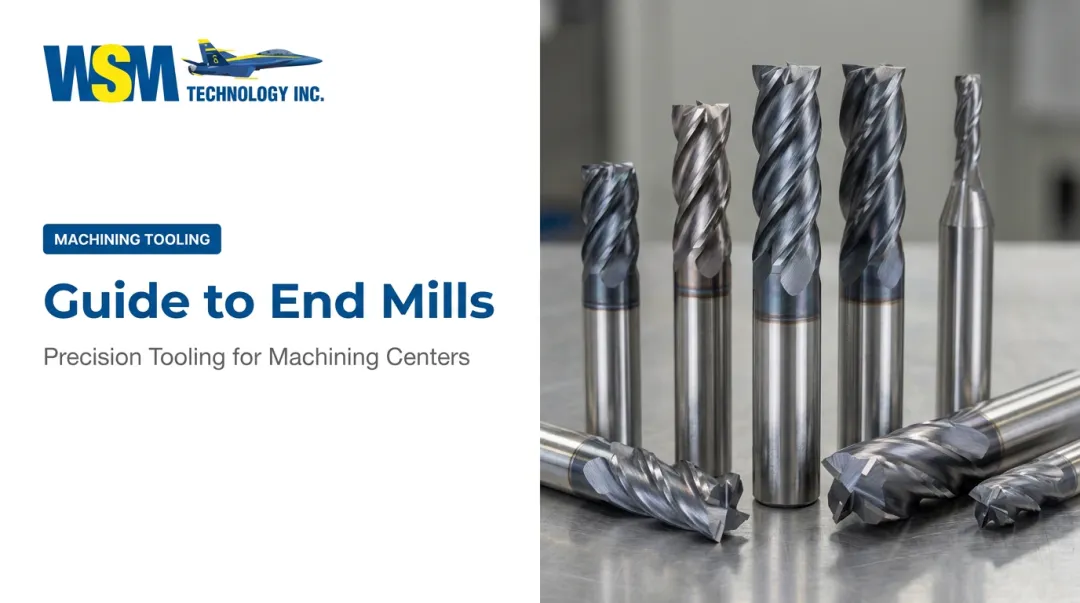
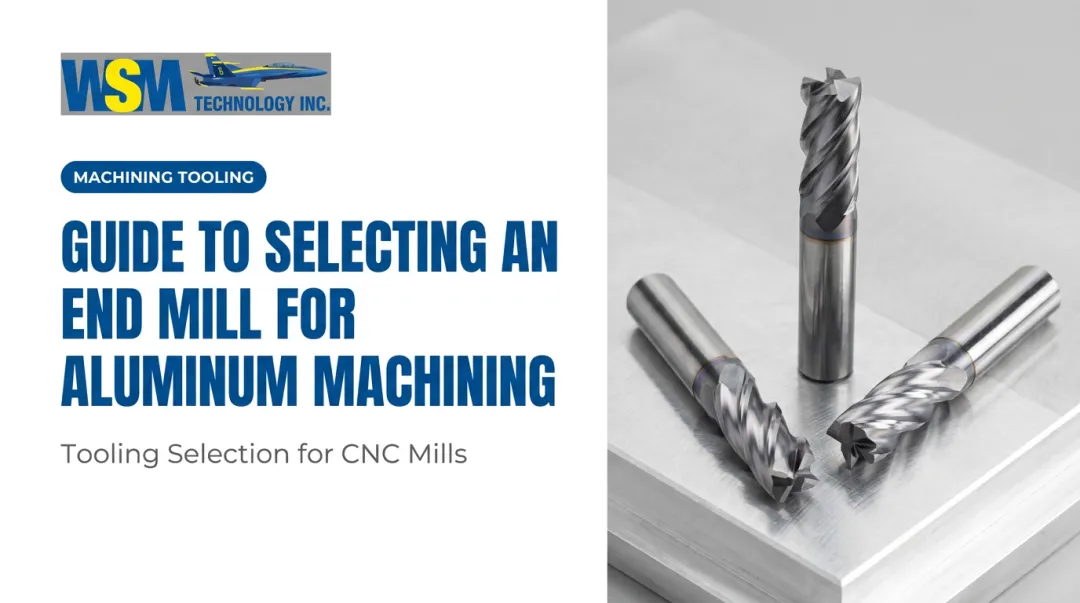
End mills are rotary cutters with edges on both the end face and the sides, making them the workhorse of CNC milling. They handle slotting, profiling, and pocketing, and come in several flavors:
- Flat end mills — square tips for square-bottom slots and pockets
- Bull nose end mills — rounded corners that add strength and produce fillets
- Roughing end mills — serrated edges built for fast bulk removal
Flute count is the key trade-off here. According to Harvey Performance Company, fewer flutes (2-3) leave larger chip valleys for faster evacuation during roughing, while more flutes improve surface finish but reduce chip space. A general-purpose end mill often needs swapping out for a dedicated finishing tool once you're chasing a tight surface spec.
Drill Bits
Drills are conical-tipped tools with helical flutes, purpose-built for one job: making round holes. Twist drills are the most common variety, but center drills and ejector drills (used for deep-hole work) fill specific niches.
Compared to plunging with an end mill, a drill is faster and more accurate for hole-making. It's also the standard first step before tapping or reaming a hole to final size. What a drill can't do is shape or contour a part. If your hole tolerance is tight, plan on a reamer as a follow-up operation.
Face Mills
Face mills are large-diameter cutters with replaceable inserts, designed to flatten and level a workpiece surface fast. They're typically the first operation run on raw stock, offering a much higher material removal rate across wide flat areas than an end mill could manage.
Where face mills fall short is intricate detail work, vertical walls, or small parts, where a fly cutter is often the more economical choice.
Ball Nose End Mills
The hemispherical tip on a ball nose end mill enables smooth 3D contouring and corner radiusing on perpendicular faces. That makes them the go-to for 3D and 5-axis contour milling and mold cavity work, directly relevant if you're running mold, die, or micro-molding jobs.
The trade-off: ball nose tools are slower on flat surfaces than a standard end mill, since achieving a smooth finish requires overlapping passes.
Thread Mills and Taps
Taps cut or form internal threads directly in a single pass, while thread mills use helical interpolation to cut both internal and external threads with one tool.
| Tool | Best suited for | Trade-off |
|---|---|---|
| Tap | High-volume, standard-size holes | Faster per hole, but limited to one thread size |
| Thread mill | Hardened materials, non-standard geometries | Handles multiple sizes with one tool, slower per hole |
If you're running repetitive standard threads, taps win on speed. For hardened or oddly shaped features, a thread mill's flexibility pays off.
Specialty and Finishing Tools
A handful of niche tools round out most tool cribs:
- Reamers — precision hole sizing after drilling
- Gear cutters — spur, helical, and bevel gear teeth
- Slitting saws — thin, deep slots and grooves
- Chamfer/countersink mills — deburring and screw seating
- Fly cutters — economical flat finishing for smaller parts
These tools address geometries the core categories above don't cover efficiently, and most shops keep a few on hand for exactly that reason.

Cutting Tool Materials and Coatings
A cutting tool has to be harder than whatever it's cutting. That's the whole game. Three materials dominate CNC tooling:
- Carbon steel: economical, but limited to low-speed applications
- High-speed steel (HSS): tougher, better heat resistance, less brittle than carbide
- Carbide: the hardest of the three, built for high-speed, high-finish work
Ceramic tooling shows up occasionally for finishing hard materials, trading some toughness for exceptional heat resistance at high cutting speeds.
Heat tolerance is where the real separation happens. Harvey Performance data puts HSS at a cutting-temperature ceiling around 1,100°F, while carbide holds up above 2,100°F. Carbide is more brittle under vibration, though, so rigidity matters.
Coatings Stretch Tool Life Further
Coatings like TiN and AlTiN add another layer of performance. A Canadian Metalworking industry guide reports:
- TiN coatings: 3-4x longer tool life versus uncoated tools, suited to steel, brass, cast iron, and aluminum under liquid cooling
- AlTiN coatings: up to 14x longer life, better suited to dry machining and difficult alloys like titanium, Inconel, and stainless

None of this matters, though, if the tool is sitting in a machine that can't hold rigidity or accuracy at the speeds the tool is rated for. Pairing the right tool grade with a platform built to support it, whether that's a Mitsubishi, OPS Ingersoll, or Roku-Roku machine, is what actually lets a shop realize the tool's full performance and lifespan.
How to Choose the Right Cutting Tool for the Job
The "right" tool depends on the part in front of you, not what's already sitting in the tool crib. Four factors drive that decision:
- Workpiece material and hardness relative to the tool material: a carbide tool wasted on soft aluminum is overkill, while HSS on hardened tool steel wears out fast
- Part feature geometry, such as fillet radius, hole depth, and wall thickness, dictates the minimum tool size you can use
- Required surface finish and tolerance call for different tools: a rough pocketing pass and a mold cavity finish pass rarely use the same setup
- Production volume and cost per part — high volume often justifies a roughing/finishing tool combination; low volume may not

Common mistakes worth flagging:
- Over-speccing a premium carbide tool when a standard grade would finish the job just as well
- Ignoring flute-count trade-offs and grabbing whatever's closest on the rack
- Picking a tool because the shop is familiar with it, not because it fits the part
There's a faster way to settle these questions than guessing. WSM Technology's Demonstration Center in Rootstown, Ohio lets shops run actual test cuts and time studies before committing to full production. You're validating a tool-and-machine combination with real data instead of assumptions.
Conclusion
Cutting tools determine CNC precision as much as the machine itself. Every category, from end mills to thread mills to specialty cutters, is engineered for a specific job rather than universal use. Matching tool type to material, part geometry, and machine capability is what drives better finish, longer tool life, and lower cost per part.
If you're weighing tooling and machine setups across Northern Ohio, Western Pennsylvania, or West Virginia, WSM Technology's team is available to talk through the specifics of your application.
Frequently Asked Questions
What tools are used in CNC machining?
CNC machining relies on end mills, drills, face mills, thread mills, reamers, and specialty cutters like gear cutters and slitting saws. The right combination depends entirely on the part geometry and material being machined.
What can you cut with a CNC machine?
CNC machines cut metals, plastics, and composites, producing everything from simple drilled holes to complex 3D contoured shapes. The material and geometry determine which cutting tools get used.
What is the most commonly used cutting tool in CNC machining?
The end mill is the most versatile CNC cutting tool, handling slotting, profiling, and pocketing across metal, plastic, and composite materials. It's often the first tool loaded for general-purpose milling work.
What material are CNC cutting tools made from?
Cutting tools are typically made from carbon steel, high-speed steel, or carbide. Carbide dominates high-speed, high-precision work thanks to its superior hardness and heat resistance.
How do I choose the right cutting tool for my CNC project?
Base your choice on workpiece material and hardness, part feature geometry, required tolerance and finish, and your production volume. These four factors narrow down the right tool faster than shop habit alone.
What's the difference between an end mill and a drill bit?
End mills cut sideways and downward, making them suited for shaping, slotting, and contouring. Drill bits are built specifically to plunge straight down and create round holes, nothing else.