
Introduction
A tolerance error of a few microns in a hip implant or catheter fitting is a patient safety event. In medical device manufacturing, the gap between a device that performs as designed and one that fails in the field is often measured in ten-thousandths of an inch.
That reality makes high precision tools non-optional. A 2024 peer-reviewed analysis of U.S. Class I medical device recalls found that the number of recalls rose from 33 in 2020 to 61 in 2023 — with manufacturing defects among the documented causes. The stakes extend well beyond the OR: McKinsey has estimated the medical device industry's direct cost of quality at $26 billion to $36 billion annually.
This guide covers what medical device manufacturers need to know about precision machining equipment, including:
- Main equipment categories used in device production
- Tolerances and standards that govern them
- Materials that create machining challenges
- What manufacturers in Northern Ohio, Western Pennsylvania, and West Virginia should consider when selecting equipment
Key Takeaways
- Medical device manufacturing requires tolerances from ±0.001" for general components down to ±0.0001" or tighter for critical implants
- CNC milling (including 5-axis), EDM, Swiss-style turning, and high-speed machining are the core process categories
- Medical-grade titanium (Ti-6Al-4V) and 316L stainless steel are the most demanding metals to machine; PEEK and UHMWPE present different but equally serious challenges
- ISO 13485 and FDA QMSR require documented process capability, traceability, and calibrated inspection — precision equipment must be built to support compliance
- The true cost of inadequate equipment covers scrap, rework, recalls, and regulatory risk well beyond the purchase price
What Are High Precision Tools in Medical Device Manufacturing?
Precision vs. Accuracy — and Why Both Matter
"High precision tools" in this context means cutting, forming, and machining equipment — and the machines driving them — capable of working to extremely tight dimensional tolerances. General medical components often require ±0.001"; critical implants, surgical instruments, and miniaturized devices can demand ±0.0001" or tighter.
Manufacturers often conflate the two terms, but the distinction matters:
- Precision refers to repeatability — every part in a production run matching the last
- Accuracy refers to how closely the finished part matches the design specification
Medical device manufacturing demands both simultaneously. A machine that consistently produces the wrong dimension is precise but not accurate. A machine that hits the target once but drifts across a run is accurate on average but not precise. Neither is acceptable.
How Medical-Grade Machines Differ from Standard Shop Equipment
That gap between "good enough" and "consistently within ±0.0001"" comes down to the machine itself. Medical-grade precision machining equipment differs from conventional CNC equipment in several key areas:
- Machine construction: Heavily ribbed castings, linear motor drives, and thermally stable bases reduce vibration and dimensional drift
- CNC control systems: Advanced controls manage thermal compensation, tool wear, and multi-axis coordination beyond what general-purpose machines offer
- Spindle technology: Higher runout specifications, higher speeds, and tighter bearing tolerances enable finer surface finishes
- Cutting tool materials: Carbide and CBN tooling maintains edge geometry longer in hard, work-hardening materials like titanium and surgical steel

Standard shop equipment produces good parts — but holding ±0.0001" reliably across a full production run requires a machine built specifically for that task.
Why Precision Is Non-Negotiable in Medical Device Manufacturing
The Patient Safety and Regulatory Reality
Surgical implants, catheter components, and diagnostic instrument housings must fit and function exactly as designed. A bone screw with an out-of-tolerance thread form may not achieve the required purchase in cortical bone. The FDA's 2024 recall list makes the stakes concrete: FHC microTargeting Insertion Tube Sets were recalled specifically for manufacturing size errors — a dimensional failure, not a design one.
The regulatory framework reflects this reality. FDA's Quality Management System Regulation (QMSR) — finalized in February 2024 and effective February 2026 — now incorporates ISO 13485:2016 by reference. Together, these standards require:
- Documented process controls and demonstrated manufacturing capability
- Material traceability from raw stock through finished device
- Calibrated inspection records tied to each production run
- Risk-based quality management with evidence of control
Precision equipment with documented repeatability isn't just a production advantage — it's a compliance prerequisite.
Market Demand Is Accelerating Investment
Meeting those compliance requirements also puts manufacturers in front of a rapidly expanding market. The global minimally invasive surgical instruments market was valued at $31.65 billion in 2023, growing at a 10.3% CAGR through 2030. Robotic surgery systems, smaller implant geometries, and aging population demographics are all pulling in the same direction: more devices, tighter tolerances, and less room for error. Shops that invest in precision equipment now are building capacity for demand that's already accelerating.
The Essential High Precision Tools for Medical Device Manufacturing
Medical device manufacturers typically combine several machine types to achieve the geometry, surface finish, and tolerances required. The right combination depends on component complexity, material, and production volume.
CNC Milling — Including 5-Axis Machining
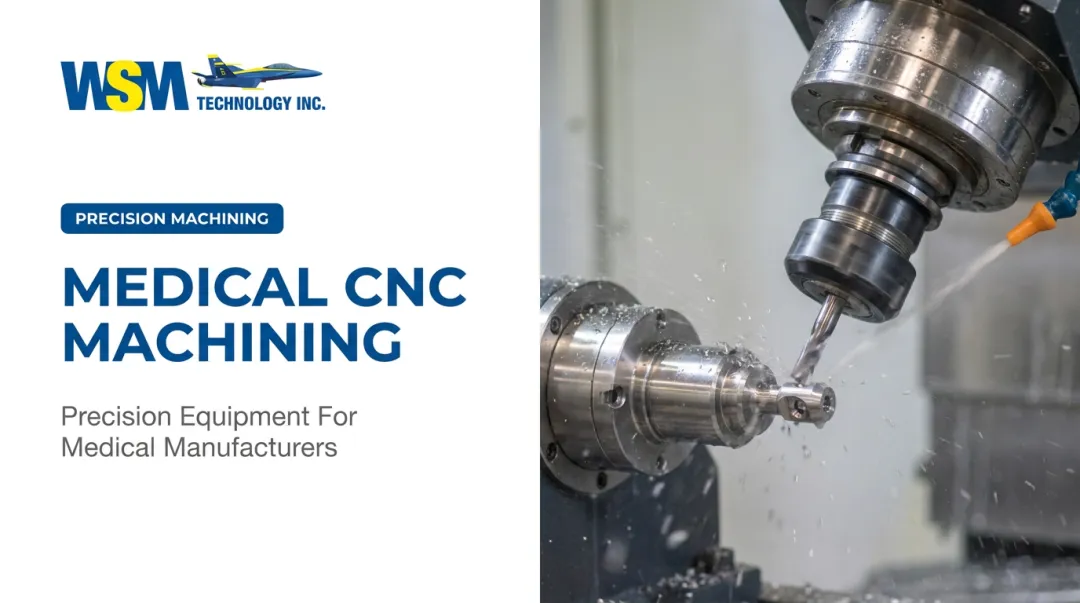
CNC milling is the cornerstone of medical precision machining. Multi-axis CNC mills use computer-controlled cutting tools to remove material and create complex 3D geometries. 5-axis configurations allow the cutting tool to approach the workpiece from any angle, enabling:
- Undercuts and complex contours in a single setup
- Freeform surfaces on implant components
- Reduced fixturing errors (fewer repositions = less cumulative tolerance error)
DMG MORI's 5-axis portfolio achieves spatial accuracy of less than 15 µm, with surface finishes below Ra 0.1 µm on high-speed spindle configurations. Common medical applications include surgical instrument handles, bone plates, orthopedic implant components, and diagnostic device housings.
Available through WSM Technology, the JINGDIAO high-speed 3- and 5-axis milling machines are built for this category of work — high-speed spindle performance and rigid construction for tight-tolerance medical component production.
EDM — Wire, Sinker, and Micro
EDM is irreplaceable for hard materials and features that cannot be milled conventionally.
The three EDM variants each address distinct medical manufacturing challenges:
| EDM Type | Key Capability | Medical Applications |
|---|---|---|
| Wire EDM | ±3 µm accuracy; Ra 0.08 µm (GF high-end) | Surgical blade profiles, titanium 2D profiles, injection mold tooling |
| Sinker EDM | Mirror finish Ra 0.1 µm; ±5 µm across cavities | Mold cavities for syringe components, implant housings |
| Micro EDM | Holes to 10 µm; Ra 0.05 µm; ±1 µm positioning | Pacemaker components, implantable sensors, insulin pump parts |

Wire EDM erodes material through spark discharge with no physical contact — no cutting forces means no deflection or stress in the workpiece, which matters for delicate medical geometries. Sodick and GF Machining Solutions are the benchmark manufacturers at this accuracy level.
Sinker EDM machines hardened cavities and 3D forms using a shaped electrode. It is the only practical process for mold cavities that produce syringe components and implant housings at production scale.
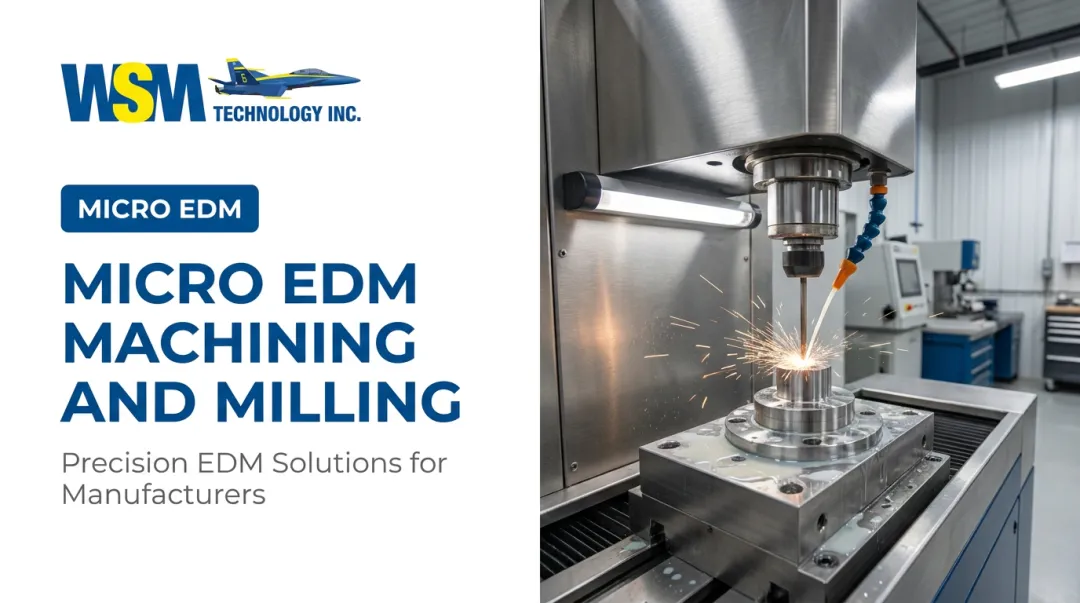
Modern Machine Shop documents micro-EDM drilling holes as small as 10 microns at ±1 micron positioning accuracy. Pacemaker components, implantable sensors, and micro-surgical tools all rely on this level of miniaturized precision. WSM Technology carries the Sarix Micro EDM line — Swiss-engineered equipment from a company specializing in 3D micro EDM since 1993.
For wire EDM, WSM also carries the Mitsubishi MV1200S, which combines Linear Shaft Motors in X and Y, Linear Glass Scales for positional accuracy, and submerged wire EDM technology for superior surface finish — with medical device manufacturing as a documented primary application.
CNC Turning and Swiss-Style Machining
CNC lathes rotate a workpiece against a cutting tool to produce cylindrical components with precise outer and inner diameters. Bone screws, catheter fittings, and shaft components are typical outputs. Swiss-style CNC lathes add a sliding headstock and guide bushing that supports the workpiece close to the cutting zone — the key to machining long, slender parts without deflection. Modern Machine Shop documents Swiss-type machines drilling 0.005" holes in stainless steel and threading to M1.4 for stents, dental implants, and bone screws.
Schaublin, represented by WSM Technology in this region, brings over 100 years of Swiss precision turning heritage and more than 250,000 lathes built around their proprietary spindle technology. That spindle lineage directly governs concentricity and surface finish on small-diameter medical components — where fractions of a micron determine whether a part passes validation.
High-Speed Milling and Multi-Axis Configurations
Higher spindle speeds reduce cutting forces and heat generation — both of which matter when machining thin-walled medical components. The Roku-Roku Android II, available through WSM Technology, achieves ±1 micron actual machining accuracy with a 60,000 RPM spindle, a full linear motor drive system on all axes, and a 16-sensor thermal compensation system with an Active Heat Isolation System. This level of thermal management is what separates a machine that's rated to ±1 micron from one that actually delivers it in a production environment.
The Cheto 7-axis milling and gun drilling machine rounds out WSM's medical manufacturing portfolio. Completing complex parts in fewer setups directly reduces cumulative tolerance stack-up — one of the more persistent accuracy challenges in multi-feature medical components.
Materials That Demand High Precision Tooling
Biocompatible Metals
Medical-grade titanium (Ti-6Al-4V) is the material of choice for load-bearing implants — and one of the most demanding metals to machine. Sandvik Coromant identifies poor heat conductivity, high strength, and work hardening as the primary drivers of machining difficulty. Heat that can't escape through the workpiece concentrates at the cutting edge, accelerating tool wear and risking surface damage.
Baseline requirements include:
- High-pressure coolant to manage heat at the cutting edge
- Appropriate carbide tooling matched to the alloy's hardness
- Controlled cutting speeds — roughly 60 m/min for roughing, 3–4× that for finishing
Surgical stainless steel (316L) presents similar challenges: work hardening increases tool wear, and the alloy's adhesion tendency creates built-up edge on cutting tools. Kennametal notes that work hardening directly compromises part quality if not managed through proper speeds, feeds, and tooling selection.
Biocompatible Polymers
PEEK and UHMW polyethylene appear in joint implant components, housings, and disposable devices. The primary machining challenge is heat, not hardness. PEEK melts around 341°C, and dull cutting edges or excessive friction can cause thermal expansion that throws dimensions off. Boedeker's machining guidelines identify heat generation from dull edges as a primary cause of dimensional drift and poor surface finish in plastic components. Strict control of cutting parameters and tooling condition is essential.
Surface Finish as a Clinical Requirement
Beyond dimensional tolerance, components that contact the human body require specific surface roughness values. A peer-reviewed dental implant study classifies implant surfaces by Sa value — distinctions that affect osseointegration, bacterial adhesion risk, and sterilization effectiveness:
- Smooth surfaces: Sa < 0.5 µm — minimizes bacterial adhesion, supports sterilization
- Moderately rough surfaces: Sa 1–2 µm — promotes osseointegration in bone-contact implants

Machining process parameters, not just machine capability, determine whether a component meets its surface specification. Achieving the target finish in a single operation eliminates secondary finishing steps — reducing cycle time and rework cost on parts where tolerances leave no margin for error.
Tolerances, Quality Standards, and Inspection
What Tolerances Are Actually Required
Tolerance requirements vary by device type and are always governed by the specific design drawing — but some practical benchmarks:
| Component Category | Typical Tolerance Range |
|---|---|
| General medical components | ±0.001" |
| Surgical instruments | ±0.001" to ±0.0005" |
| Critical implants (orthopedic, spinal) | ±0.0005" to ±0.0001" |
| Miniaturized devices (stents, pacemaker parts) | ±0.0001" or tighter |
FDA guidance for intravascular stents requires manufacturers to provide dimensional specifications and tolerances for unexpanded stents, measured at multiple points — the expectation is device-specific documentation, not generic industry benchmarks.
Regulatory and Quality Standards
The two governing standards for medical device manufacturing quality:
- ISO 13485:2016 — Quality Management System for Medical Devices, requiring documented process controls, risk management, and traceability
- FDA QMSR — The updated Quality System Regulation, effective February 2026, which now incorporates ISO 13485:2016 by reference while maintaining FDA-specific requirements
In practice, both standards demand full traceability from raw material to finished part, documented processes at every stage, and measurements taken with calibrated equipment — including the inspection tools covered below.
Inspection Equipment
Precision machining must be matched by equally capable inspection. Current metrology benchmarks:
- ZEISS O-INSPECT multisensor CMM: 3D MPE of 2.2 µm + L/250
- Keyence LS-9006M laser micrometer: measurement accuracy ±0.5 µm, repeatability ±0.03 µm
- Renishaw Equator-X shop-floor gauge: 2.1 µm + L/300
In-machine probing — such as the Renishaw OMP400 part probe included with the Roku-Roku Android II — provides dimensional feedback during machining, catching drift before it becomes scrap.
Process Controls That Preserve Precision
The right machine only performs when the environment around it cooperates:
- Temperature-controlled environments: Thermal expansion is the enemy of tight tolerances; even a few degrees of ambient variation creates dimensional drift
- Tool wear monitoring: A worn insert doesn't cut — it rubs, generating heat and oversizing features
- Workholding and fixturing: Vibration and deflection during cutting translate directly into dimensional error
- Coolant management: High-pressure coolant flushes chips and controls workpiece temperature, particularly critical in titanium
Choosing the Right High Precision Tools for Medical Device Manufacturing
Match Equipment to Application Requirements
Before specifying equipment, answer these questions:
- What is the most complex geometry I need to machine? Freeform implant surfaces → 5-axis milling. Complex cavities in hardened tooling → sinker EDM. Miniaturized features → micro EDM.
- What materials will I be running? Titanium and stainless steel demand specific tooling, speeds, and coolant strategies. PEEK requires heat management.
- What tolerances and surface finishes are required? ±0.001" is achievable on a well-maintained 3-axis mill. ±0.0001" in a production run requires thermal compensation, linear drives, and process controls.
- What is my production volume? One-off complex implants → machining center flexibility. High-volume slender parts → Swiss turning. Mixed small-batch medical work → multi-axis capability reduces setup time.

Validate Before Purchasing
Machine specifications on a datasheet and machine performance in your shop are not the same thing. Geometric accuracy — straightness, squareness, angular error — and spindle runout affect real-world part quality in ways that rated tolerance numbers don't fully capture. The only reliable way to validate a machine is to run representative parts on it before purchase.
WSM Technology's demonstration center in Rootstown, Ohio exists for exactly this purpose. Manufacturers in Northern Ohio, Western Pennsylvania, and West Virginia can request test cuts on their own materials and part geometries before committing to a purchase.
WSM's application engineering team — including founder Blaise Buholzer, whose career began as an application engineer on wire and sinker EDM at Charmilles — is on hand to optimize the process and document results.
Account for Total Cost, Not Just Purchase Price
The true cost of precision equipment is not the capital outlay: it's the cost of what happens without it:
- Scrap and rework from parts that miss tolerance
- Delayed shipments when first-article inspection fails
- Compliance failures when process documentation can't demonstrate capability
- Recalls when defects reach the field
McKinsey estimated nonroutine external quality failures in medical devices — recalls, warning letters, consent decrees — at $7.5 billion to $9.5 billion annually across the industry. Properly specified precision equipment, supported by installation, training, and application engineering, is a cost reduction and risk mitigation strategy, not a capital expenditure.
WSM Technology offers new and demo units across EDM, milling, and turning categories. Options range from budget-accessible platforms like the used Mitsubishi FX10 Wire EDM at $14,500 to premium systems like the Roku-Roku Android II for ultra-precision work. Every purchase includes installation, training, and ongoing local support.
Frequently Asked Questions
What are high precision tools?
High precision tools are cutting tools and the machines that drive them: CNC mills, EDM machines, CNC lathes, and grinding machines. These systems hold extremely tight tolerances — typically ±0.001" or finer — where dimensional accuracy and repeatability across a production run are critical, as in medical device manufacturing.
What tolerances are required for medical device manufacturing?
Tolerance requirements vary by device type. General medical components may require ±0.001", while critical implants, surgical instruments, and miniaturized devices can demand ±0.0001" or tighter. The design specification on the part drawing always governs the required tolerance — there is no universal number.
What is the difference between wire EDM and sinker EDM for medical components?
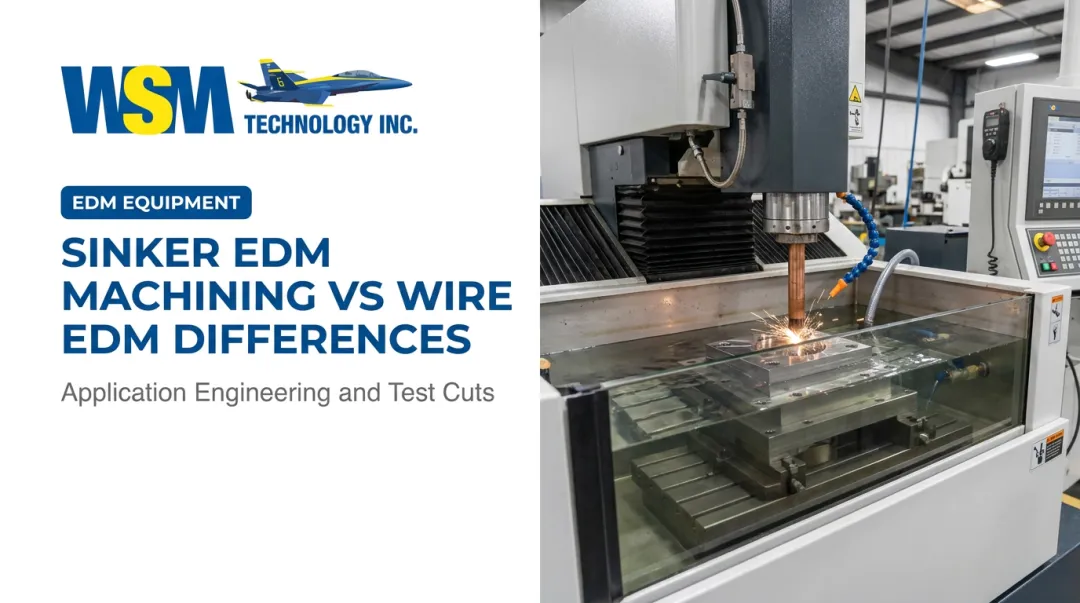
Wire EDM uses a moving electrically charged wire to cut 2D profiles and fine features in hardened materials without physical contact. Sinker (die-sink) EDM uses a shaped electrode to machine 3D cavities and complex forms. Wire EDM handles profiles and through-features; sinker EDM is the choice for mold cavities and complex pockets.
Which materials are most commonly used in precision medical device machining?
Medical-grade titanium (Ti-6Al-4V) and surgical stainless steel (316L) are the most common metals. Biocompatible polymers like PEEK and UHMW polyethylene cover non-metallic components such as joint implant inserts and device housings. Each material requires precision machining to meet the tolerances and surface finish specs required by medical standards.
How does 5-axis CNC milling benefit medical device production?
5-axis CNC milling machines complex geometries in a single setup by approaching the workpiece from multiple angles. This reduces fixturing errors and enables undercuts and freeform surfaces — such as orthopedic implant contours — that would otherwise require multiple repositions on a 3-axis machine, each adding potential tolerance error.
What quality certifications are relevant for precision medical device manufacturing?
ISO 13485 (Quality Management System for Medical Devices) and FDA QMSR (effective February 2026) are the primary standards. Machining processes should include documented process controls, material traceability, and calibrated inspection records to support compliance.