
This guide is written for precision machinists, mold and die makers, aerospace and automotive engineers, and tool shops evaluating EDM technology. Understanding spark erosion at an operational level — how the physics actually work, what variables you're controlling, and where the process breaks down — is what separates productive EDM operations from frustrating ones.
Key Takeaways
- Spark erosion and EDM are the same process — the terms are fully interchangeable
- Material removal is thermal, not mechanical — making it viable for hard, complex, and delicate workpieces
- The dielectric fluid controls spark behavior, flushes debris, and restores insulation between pulses — far more than a simple coolant
- Pulse on-time, off-time, current, and electrode material all determine surface finish and removal rate
- Spark erosion excels with hardened steels and complex cavities — it is not suited for non-conductive materials
What Is Spark Erosion?
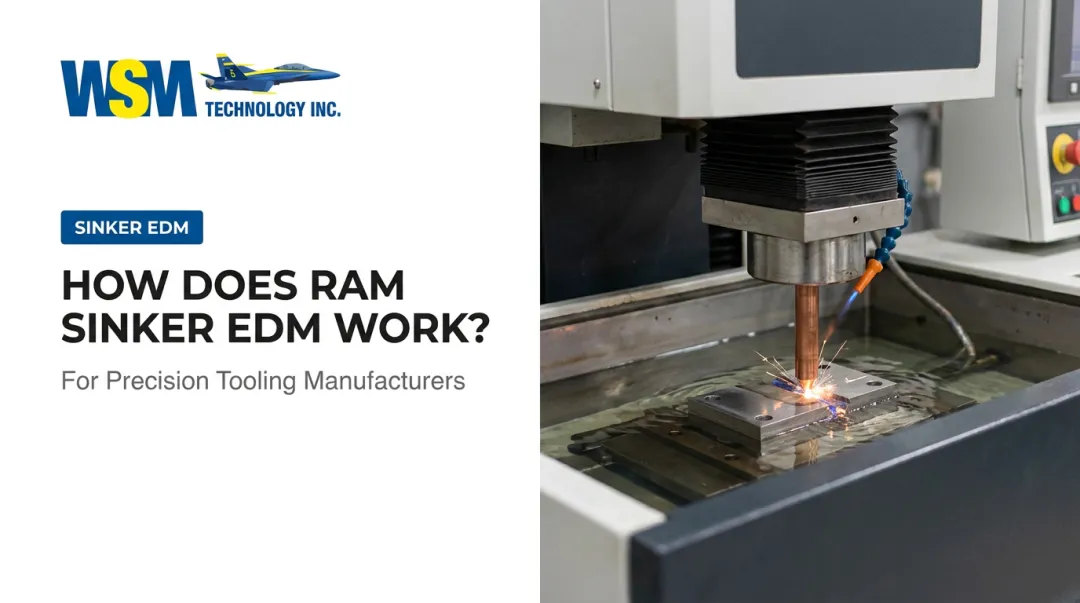
Spark erosion — also called sinker EDM, die-sink EDM, ram EDM, or electrical discharge machining — is a subtractive manufacturing process that erodes conductive metal through a rapid series of electrical discharges between a shaped electrode and the workpiece, both immersed in a dielectric fluid.
The result is precise material removal that replicates the exact electrode geometry into the workpiece — enabling complex cavities, fine details, and tight tolerances in pre-hardened materials that conventional cutting tools cannot reach.
Spark Erosion vs. Wire EDM
These two processes are often confused because both fall under the EDM umbrella:
- Spark erosion (sinker EDM) — uses a custom-shaped solid electrode "sunk" into the material to create cavities and recessed internal features
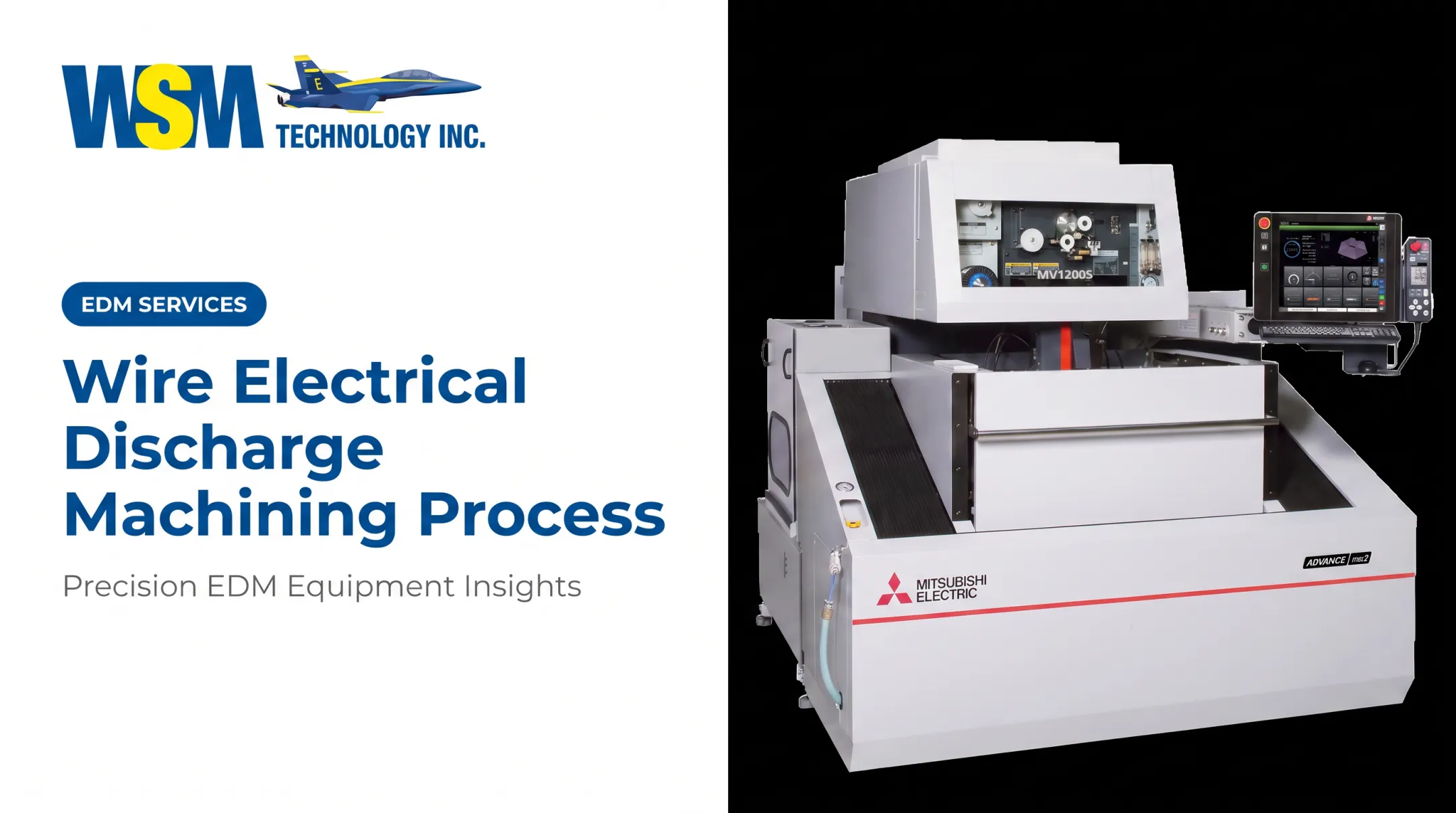
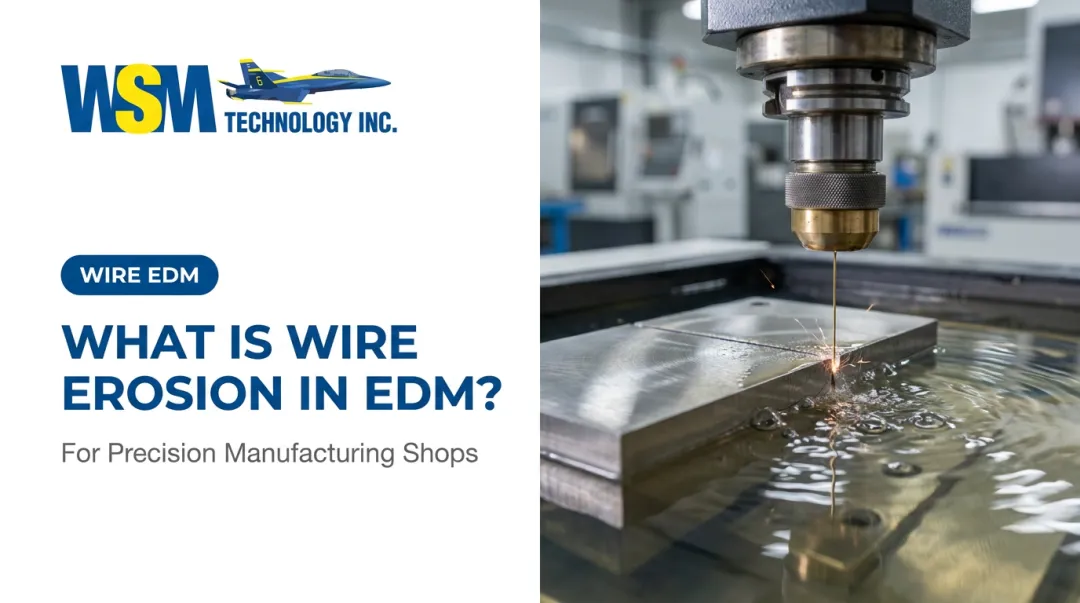
- Wire EDM — uses a continuously fed wire electrode to make precise through-cuts and external profiles
Both are forms of EDM, but they're selected for fundamentally different part geometries — sinker EDM for internal cavities, wire EDM for external profiles and through-cuts.
A Note on Terminology
The terms spark erosion, die-sink EDM, sinker EDM, ram EDM, and spark machining all refer to the same fundamental process. As confirmed by the University of Wisconsin-Milwaukee, EDM is also known as spark machining, spark eroding, and die sinking.
European and UK-oriented manufacturers — including Plansee and Bedra — commonly use "spark erosion" or "electro-erosion" alongside EDM. This interchangeable usage causes real confusion when engineers are evaluating machines or service providers. Whatever the label, the underlying physics are identical.
How Spark Erosion Works
The conceptual flow is straightforward: a shaped electrode (typically graphite or copper) is positioned close to — but not touching — the conductive workpiece. Both are submerged in dielectric fluid. Voltage is applied, the fluid breaks down at the narrowest gap point, a controlled spark fires, erodes a microscopic crater, the fluid flushes the debris, and the cycle repeats.
According to Graphel's sinker EDM terminology reference, this cycle can repeat up to 250,000 times per second, with only one spark occurring at a time.
The result: the electrode's geometry is progressively replicated into the workpiece.
The Role of the Dielectric Fluid
The dielectric fluid does four jobs simultaneously:
- Electrical insulation — maintains the gap until voltage causes controlled breakdown
- Spark channel stabilization — controls where and how the plasma channel forms
- Cooling — prevents thermal runaway at the machining site
- Flushing — removes eroded particles so they don't cause re-strikes or short circuits
Sinker EDM machines use hydrocarbon oil as the dielectric, not water. Inadequate flushing is one of the most common causes of inconsistent surface finish, increased electrode wear, and arc instability. The debris has to get out of the gap cleanly between pulses.
Pulse Parameters: The Primary Control Levers
| Parameter | Longer/Higher | Shorter/Lower |
|---|---|---|
| Pulse on-time | Faster removal, rougher finish | Slower removal, finer finish |
| Pulse off-time | Better flushing, lower removal rate | Risk of debris re-strike |
| Current | Higher MRR, more wear | Lower MRR, better finish |

A 2020 ScienceDirect study on EDM of AISI L2 tool steel found discharge current was the largest single contributor to material removal rate, accounting for 82.38% of MRR variation. Pulse on-time contributed 31.32% to surface roughness. Those two parameters, current and pulse on-time, are where cycle time and surface finish tradeoffs get resolved in practice.
The Recast Layer
The process is entirely thermal. Sparks generate plasma channel temperatures measured at 8,000 to 10,000 K in peer-reviewed spectroscopic research. That localized heat melts and vaporizes material — but not all of it escapes.
Some melted material resolidifies on the machined surface, forming what's called a recast (or white) layer.
Recast layer depth varies by material and parameters — research on Inconel 718 reported layers of approximately 6.2 ± 2.1 µm under tested conditions. In aerospace and medical applications, this layer must be measured, and either removed or accounted for in design tolerances. Post-process options include abrasive finishing, controlled etching, or adjusting finish pass parameters to minimize layer depth before final inspection.
Electrode Wear and Roughing vs. Finishing
The electrode also loses material during the process — this is tool wear. It's why electrode material selection and polarity settings matter. Most sinker EDM operations run in stages:
- Roughing passes — higher energy, faster removal, coarser finish
- Finishing passes — reduced energy settings, tighter surface finish
- Inspection — workpiece cleaned, measured, verified against spec

Why and Where Spark Erosion Is Used
The Core Advantages
Spark erosion is adopted in precision manufacturing for three reasons that conventional machining cannot replicate:
- Hardness independence — hardened steel, Inconel, titanium, and carbide are processed with the same fundamental approach as softer metals; the process machines by thermal erosion, not cutting force
- Zero cutting forces — no mechanical contact means no deflection, distortion, or stress in thin walls or fine features
- Geometric access — blind cavities, deep ribs, and complex internal geometries that milling cannot reach are routine for sinker EDM
Primary Application Environments
- Mold and die making — complex cavities, ribs, and textured surfaces in hardened tool steel; this is where sinker EDM is most deeply embedded in production workflows
- Aerospace — turbine blade cooling holes, engine components in superalloys
- Automotive — injection mold inserts, gear and transmission tooling
- Medical device manufacturing — surgical instruments, implant tooling requiring tight tolerances
- Electronics — micro-feature tooling, connector molds

Industry documentation shows real outcomes: well-optimized EDM programs in high-precision mold shops have cut machining time by up to 40% — a figure that reflects how much process tuning matters alongside the equipment itself.
Lights-Out Capability
In most tool rooms and precision manufacturing facilities, spark erosion runs as a planned primary machining operation — often unattended overnight. Once parameters are dialed in, the process is stable enough for lights-out production, which is a real throughput advantage for shops cutting hardened materials.
Key Factors That Affect the Spark Erosion Process
Electrode Material: Graphite vs. Copper
The choice between graphite and copper electrodes shapes your results before you fire a single spark.
Graphite:
- Standard electrode material in North American sinker EDM shops
- Higher machinability — faster to produce complex electrode geometries
- At high amperage roughing, POCO/Entegris data shows graphite can maintain end wear below 1% while copper erodes faster
- Fine-grain grades can achieve near-mirror finishes with additives
Copper:
- Preferred for very fine finishes and high-precision detail work
- Better thermal conductivity, which affects spark behavior in fine-detail work
- Common in European and Asian shops for precision cavity work
WSM Technology's team — including founder Blaise Buholzer, who began his career as an Application Engineer on die-sinker EDM machines at Charmilles — can provide electrode selection guidance specific to your material and geometry.
Pulse Parameters
Each parameter must be calibrated for your specific material and electrode combination. Modern CNC EDM generators allow fine-grained control over all four variables:
- Current — higher amperage increases material removal rate but degrades surface finish
- Voltage — determines discharge gap size and spark stability
- On-time — longer pulses remove more material per spark but increase recast layer depth
- Off-time — insufficient off-time causes arc instability and electrode wear
Getting these parameters right is iterative work, not a one-time setup.
Dielectric Fluid Management
Sinker EDM uses hydrocarbon-based EDM oil, which provides better erosion control than water-based systems. Three flushing methods are common:
- Pressure flushing — oil pumped through the electrode or workpiece
- Suction flushing — debris drawn away from the gap
- Immersion — the workpiece sits submerged without directed flow

Poor dielectric management (contaminated fluid, inconsistent pressure, inadequate filtration) is among the most frequent causes of arc instability, surface finish variation, and premature electrode wear.
Workpiece Material Properties
All conductive materials can be spark-eroded, but thermal properties determine speed. Materials with higher melting points — carbide, Inconel — require more energy per spark and erode more slowly.
Thermal conductivity affects heat dissipation and recast layer depth. Both characteristics must factor into your parameter setup and finishing specifications.
Common Misconceptions and Limitations
"No contact means no thermal effect"
This is the most persistent misconception in sinker EDM. Because the electrode never touches the workpiece, operators assume there's no thermal impact on the part. There is. Plasma temperatures at the spark site reach thousands of degrees Kelvin, creating the recast layer described earlier and potentially introducing residual stresses. In aerospace and medical applications, this layer must be addressed — not assumed away.
"Spark erosion is too slow to be competitive"
Spark erosion's material removal rate is lower than CNC milling — accurate in isolation, but not the right comparison. When the workpiece is already hardened, milling requires multiple setups, specialized tooling that wears quickly, and often produces distortion in fine features.
Spark erosion eliminates tool breakage, runs unmanned, and often reduces total workflow time, particularly for complex cavities in hardened steel. The comparison has to account for the full production cycle, not just in-machine cutting time.
When spark erosion is not the right choice
- Through-cuts and external profiles — wire EDM will typically be faster and more cost-effective
- Soft materials at high volumes — conventional CNC milling avoids unnecessary complexity and cost
- Non-conductive materials — ceramics, plastics, and most composites cannot be spark-eroded with standard setups; the process requires electrical conductivity
- Shops without skilled EDM operators — the process benefits are undermined without operator competence and proper machine support
Choosing between sinker EDM, wire EDM, and micro EDM is as important as choosing EDM at all. WSM Technology's application engineers consult with manufacturers to make that call based on actual part geometry and production requirements. Test cuts and time studies are available at their Rootstown, Ohio demonstration center before you commit to a process or machine purchase.
Frequently Asked Questions
Is EDM the same as spark erosion?
Yes. EDM (Electrical Discharge Machining) and spark erosion refer to the same fundamental process. "Spark erosion" is the common term used in the UK and Europe, while "EDM" is more widely used in North America. Both describe material removal through controlled electrical discharges between an electrode and conductive workpiece.
What is the process of EDM spark erosion?
Voltage is applied between a shaped electrode and a conductive workpiece submerged in dielectric fluid. When the gap narrows enough, the fluid breaks down, a spark fires, erodes a microscopic crater, the fluid flushes debris, and the cycle repeats up to 250,000 times per second until the electrode's geometry is replicated in the workpiece.
What is the difference between wire EDM and spark erosion?
Spark erosion (sinker EDM) uses a custom-shaped solid electrode to create cavities and recessed internal features. Wire EDM uses a continuously fed wire to make precise through-cuts and external profiles. Both are forms of EDM but are suited to different part geometries — sinker for blind cavities, wire for through-cuts and 2D profiles.
How much does an EDM machine cost?
Older used sinker EDM units can be found from under $20,000, while high-precision CNC sinker EDM machines from manufacturers like Mitsubishi range considerably higher based on work envelope and generator capability. Contact WSM Technology at sales@wsmtechnology.com or call (330) 962-8308 for application-specific pricing.
Can spark erosion machine any metal?
Any electrically conductive metal can be spark-eroded — hardened steel, titanium, Inconel, carbide, and copper alloys included. Non-conductive materials such as plastics, standard ceramics, and most composites cannot be processed with conventional sinker EDM setups.
Does spark erosion damage the workpiece surface?
The process creates a thin recast (white) layer from resolidified material, with depth varying by material and parameters. For most tooling work, this layer is acceptable or removed during finishing passes. In aerospace or medical applications, the recast layer must be measured and addressed in the finishing specification.