
Introduction
A shop machinist loads a fresh end mill, dials in a program that's run a hundred times before, and hits cycle start. Ten seconds later: a screech, a puff of smoke, and a snapped tool sitting in a gouged part.
The culprit usually isn't the machine or the operator. It's the tool.
Choosing the wrong end mill causes more scrapped parts, chatter marks, and broken tooling than almost any other variable in CNC milling. End mills are among the most versatile cutting tools in the shop, used daily across mold and die work, aerospace, automotive, and precision mechanics.
This guide breaks down end mill anatomy, the major types, HSS versus carbide versus cobalt, how to select the right tool for your job, and how to troubleshoot the most common milling problems.
Key Takeaways
- End mills cut both axially and radially; drill bits cut only straight down
- Tip geometry (square, ball nose, corner radius) dictates the best operations
- Carbide costs more upfront but often wins on cost-per-part in high-volume production
- Flute count, depth of cut, and rigidity matter as much as the tool material itself
What Is an End Mill? Anatomy and How It Works
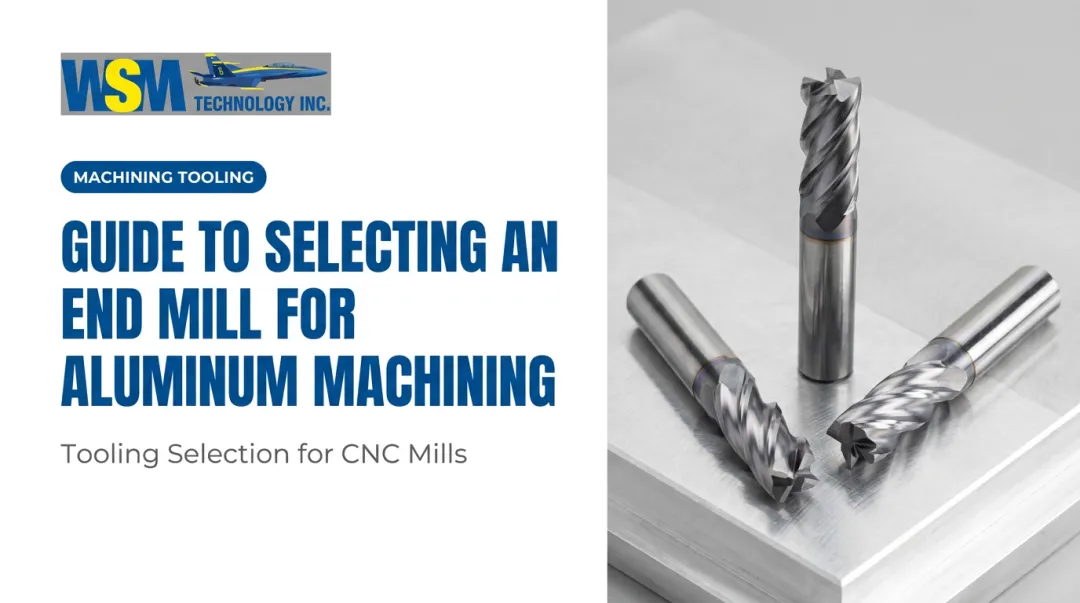
An end mill is a rotating, multi-edge cutting tool that removes material from a workpiece using both its end face and its side edges. This is the key distinction from a drill bit, which is optimized for boring straight down and generally can't cut sideways.
Center-cutting end mills can plunge into material like a drill, but non-center-cutting versions can't. It pays to check the geometry before you program a plunge move.
Key Anatomy Terms
Every machinist should know these five terms cold:
- Shank – The non-cutting portion held in the collet or toolholder; its diameter determines what holder you need
- Flute – The spiral groove that forms the cutting edge and evacuates chips as the tool rotates
- Cutting diameter – The diameter of the circle traced by the rotating cutting edges
- Length of cut – The usable axial cutting length, separate from the tool's overall length
- Helix angle – The angle between the cutting edge and the tool's centerline; lower helix angles (around 35°) suit roughing, while higher angles (up to 45°) favor finishing
How the Cutting Action Works
Once secured in the spindle or collet, the end mill spins at a programmed RPM while the CNC-driven tool path guides it through the material. The end and peripheral edges shear away stock as the machine moves the tool along X, Y, and Z axes simultaneously. This simultaneous multi-axis motion is what allows end mills to cut slots, contours, and profiles that a drill simply can't produce.
Types of End Mills and Their Best Applications
Tip geometry and flute design dictate which job an end mill is built for. Picking the wrong profile is one of the fastest ways to burn through tooling budgets, according to Kennametal's beginner's guide to end mills, which maps square tools to flat surfaces, ball tools to curved geometry, and serrated roughers to fast stock removal.
The table below breaks down six common profiles and where each one earns its keep on the shop floor.
| End Mill Type | Tip Geometry | Best Applications |
|---|---|---|
| Square End Mill | Flat, 90-degree tip | Slotting, profiling, flat-bottom pockets |
| Ball Nose End Mill | Hemispherical tip | Contouring, 3D surfaces, mold and die work |
| Corner Radius End Mill | Rounded cutting edge | Fillets, stronger edges, longer tool life |
| Corner Rounding End Mill | Rounded profile cutter | Deburring, adding a specified edge radius |
| Roughing End Mill | Serrated or wavy edges | Heavy stock removal, chip breaking |
| Finishing End Mill | High flute count, large helix angle | Tight tolerances, smooth final surfaces |
Square and Ball Nose: The Two Most-Used Profiles
Square end mills are the workhorse of most shops. If a shop only owns one type of end mill, it's usually this one, since the flat, 90-degree tip handles slotting, profiling, and flat-bottom pockets without issue.
Ball nose end mills solve a different problem. Their hemispherical tip follows curved geometry that a square tool would gouge or leave stepped, making them the standard choice for contouring, 3D surfaces, and mold and die work.
Beyond these two staples, several specialized profiles fill specific gaps in the lineup:
- Corner radius and corner rounding end mills spread cutting force more evenly than a sharp corner, extending tool life; corner radius tools cut fillets, while corner rounding tools deburr and add a specified edge radius
- Roughing end mills use serrated or wavy edges to break chips and reduce vibration during heavy stock removal, though the tradeoff is a rougher finish that needs a separate finishing pass
- Finishing end mills carry higher flute counts and larger helix angles, removing less material per pass but leaving a surface that often needs no further work
- Specialty end mills — V-groove and engraving cutters for chamfering and detail, dovetail cutters with reduced necks for tight-space slots, and tapered end mills for mold finishing — round out the lineup

End Mill Materials: HSS vs. Carbide vs. Cobalt
Material selection comes down to a tradeoff between toughness, heat resistance, and cost. According to Harvey Performance's substrate selection guide, the three main options each occupy a distinct spot on that spectrum.
High Speed Steel (HSS) is the most economical option and the toughest of the three, meaning it resists chipping and breaking even in less-rigid setups. It runs slower than cobalt or carbide, which makes it a solid choice for:
- General-purpose work on softer metals and plastics
- Prototyping and low-volume runs
- Shops without high-speed spindles
Solid Carbide sits at the opposite end. It's harder and more heat-resistant than HSS or cobalt, and it holds an edge longer while supporting faster cutting parameters. That makes it the go-to choice for high-volume production and hard materials like titanium and hardened steel. The downside: carbide is more brittle and typically costs more upfront than a comparable HSS tool.
Carbide's higher price reflects material and manufacturing complexity, but it often delivers a lower cost-per-part on production runs because it lasts longer and cuts faster. HSS remains the more forgiving, budget-friendly pick for short runs or non-rigid machines.
Cobalt (HSS-E) splits the difference: better wear resistance than standard HSS, without carbide's price tag or brittleness. It's a practical middle ground for shops that need more speed than HSS offers but aren't ready to commit to carbide.
Coatings Extend Tool Life
Regardless of base material, coatings like TiN, TiAlN, and AlTiN act as thermal barriers and reduce friction, letting tools run hotter and faster before wearing out. AlTiN in particular holds up better under high heat than TiN, making it a common choice for demanding ferrous applications.
Practical guidance: Reach for carbide when you're running high speeds or high volumes on hard alloys. Stick with HSS or cobalt for prototyping, short runs, or machines that can't hit the RPMs carbide needs to perform.

How to Choose the Right End Mill for Your Job
Picking the right tool means balancing several variables at once, not just picking a material and calling it done.
Flute Count and Depth of Cut
Fewer flutes (two) create larger chip valleys, which matters most in soft or non-ferrous materials like aluminum where chip volume is high. More flutes (four or more) add strength and produce finer finishes in harder materials like steel, but at the cost of chip clearance.
Flute count also affects how deep you can safely cut. A common starting rule is limiting each pass to roughly 50% of the tool's diameter to avoid excess heat and tool stress. That said, this isn't a hard ceiling — high-efficiency milling strategies sometimes use much lighter radial engagement (as little as 7-30% of diameter) paired with deeper axial cuts. Start conservative, then adjust based on results.
Feeds, Speeds, and Rigidity
Match feed rate and spindle speed to both the material and the tool geometry. Manufacturer speed/feed charts are the starting point every time, then fine-tune from there based on how the tool actually performs in your setup.
Those settings only hold up if the machine setup supports them. Coolant strategy and rigidity play a direct role:
- Flood coolant helps with heat and chip evacuation, but can cause thermal shock in interrupted cuts
- Minimum quantity lubrication (MQL) works well in specific applications but isn't a universal upgrade
- Tool holder balance and machine rigidity matter more than most shops realize
According to Haas's mill chatter troubleshooting guide, reducing the length-to-diameter ratio of tool stickout by just 10% increases stiffness by 25%. Keep overhang no greater than three times the tool diameter unless the job absolutely requires more reach.
Common End Milling Problems and How to Prevent Them
Most end milling issues trace back to one of three root causes.
| Problem | Common Causes | How to Fix It |
|---|---|---|
| Chatter and vibration | Loose fixturing, excessive tool overhang, mismatched cutting parameters | Shorten stickout, tighten workholding, and balance the toolholder before adjusting speeds and feeds |
| Premature wear or breakage | Incorrect feeds and speeds, a dulled edge pushed too long, or a coating mismatched to the material | Replace worn tools before cutting forces climb and cascade into bigger problems |
| Poor surface finish | Insufficient rigidity, wrong flute count, or an overly aggressive feed rate | Check runout first — it's the most common cause and the easiest fix |
If you're unsure which cause applies, WSM Technology's application engineers can run a test cut at our Rootstown demonstration center to pinpoint the issue before you swap tooling or adjust your program.
Get Expert Milling Support from WSM Technology
Even a perfectly chosen end mill underperforms on the wrong machine. Pairing the right tool with the right milling platform is where real gains happen, and it's a big part of what WSM Technology helps shops figure out.
WSM's lineup includes:
- OPS Ingersoll machining centers, built for high-speed and graphite milling applications
- Roku-Roku Android II, featuring a 60,000 RPM spindle, linear motor drives, and 16-sensor thermal compensation that keeps tooling running within tight tolerances
- JINGDIAO High Speed Mills (3 and 5-axis), delivering high productivity and ultra-precision results
Before committing to new tooling or a new machine, shops can run test cuts and time studies at WSM's Demonstration Center in Rootstown, Ohio. It's a practical way to validate a setup before it lands on your shop floor and eats into your budget.

WSM also provides on-site training and technical support throughout Northern Ohio, Western Pennsylvania, and West Virginia, helping shops get more consistent results out of the machines and tooling they already own.
Frequently Asked Questions
Which end mills are more expensive: HSS or carbide?
Carbide end mills cost more upfront due to material and manufacturing complexity. However, they often deliver a lower cost-per-part over high-volume production runs because they last longer and cut faster.
Which is better: HSS or carbide end mills?
Neither is universally better. HSS suits general-purpose work and softer materials, especially in less-rigid setups, while carbide excels in high-speed, high-volume, and hard-material applications.
What are the different types of end mills?
The main types include square end mills for general-purpose work, ball nose for 3D contours, corner radius for fillets and edge strength, roughing for fast stock removal, finishing for smooth surfaces, and specialty profiles like V-groove and dovetail cutters.
How many flutes should an end mill have?
Fewer flutes (two) work best for chip clearance in soft or non-ferrous materials like aluminum. More flutes (four or more) add strength and improve finish quality in harder materials such as steel.
What is the difference between an end mill and a drill bit?
A center-cutting end mill can cut both axially and radially, allowing it to produce slots, contours, and profiles. A standard drill bit only cuts axially, making it optimized for round holes.
How can I extend the life of my end mill?
Use manufacturer-recommended speeds and feeds, minimize tool overhang, maintain rigid workholding, and match your coolant and coating to the material. Replace worn tools before cutting forces increase and cause chatter or breakage.