
The stakes come with real opportunity attached. The U.S. medical-device manufacturers market reached an estimated $256.2 billion in 2024, with a projected 5.9% annual growth rate through 2030. That expansion is pulling more contract shops into orthopedic, cardiovascular, and diagnostic device supply chains.
Precision alone won't win those contracts, though. Medical shops need the right combination of milling, EDM, and turning technology, plus documentation practices that satisfy FDA and ISO 13485 expectations.
This guide covers what medical CNC machining involves, the core processes and equipment required, common materials, where these parts end up, and how to choose an equipment partner to enter or scale within this sector.
Key Takeaways
- Medical CNC machining demands micron-level tolerances and full material traceability.
- EDM, 5-axis milling, and Swiss turning each solve distinct geometry challenges.
- Titanium, PEEK, and stainless steel dominate device production but cut differently.
- Surgical instruments, implants, and diagnostic housings depend on repeatable subtractive manufacturing.
- The right equipment partner offers test cuts, training, and local service.
What Is Medical CNC Machining?
Medical CNC machining is the use of computer-controlled milling, turning, and EDM equipment to subtractively manufacture precision components, including implants, surgical instruments, and device housings, from biocompatible materials to exact digital specifications.
Instead of a machinist manually turning handwheels, a programmed toolpath removes material with a level of consistency human hands can't replicate part after part.
The workflow follows a predictable path:
- A designer builds a CAD model of the part
- CAM software converts that model into G-code
- The G-code drives the machine's motion, speed, and tool changes
- The machine cuts, drills, or erodes the part to spec
That repeatability is the whole point. A regulated medical part can't vary from batch to batch, and CNC's digital instructions make that consistency achievable at scale.

Why "CNC" Covers More Than Milling
In a medical context, "CNC" broadly refers to any automated, computer-guided process, including milling, turning, grinding, and EDM, used to produce body-safe components. This distinguishes it from manual machining, where operator fatigue and human judgment introduce far more variability.
Medical CNC machining also differs from general manufacturing in three specific ways:
- Tolerance demands often sit at the single-digit micron level, well beyond what most industrial parts require
- Documentation requirements mandate material traceability and biocompatibility records for every lot, not just a quality check at final inspection
- Sterilization compatibility requires surface finishes and material choices that hold up to repeated autoclave or gamma-ray cycles
CNC machining isn't limited to finished parts, either. Shops also use it to build the precision tooling and molds behind injection-molded disposable medical plastics, meaning the same equipment can serve two very different corners of the device supply chain.
Why Precision and Compliance Are Non-Negotiable in Medical Manufacturing
Even a micron-level deviation in an implant or surgical tool can cause a device to fail during use. In 2019, AngioDynamics initiated a Class II recall covering 582 BioFlo implantable port kits after FDA records showed the snap-lock connectors might not meet dimensional specifications, which could prevent catheter insertion and delay implantation.
That's a single documented case, but it illustrates exactly how a dimensional miss ripples into a real procedure.
CNC's core advantage is repeatability. A well-programmed machine produces statistically identical parts across a production run, which directly supports compliance with two key standards:
| Standard | Requirement |
|---|---|
| ISO 13485 | International standard for medical device quality management systems |
| FDA QMSR | Effective February 2, 2026; incorporates ISO 13485:2016 for finished-device manufacturers |
Not every machine shop needs to register as an FDA device manufacturer. Component-only suppliers often fall outside that requirement, but they still benefit from ISO 13485-aligned practices, since OEMs increasingly expect traceability documentation from every link in the chain.
The Added Complexity of Biocompatible Materials
Machining titanium, PEEK, and cobalt-chrome isn't the same as cutting standard steel. These materials demand specialized tooling, tighter coolant control, and contamination-conscious handling well beyond a typical production setup. Shops that skip this step tend to burn through tooling costs fast, and worse, risk out-of-spec parts.
Essential CNC Processes and Equipment for Medical Machining
Different medical parts call for different machine types:
- EDM handles hardened metals and micro-features
- Multi-axis milling manages complex geometries
- Swiss-style turning covers small cylindrical parts
Most shops serving medical OEMs end up needing a combination, because OEMs generally prefer suppliers who can handle multiple part types in-house rather than juggling several vendors themselves.
Investing in the right mix of equipment, rather than a single machine, is often what separates shops that land medical contracts from shops that keep getting passed over.
EDM for Medical-Grade Precision
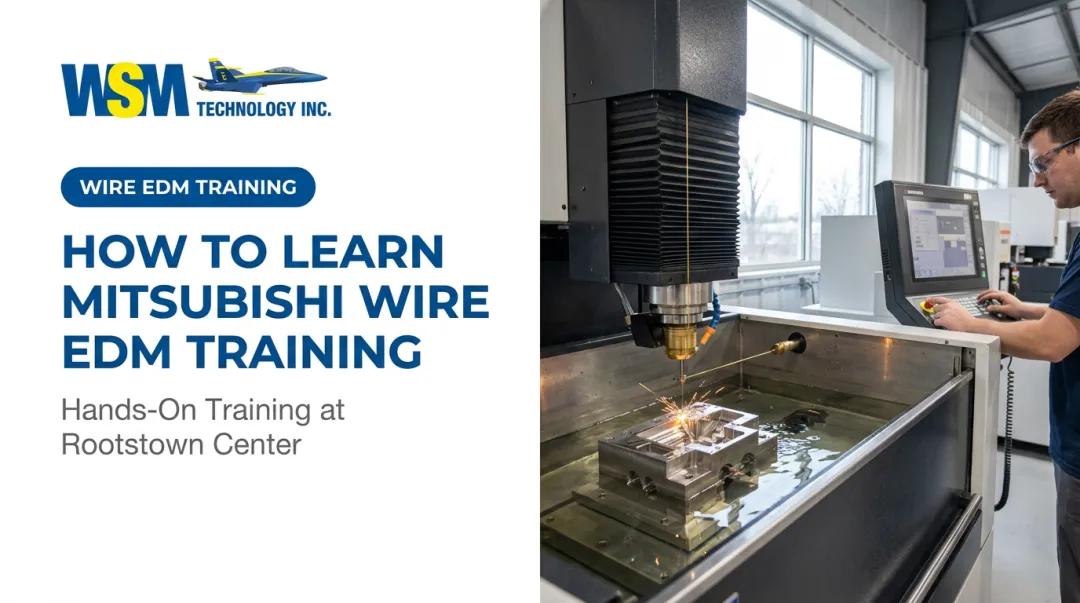
Sinker and wire EDM cut hardened metals and form micro-holes and sharp internal corners, in parts like spinal cages and vena cava clips, without inducing the mechanical stress a cutting tool would leave behind.
Modern Machine Shop reports wire EDM capability down to ±0.0001 inch, with finishes as fine as 4 microinches Ra, which explains why it's the go-to process for hardened alloys that resist conventional cutting.
Micro EDM systems push that precision even further for ultra-fine features in stents, cannulas, and micro-surgical instruments, where standard cutting tools simply can't reach the required detail. WSM Technology supplies Sarix micro EDM equipment out of its Rootstown, Ohio facility, alongside Mitsubishi wire and sinker EDM lines that list medical device manufacturing among their core applications.
Multi-Axis Milling for Complex Geometries
Five-axis milling lets a shop machine complex organic shapes, such as joint implants and spinal components, in a single setup. That matters because every repositioning introduces a new opportunity for error. Fewer setups mean fewer chances for something to go wrong, plus shorter production cycles.
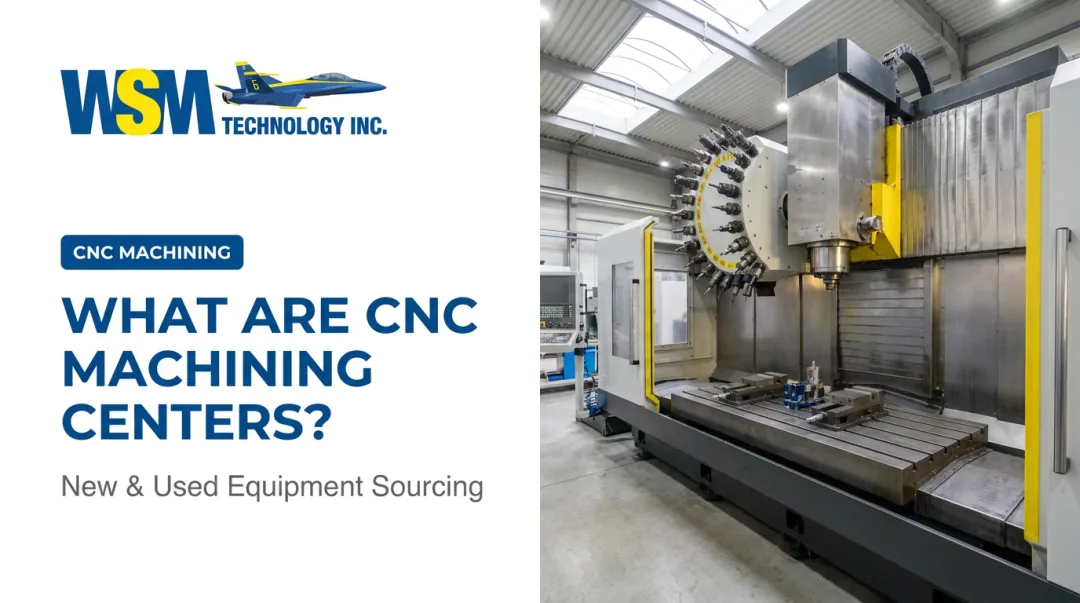
Beyond five-axis capability, shops increasingly turn to high-speed milling centers for hard, precise medical components that need fine surface finishes alongside tight geometric tolerances. This is where equipment like OPS Ingersoll's 5-axis machines or the Roku-Roku Android II, which holds ±1 micron actual machining accuracy on a 60,000 RPM spindle, earns its place on the shop floor.
Swiss-Style Turning for Small Cylindrical Parts
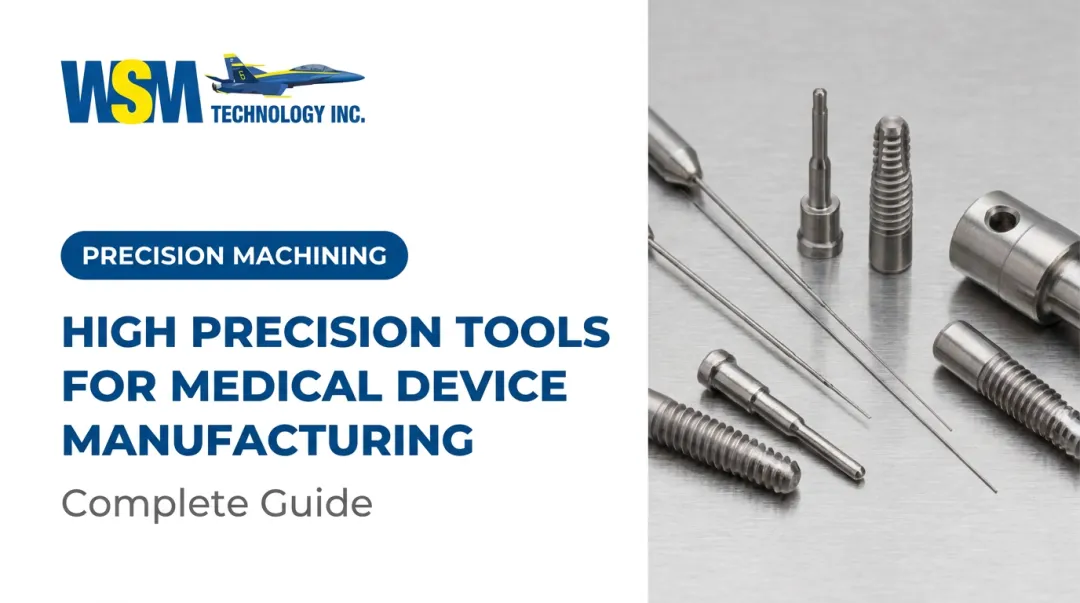
Swiss turning's guide-bushing design supports the workpiece close to the cutting point, which is exactly why it's become the standard process for bone screws, dental implants, and catheter components. These parts are long, thin, and demand extremely tight tolerances that conventional turning setups struggle to hold consistently.
Shops adding Swiss-type lathes, such as Schaublin's precision turning line, to their equipment lineup often find they can expand into micro-mechanics and medical turning work that was previously outsourced to specialty shops.

Materials Commonly Machined for Medical Devices
Material selection follows the device's mechanical, corrosion, wear, and imaging requirements. Here's how the most common ones stack up:
| Material | Why it's chosen | Typical applications |
|---|---|---|
| Titanium | High strength-to-weight ratio, biocompatible oxide layer | Joint implants, hip cups, pacemaker cans |
| Stainless steel (316L) | Corrosion resistance, widely proven medical alloy | Surgical instruments, forceps, clamps |
| PEEK | Radiolucent, MRI-safe, stiffness closer to bone than metal | Spinal fusion devices, trauma implants |
| Nitinol | Shape-memory and superelastic behavior | Stents, guidewires |
| Cobalt-chrome | Extreme wear and corrosion resistance | Hip and knee replacement components |
Machinability varies drastically across this list. Titanium is the most demanding material on the table:
- Conducts heat poorly, concentrating it at the cutting edge
- Reacts chemically enough to gall and weld onto tooling if speeds and feeds aren't dialed in
- Chews through carbide inserts faster than almost any other medical material
That reactivity is why machine selection and operator training matter as much as the material spec itself: a shop running the wrong coolant strategy on titanium will burn through tooling costs long before it burns through the part budget.
WSM's application engineering team runs test cuts and time studies upfront, helping shops lock in the right speeds, feeds, and coolant approach before production begins.
Real-World Applications of Medical CNC Machining
Medical CNC machining shows up across nearly every category of device on a hospital shelf:
- Surgical instruments: scalpels, forceps, retractors, and clamps machined from 316L stainless or titanium for sharp edges, ergonomic balance, and repeated sterilization
- Orthopedic and spinal implants: bone screws, plates, spinal cages, and joint replacements requiring tight tolerances for safe, long-term bone integration
- Diagnostic and monitoring equipment: components for MRI, CT, ultrasound, and heart-rate monitoring systems, where material choice and dimensional accuracy directly affect device performance
Five-axis milling tends to carry the load on implant geometry, while EDM and Swiss turning cover the smaller, harder-to-hold features on instruments and screws. WSM Technology supplies these same machine categories, plus the training and application support needed to hold these tolerances, to manufacturers across Northern Ohio, Western Pennsylvania, and West Virginia.
Choosing the Right Equipment Partner to Enter Medical Machining
Breaking into medical manufacturing takes more than a machine purchase. Shops need a technology partner offering application support, training, and consumables to consistently hit tight tolerances on the first try, not the fifth.
Hands-on evaluation matters before you commit. WSM Technology's Demonstration Center in Rootstown, Ohio, lets shops test-cut sample parts on EDM, milling, and turning equipment before signing a purchase order. That kind of proof beats a spec sheet every time.

Local service also carries weight once the machine is running production. Downtime on a machine cutting high-tolerance medical work costs real money, which is why factors like these matter:
- Delivers on-site service response
- Stocks OEM replacement parts for fast turnaround
- Provides regional training access
WSM covers Northern Ohio, Western Pennsylvania, and West Virginia with exactly that kind of local support. The turnkey approach includes installation, operator training, and time studies to optimize cycle times.
That combination helps shops take on new medical contracts without the trial-and-error that usually eats into first-year margins. Local support and turnkey training solve half the equation, though. The other half is brand depth: can one partner supply every machine type a growing medical shop will eventually need?
WSM represents:
- Mitsubishi wire and sinker EDM
- Sarix micro EDM
- Roku-Roku and OPS Ingersoll milling
- Schaublin turning
Sourcing from one relationship instead of juggling separate vendors keeps procurement simple as medical contracts scale.
Frequently Asked Questions
What is a CNC in medical terms?
In medical manufacturing, CNC refers to computer numerical control machining used to produce precision implants, instruments, and device components with automated, repeatable accuracy from biocompatible materials.
What is CNC vs NC vs DNC?
NC (Numerical Control) relied on older punch-tape systems for basic automation. CNC (Computer Numerical Control) replaced that with onboard computers, enabling programmable and repeatable machining. DNC (Direct Numerical Control) goes a step further, networking multiple CNC machines to a central computer for shared program management.
What tolerances are achievable with medical CNC machining?
Tolerances vary by process: micro EDM and Swiss turning can hold ±0.0002 inch (5 microns) for bone screws and micro-components, while five-axis milling typically holds ±0.001 inch on larger implant bodies.
Which CNC machine type is best for producing medical implants?
Part geometry drives the decision. Five-axis milling handles complex organic shapes like joint implants, while Swiss turning excels at small cylindrical parts such as bone screws. EDM steps in for hardened metals or micro-features like spinal cage details.
Do shops need special certification to do medical CNC machining?
Manufacturers producing finished medical devices typically need FDA registration and ISO 13485 alignment. Shops machining components only should still maintain a solid quality management system and traceability practices.
How can a shop get started in medical CNC machining?
Start by assessing your current equipment gaps, then invest in operator training. Partnering with a machine tool dealer like WSM Technology for demonstrations and test cuts before buying reduces costly guesswork.