
The U.S. Bureau of Labor Statistics projects 34,200 machinist and tool-and-die-maker openings annually through 2034, driven mainly by retirements and workers leaving the trade rather than new job growth (BLS). Wire EDM sits squarely inside that shortage.
Learning Mitsubishi's wire EDM systems specifically adds another layer. The M800 control, onboard CAM, and Mitsubishi's parameter logic don't behave exactly like other EDM brands, so even experienced operators face a real learning curve when they switch platforms.
This guide walks through how to learn Mitsubishi Wire EDM step by step, from what you need before you start through certification and beyond.
Key Takeaways
- Serves both newcomers to machining and experienced CNC operators specializing in Mitsubishi controls
- Requires blueprint reading and basic CNC familiarity before formal EDM training begins
- Progresses through a clear sequence: foundations, supervised practice, programming, then certification
- Builds real competency faster at manufacturer demonstration centers than through self-study alone
- Outweighs any single course: consistent mentorship and hands-on practice build lasting skill
Is Mitsubishi Wire EDM Training Right for You?
Not everyone approaching Mitsubishi Wire EDM needs a formal program, but knowing where you stand before day one saves both time and machine hours.
Who Should Consider This Training
Mitsubishi Wire EDM training fits several different starting points:
- CNC machinists diversifying skills — adding EDM to a milling or turning background
- Mold and die apprentices — building toward a specialized, high-demand trade
- Engineers moving into hands-on manufacturing roles — need real machine time, not just theory
- Shop owners upskilling in-house staff — often faster than hiring for a new position
Formal training isn't always necessary. A single-machine shop running simple 2D geometry might get by with informal, on-the-job learning under an experienced operator. But shops running Mitsubishi-specific controls benefit most from manufacturer-aligned training rather than generic EDM courses. The M800 interface, parameter tables, and onboard CAM don't map directly onto other brands' software, so trainees who learn "wire EDM in general" often end up relearning the interface anyway.
Authorized dealers such as WSM Technology build their training curriculum directly around the M800 control, so operators learn on the exact screens and parameter tables they'll use daily on the shop floor.
What You Need Before Starting
Before your first session, check off these basics:
- Blueprint reading and GD&T knowledge: you need to interpret tolerances and part specs correctly
- Basic computer literacy: navigating CNC/CAM programming software is part of daily operation
- Machine or simulator access: reading about EDM doesn't build the muscle memory required for consistent cuts
- An experienced operator or trainer nearby: especially during early machine hours, to catch bad habits before they set in

Skipping any of these doesn't make training impossible. It just slows everything down once you're standing in front of a real machine.
How to Learn Mitsubishi Wire EDM: A Step-by-Step Training Path
Mastering wire EDM follows a defined sequence, and skipping foundational steps tends to show up later as poor part quality and slower long-term progress.
Building Foundational Knowledge
Every trainee should understand the physics before touching a control panel. Wire EDM generates rapid electrical discharges between a traveling wire electrode and the workpiece, eroding material without physical contact. Deionized water fills the spark gap, cools the cut, and flushes away eroded particles.
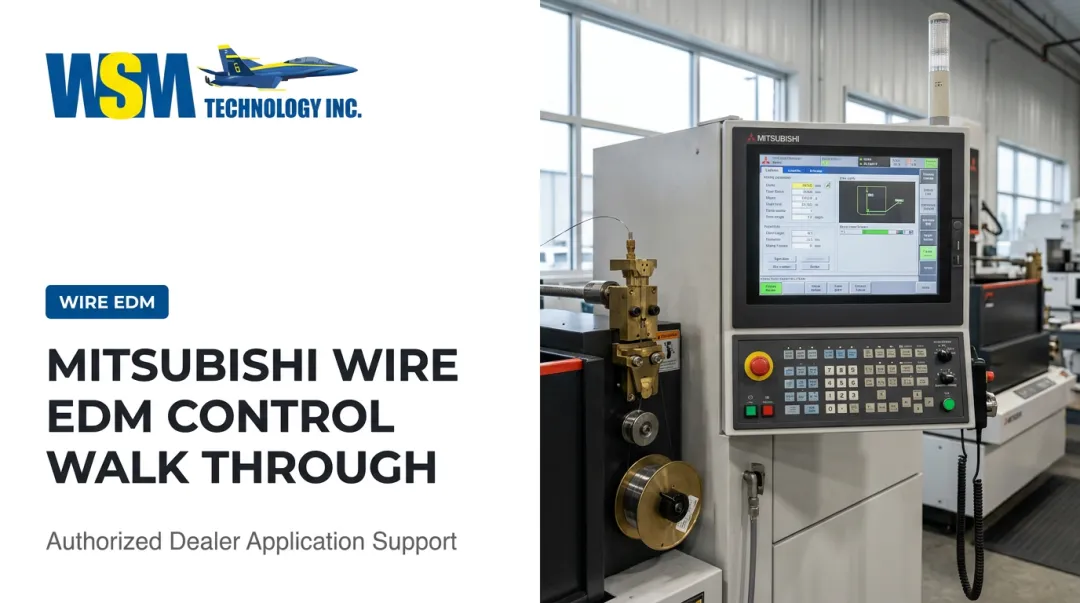
Once that clicks, study the Mitsubishi-specific control interface and terminology on its own. Mitsubishi's M800 control, parameter tables, and onboard CAM system use conventions that don't translate directly from other EDM brands.
The most common early mistake: skipping straight to programming before understanding the physics behind it. Trainees who rush this step usually hit a wall once they reach advanced parameter settings — they can type in numbers, but they don't know why those numbers matter.
Starting Hands-On Training
Hands-on training typically starts on a demo machine, not a live production unit. That distinction matters. Mistakes on a demo machine cost nothing; mistakes on a production machine cost real parts and real downtime.
Training formats vary — some programs are fully instructor-led, others self-paced online. In practice, a hybrid approach, short instructional segments paired with immediate supervised practice, tends to produce better retention than either extreme alone.
WSM Technology's demonstration center in Rootstown, Ohio gives trainees exactly this kind of environment. Visitors can run test cuts and get supervised, hands-on time on live Mitsubishi machines before committing to advanced coursework or new equipment, so early mistakes happen somewhere they don't matter.
Learning Programming and Machine Operation
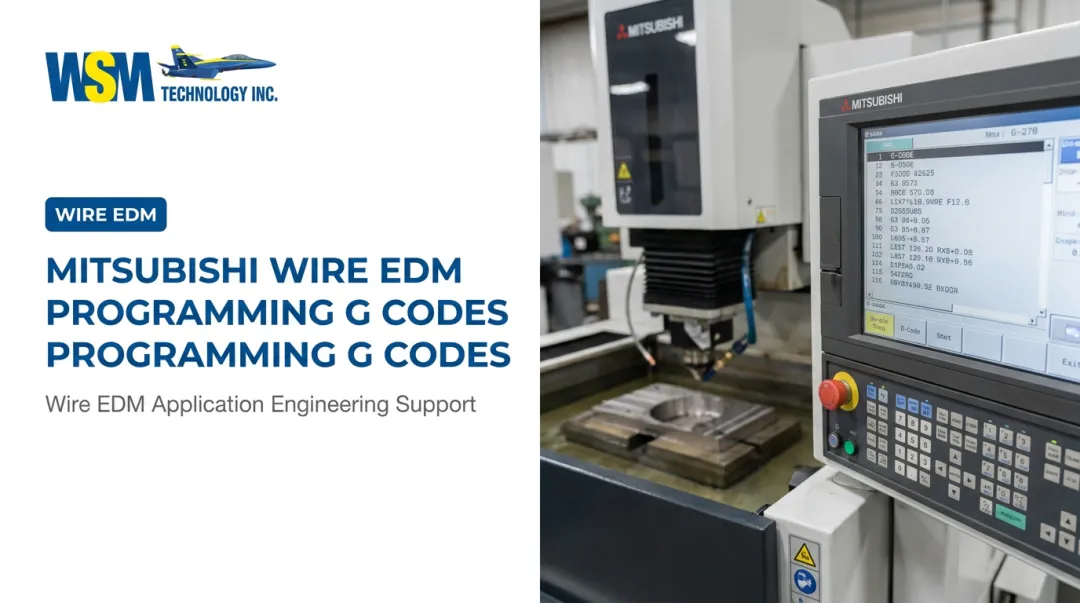
This is the core skill-building phase: writing and editing wire EDM programs, setting offsets, and configuring cutting conditions for different materials and thicknesses.
Three parameters demand particular attention:
| Parameter | Effect on Cut Quality |
|---|---|
| Wire tension | Higher tension improves straightness and stability; too little degrades accuracy during steep tapers |
| Flushing pressure | Unbalanced flushing weakens the wire and can cause breaks; excessive pressure causes vibration and poor finish |
| Servo response | Fast servo circuitry reacts to changing gap conditions, giving finer control over the spark itself |
Get these three right and everything downstream improves. Correct parameter settings determine surface finish consistency and cutting speed, which is exactly why parameter mastery, not just program-writing, separates competent operators from advanced ones.
Tracking Progress and Skill Checkpoints
Both trainee and trainer should track measurable checkpoints, not just gut feel:
- Test part accuracy against print tolerances
- Cut time compared to expected cycle times
- Program error rate on repeat jobs
Watch for warning signs that a trainee needs more support: repeated wire breaks, inconsistent tolerances from part to part, or excessive rework on simple geometry. These aren't failures. They're signals to slow down and revisit fundamentals before adding complexity.
Certification and Continuing Education
Formal training doesn't end after your first few weeks on the machine. According to MC Machinery's wire EDM training catalog, the structured path includes a 3-day machine fundamentals course, followed by 2-day optimization and 2D CAM modules once you've logged real operating time. NIMS also offers an EDM 2-Axis Wire credential under its Machining Level II program, combining a proctored theory exam with an inspected performance project.
Continuing education matters because the technology doesn't sit still. Adaptive control, intelligent power supplies, and automatic threading systems get refined regularly, and operators who stop learning after basic training tend to stagnate. WSM Technology's Local Advanced Training builds on foundational skills for this reason, giving operators a path to keep pace with new control features as they roll out.

Where Mitsubishi Wire EDM Skills Are Used in Practice
Trained wire EDM operators are in demand across four core industries:
- Mold and die making: cutting complex cavity geometry directly into hardened tool steel
- Aerospace: producing turbine-disk fir-tree slots and blade roots in hard alloys; a Modern Machine Shop report documents a 40% cost reduction versus broaching, with burr-free edges
- Medical device manufacturing: repeatable precision on small, intricate components
- Automotive: high-precision stamping tools and tooling for production parts
Usage patterns shift by shop type. High-volume production environments prioritize speed-focused operators who can hold tolerance while cutting fast. Mold and die shops need micro-precision specialists who can hold tight tolerances on complex, one-off cavities, where a single mistake means remaking an expensive tool.
A regional dealer network often bridges the gap between newly trained talent and shops that need it. WSM Technology's coverage across Northern Ohio, Western Pennsylvania, and West Virginia keeps the company in regular contact with shops actively looking for skilled EDM operators. That visibility comes naturally from selling and servicing the machines those shops already run.
Best Practices for Learning Wire EDM Effectively
A few habits separate trainees who progress quickly from those who plateau.
- Build muscle memory with frequency, not marathon sessions. Machining is a physical skill, and short, regular practice sessions build consistency faster than occasional long ones.
- Keep your environment disciplined. Clean dielectric fluid and consistent wire tension during practice reinforce good operating habits from day one; sloppy conditions teach sloppy habits.
- Simulate before you cut. Running every program through simulation first prevents most costly wire breaks and scrapped parts as geometry gets more complex.
- Learn from real shop mentors, not just tutorials. Online tutorials help with concepts, but diagnosing chatter or drifting tolerance is hard to teach remotely. A mentor who has fixed that exact problem before is worth more than a dozen videos.
- Choose training that includes ongoing support. Machine software and controls update regularly, so look for programs that stay available after the course ends. WSM Technology, for example, pairs Local Training and Local Advanced Training with ongoing application engineering support.

Conclusion
Mastering Mitsubishi Wire EDM comes down to following a disciplined, sequential path: fundamentals, supervised practice, programming mastery, and continuing education. Trainees who skip steps to save time usually spend more of it later, fixing habits that should have been caught early.
That discipline makes proper training an investment in part quality and career longevity, one worth prioritizing over shortcuts. Working with WSM Technology, the authorized Mitsubishi/MC Machinery dealer for the region, gives you a shorter, more reliable path from first cut to consistent precision. For shops and operators across Northern Ohio, Western Pennsylvania, and West Virginia, that path starts with hands-on time at WSM's demonstration center in Rootstown, Ohio.
Frequently Asked Questions
What is the wire EDM method?
Wire EDM is a spark erosion process that uses a thin, electrically charged wire to cut conductive materials without physical contact between the tool and workpiece. Deionized water fills the gap, controlling the spark and flushing away eroded material.
How long does it take to learn wire EDM?
Basic operation can be learned in a matter of weeks, especially with a structured course like MC Machinery's 3-day fundamentals class. True programming and process mastery typically takes several months to a few years of consistent practice.
Do I need a degree to become a wire EDM operator?
No. A technical school certificate or apprenticeship is often more valuable than a four-year degree for this hands-on trade. Programs like Red Rocks Community College's Wire EDM Operator Certificate cover both operation and programming in a fraction of the time.
What skills are needed for wire EDM programming?
Programmers need CNC/CAM software knowledge, solid blueprint reading skills, and basic geometry. NIMS credentialing also requires process planning, inspection, and safe workholding as core competencies.
Is wire EDM difficult to learn?
The fundamentals are approachable for most trainees within a short course. Achieving consistent precision and speed across varied materials and geometries requires sustained practice over time.
Where can I get hands-on Mitsubishi Wire EDM training?
Manufacturer-backed dealer demonstration centers are a practical starting point. WSM Technology's demonstration center in Rootstown, Ohio, offers supervised, hands-on time on live Mitsubishi machines before you commit to advanced coursework.