
Hardened tool steel, titanium, carbide — these materials chew through end mills and drills. EDM sidesteps that problem entirely because it doesn't care how hard a material is, only whether it conducts electricity. That's why shops machining deep cavities, sharp internal corners, or ultra-hard alloys lean on EDM daily, not occasionally.
This article breaks down the three main types of EDM machining, how they differ, where each one fits best, and how to choose the right type for your next project.
Key Takeaways
- EDM erodes material via electrical sparks, with zero physical tool contact
- Three primary types exist: Wire EDM, Sinker EDM, and Hole Drilling/Micro EDM, each suited to different geometries
- Wire EDM cuts contours, Sinker EDM shapes cavities, and Hole Drilling EDM bores precision holes
- Conductivity, not hardness, determines EDM compatibility for any material
- Choosing the right type depends on geometry, tolerance, material, and volume, not brand reputation
What Is EDM Machining?
EDM uses rapid electrical discharges between an electrode and a conductive workpiece, both submerged in dielectric fluid, to erode material into precise shapes. There's no cutting force, no tool deflection, and no mechanical stress on the part.
Here's the basic mechanism:
- Spark generation melts and vaporizes microscopic amounts of material at the point of discharge
- Dielectric fluid cools the gap and flushes eroded debris away
- The gap distance is continuously controlled by the machine's CNC to maintain consistent sparking

EDM is a shop-floor process running daily in mold and die shops, aerospace suppliers, and precision component manufacturers throughout Northern Ohio and beyond.
Why It Matters for Precision Manufacturing
Manufacturer specifications illustrate just how tight EDM can get. Sinker EDM models from Makino publish position accuracy ranging from ±1.0 to ±5.0 microns, with best-case surface finishes between 0.03 and 0.3 microns Ra, depending on the specific machine class. These are machine-level benchmarks, not guaranteed part outcomes, but they show the ceiling the process can reach.
These benchmarks explain why so many shops rely on EDM instead of conventional methods. Without it, they face real problems:
- Deep cavities and sharp internal corners become difficult or impossible with rotating cutters
- Extremely hard materials chew through conventional tooling fast
- Tool deflection on high length-to-diameter features forces design compromises
- Rework and scrapped parts pile up when conventional machining hits its limits
Types of EDM Machining
EDM isn't a single machine or method. The three types differ in electrode design, motion, and the part features they're built to produce. Matching the right process to your geometry, material, and tolerance needs starts with understanding these differences.
| Type | Electrode | Motion | Best For |
|---|---|---|---|
| Wire EDM | Continuous thin wire | Linear cutting | Through-cuts, contours |
| Sinker EDM | Shaped graphite/copper | Vertical plunge | Blind cavities, 3D detail |
| Hole Drilling EDM | Rotating tube | Rotational feed | Small, deep, precise holes |
Wire EDM
Wire EDM uses a continuously fed thin wire electrode, typically brass or zinc-coated, to cut through a conductive workpiece submerged in deionized water. The wire travels between upper and lower guides, sparking against the material to erode a kerf slightly wider than the wire itself.
What makes it different: instead of a shaped tool, Wire EDM uses a linear, continuously renewed wire. That's what makes it ideal for through-cuts rather than blind cavities, since the wire simply can't stop partway and carve a pocket.
Wire EDM is best suited for:
- Cutting punches, dies, extrusion tools, and stamping components
- Thin or fragile sections that would deform under conventional cutting forces
- Mold and die shops, aerospace and medical manufacturers needing tight-tolerance contour cuts
Key strengths: MC Machinery lists wire EDM applications requiring tolerances as tight as ±0.0001 inch, and the process runs largely unattended once set up, with automated wire threading cutting downtime between jobs.
Trade-offs: Wire EDM can't create blind cavities on its own: internal features need a start hole, often produced via hole drilling EDM first. Wire consumption also adds an ongoing consumable cost that shops need to budget for.
WSM Technology supplies Mitsubishi wire EDM machines, including the MV1200S and FX10, to mold, die, and precision shops across Northern Ohio, Western PA, and West Virginia for exactly these contour-cutting applications.
Sinker (Die Sinking) EDM
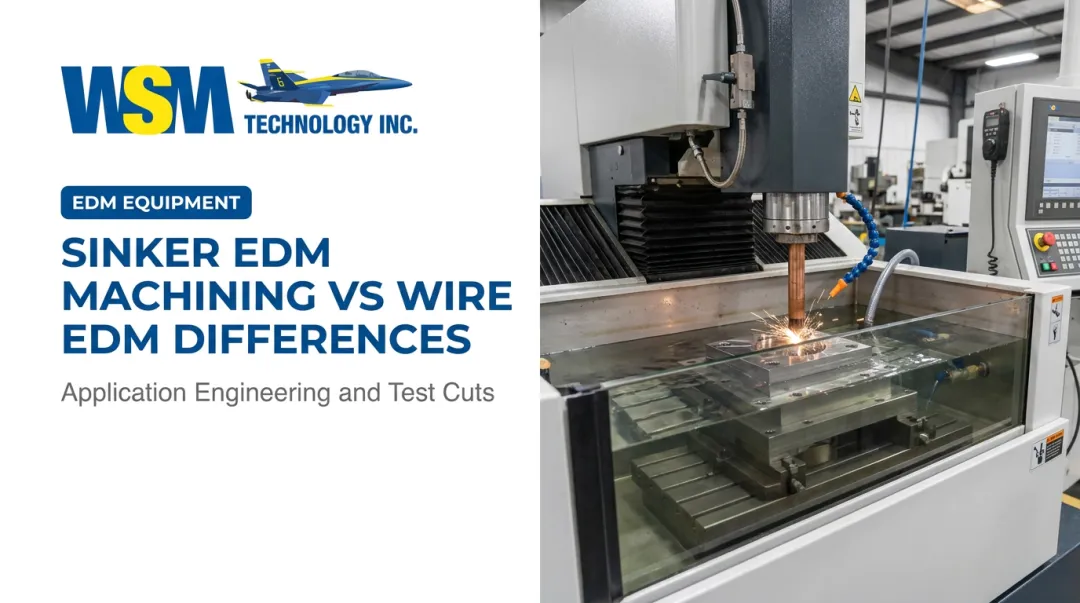
Sinker EDM, also called ram or cavity EDM, uses a pre-shaped graphite or copper electrode plunged into the workpiece to erode a cavity matching the electrode's negative shape. The electrode cycles vertically throughout the cut, both eroding material and clearing debris from the gap.
What makes it different: rather than a linear wire, Sinker EDM relies on a custom-machined 3D electrode. That's what enables blind cavities, sharp internal corners, and undercut-free complex shapes that a wire simply can't produce.
Sinker EDM is best suited for:
- Injection molds and die-cast tooling
- Forging and stamping dies
- Parts requiring intricate cavity detail without mechanical stress on the workpiece
Key strengths: it delivers fine surface finishes and tight corner radii impossible with rotating cutters, and because there's no mechanical contact, there's no cutting-force-induced stress on the part.
Trade-offs: electrodes must be remachined for every design change, and wear ratios vary by material pairing. A Canadian Metalworking report citing Makino's product manager notes copper-tungsten electrodes on tungsten carbide run 18-20% wear, while graphite on the same material can hit 45-50%.
On standard tool steel, graphite wear typically stays under 1%, so there's no single "typical" number; it depends entirely on your electrode-workpiece combination.

WSM Technology's Mitsubishi and OPS Ingersoll sinker EDM equipment gives mold and die makers a local resource for this capability, with test cuts available to confirm performance before purchase.
Hole Drilling / Micro EDM
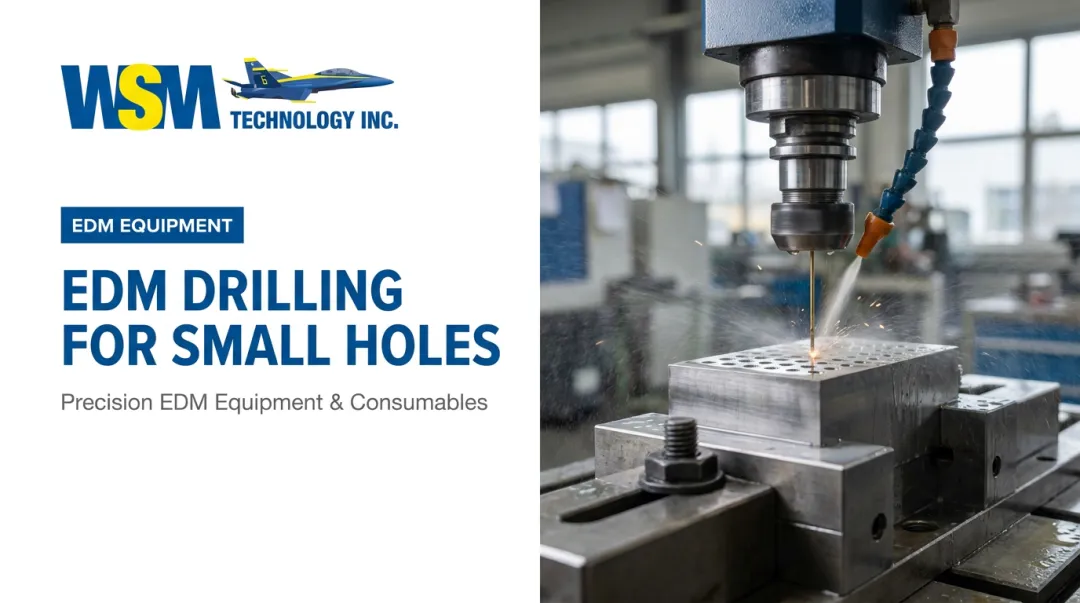
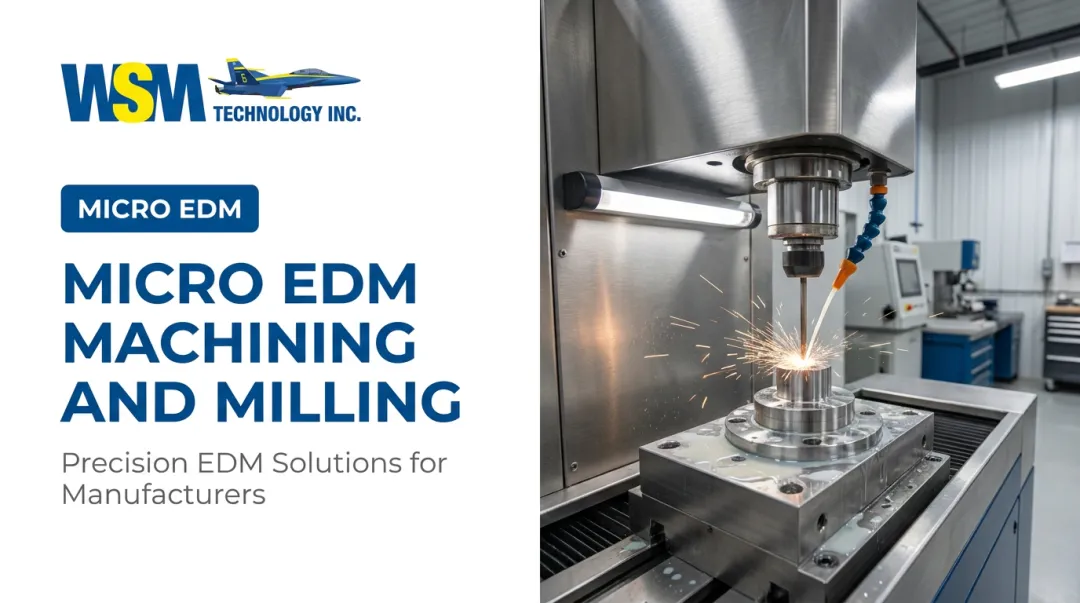
Hole Drilling EDM uses a rotating tube-shaped electrode, often brass or copper, to erode small, deep, precise holes through spark erosion. Dielectric fluid pumps through the hollow electrode center to cool it and flush debris, much like a syringe needle clearing its own path.
What makes it different: this process focuses on producing straight or angled small-diameter holes rather than contours or cavities. It can also drill at angles conventional drilling struggles to hit cleanly.
Hole Drilling/Micro EDM is best suited for:
- Cooling channels in molds and tooling
- Fuel injection nozzles and turbine blade cooling holes
- Micro-tooling in aerospace, medical, and electronics components
Key strengths: Sarix, a specialist in this equipment category, publishes a micro-EDM drilling range beginning at 10 microns on the small end, illustrating just how fine this process can go. It also produces a smooth bore finish without any secondary deburring step.
Trade-offs: it's limited to hole-type geometries and generally runs slower for larger-volume material removal compared to wire or sinker EDM.
WSM Technology's Sarix Micro EDM line serves as a specialized solution for shops across Ohio, Pennsylvania, West Virginia, Michigan, Indiana, and Kentucky needing micro-hole drilling and fine-feature EDM work.
How to Choose the Right Type of EDM Machining
The "right" EDM type depends on part geometry, tolerance, material, and production goals — not which machine has the flashiest spec sheet.
Weigh these factors before committing:
- Part geometry and feature type: through-cut profile vs. blind cavity vs. precision hole
- Material hardness and conductivity: confirm the workpiece actually conducts electricity
- Tolerance and surface finish demands: some jobs need microns, others don't
- Production volume and lead time: prototyping runs differ from full production
- Budget, including ongoing costs: electrode wear and wire consumption add up over a production run
Test cuts and time studies remove the guesswork. At WSM Technology's Rootstown, Ohio demonstration center, shops can run their own parts across wire, sinker, and micro EDM equipment before making a capital decision. This lets them compare actual cycle times and finish quality rather than relying on spec sheets alone.
What to Check Before Finalizing a Type of EDM Machining
A few practical checks prevent expensive missteps:
- Don't over-buy capability. A standard wire or sinker machine often fully covers the job; a 5-axis wire EDM isn't necessary for every contour cut.
- Account for long-term costs. Electrode remachining, wire consumption, and wear ratios affect total cost of ownership well beyond the purchase price.
- Consider a combination approach. Many parts need hole drilling EDM to create a start hole before wire EDM contour cutting begins. These aren't competing purchases; they're sequential steps that solve one part's geometry.

WSM Technology also stocks EDM consumables, including wire, filters, and resin tanks, so shops running Mitsubishi or comparable equipment can keep operating costs predictable rather than scrambling for supply.
Conclusion
EDM machining shapes precise, hardened, and complex components across mold, die, aerospace, and medical manufacturing. Wire, sinker, and hole drilling EDM each solves a distinct machining challenge based on part geometry — none of them replaces the other two.
Understanding these differences, and working with an experienced local partner like WSM Technology for equipment evaluation, leads to better production outcomes and fewer costly surprises down the line.
Frequently Asked Questions
What are the different types of EDM machining?
The three primary types are Wire EDM (contour and through-cutting), Sinker EDM (cavity and mold forming), and Hole Drilling/Micro EDM (small, precise holes). Each uses a different electrode design suited to its specific geometry.
Which materials cannot be machined by EDM?
EDM requires an electrically conductive workpiece, so ordinary nonconductive plastics, ceramics, and glass can't be processed through conventional EDM. Some specialized techniques use conductive assisting layers for certain ceramics, but that's the exception, not the rule.
What is the difference between wire EDM and sinker EDM?
Wire EDM uses a continuously fed wire electrode to cut through a workpiece, ideal for contour and through-cuts. Sinker EDM uses a custom-shaped electrode plunged into the material to form blind cavities and 3D detail.
Which EDM type is best for creating complex mold cavities?
Sinker (die sinking) EDM is best suited for complex 3D mold cavities because its shaped electrode can produce sharp internal corners and undercut-free geometry that a wire or drilling process can't replicate.
How accurate is EDM machining compared to conventional machining?
EDM equipment can achieve micron-level accuracy and sub-micron surface finishes on select machine classes, making it well-suited to hardened conductive materials. Milling can hold tighter tolerances in open, accessible geometry, so the better choice depends on the part's specific features.
Can EDM machining be combined with CNC milling or other processes?
Yes. Shops commonly use CNC milling to rough out accessible material first, then finish deep, narrow, or sharp-cornered features with EDM. This combination improves efficiency without sacrificing precision on the geometry milling can't reach.