
Yet many shop owners struggle with a basic question: which CNC technology actually fits their parts? Milling, EDM, or a 5-axis machine that does both jobs better? And what does that investment actually cost?
This guide breaks down how CNC machining works in mold making, the machine types shops rely on, what to look for before buying, the real benefits at stake, and why local service and support can make or break your return on investment.
Key Takeaways
- Mold cavities and cores come from three technologies working together: milling, EDM, and turning
- Machine selection hinges on precision, rigidity, spindle power, and axis configuration matched to your parts
- 5-axis and multi-process machines cut setups and slash cycle times versus older 3-axis-only shops
- The global CNC machine market is projected to grow from $108.58B in 2026 to $251.61B by 2034 (11.10% CAGR), driven by precision engineering
- Local dealer support (training, demo centers, and OEM parts) directly affects machine uptime
How CNC Machining Works in Mold Making
Every mold starts as a 3D CAD model. CAM software then translates that design into toolpaths, which get converted into G-code the CNC machine reads and executes. The result: cores and cavities cut to tolerances measured in microns, not millimeters.
A typical mold production sequence looks like this:
- Design the mold in CAD, defining parting lines, draft angles, and cooling layouts
- Generate toolpaths in CAM software, selecting cutting strategies for each feature
- Set up the workpiece on the machine, indicating and clamping the block
- Rough out the bulk material quickly, leaving stock for finishing
- Semi-finish to refine geometry and reduce stepover
- Finish to final dimension and surface specification

Milling handles most of this work, but it hits a wall on hardened tool steel, deep narrow cavities, and sharp internal corners. That's where sinker and wire EDM take over.
Sinker EDM erodes material using an electrode shaped like the cavity's negative, making it ideal for hardened steels and fine detail that standard end mills can't reach. Wire EDM handles precision cutting of inserts, slides, and parting-line details. Together, they cover the fine-detail, hardened-steel accuracy that milling alone can't guarantee.
Once machining wraps up, finishing and polishing steps bring the cavity surface to spec—critical for molded parts that need a specific texture or optical clarity. Modern high-precision milling centers, including ultra-precision 3-axis platforms, are now built for sub-micron machining accuracy and repeatability, a benchmark that would have been unheard of in mold shops a decade ago.
Types of CNC Machines & Technologies for Mold Making
Most mold shops don't rely on a single machine. They combine milling, EDM, and turning technology, each handling the geometry and material it does best.
CNC Milling Machines: 3-Axis vs. 5-Axis
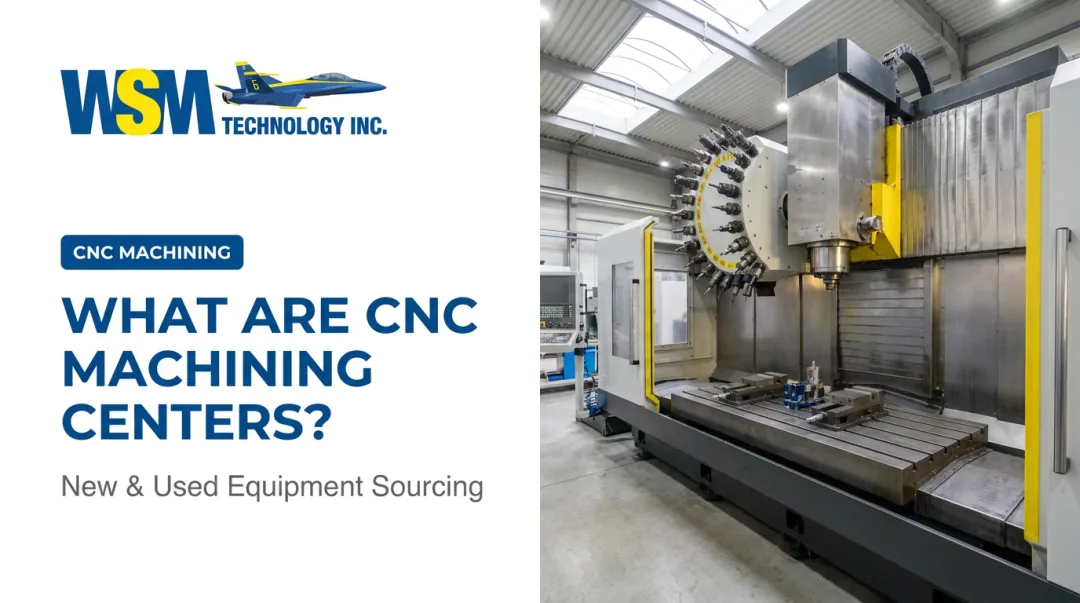
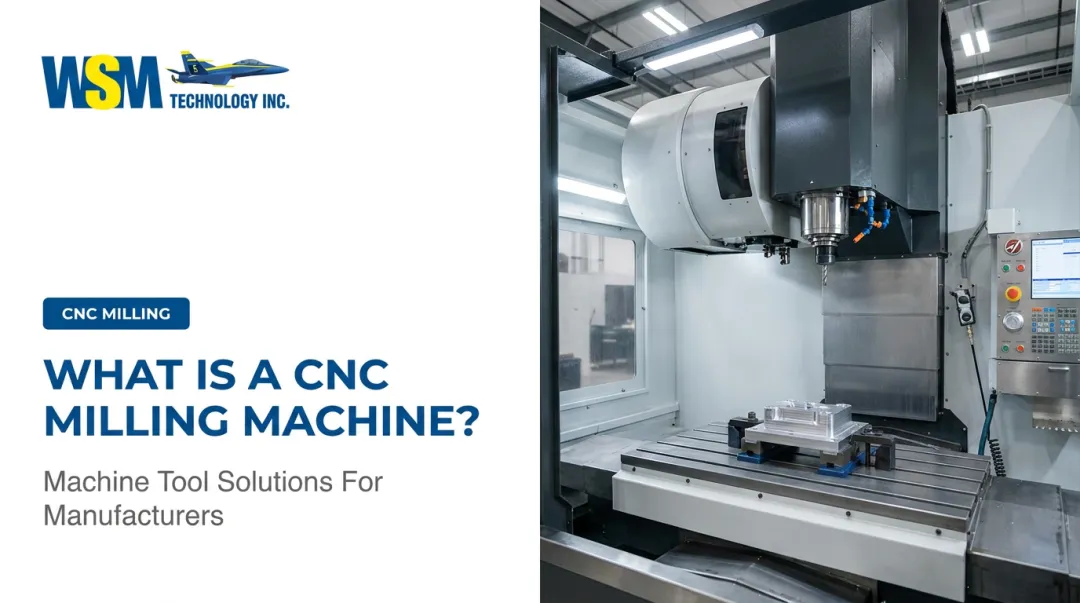
Three-axis mills still handle plenty of mold work: simple cavity geometries, flat-bottomed pockets, straightforward core shapes. But 5-axis machines cut complex contours, undercuts, and steep walls in a single setup, eliminating repositioning errors entirely.
The cycle-time difference can be dramatic. In one documented electrode test, Makino's D200Z reduced machining time on a cross-rib graphite electrode from 61 minutes with 3-axis machining to just 5.5 minutes with 5-axis machining, a 90% reduction driven by shorter tool lengths and better tool-height access.
For shops running high-precision cavity work, machines like the Roku-Roku Android II push this further, delivering ±1 micron accuracy at 60,000 RPM with linear motor drives on every axis. Other platforms, including JINGDIAO's 3- and 5-axis high-speed mills and OPS Ingersoll's machining centers and graphite mills, round out the milling side of most mold shop toolrooms.
EDM Machines (Wire & Sinker)
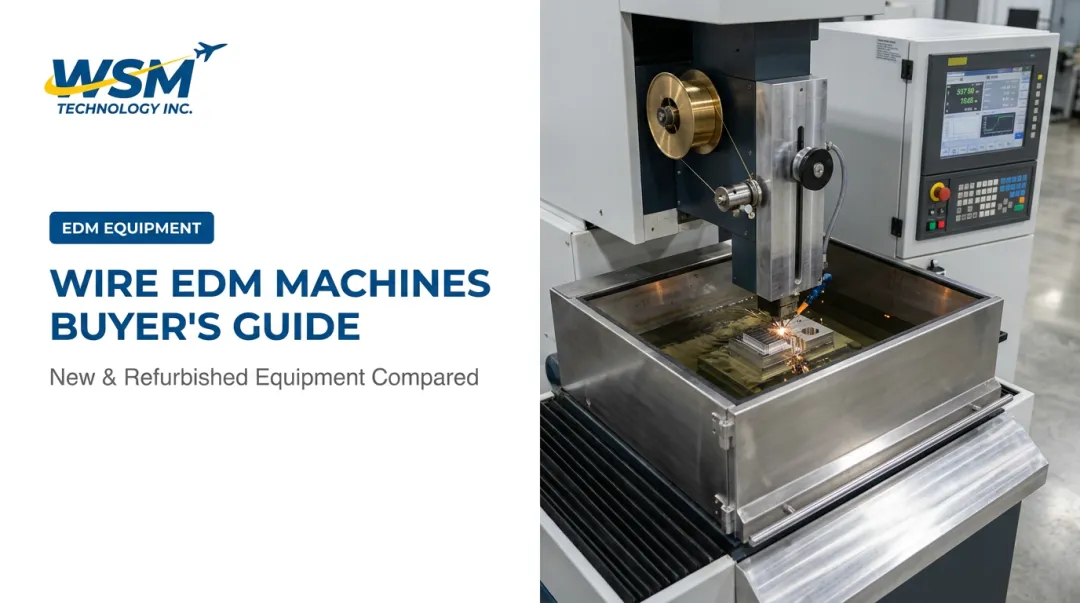
Sinker EDM shapes a hardened cavity by eroding metal with a shaped electrode, delivering fine detail that survives even in fully hardened tool steel. Wire EDM, by contrast, precision-cuts components and inserts using a thin traveling wire electrode.
Brands like Mitsubishi (including the MV1200S and MV2400 wire EDM platforms with linear shaft motors and submerged cutting) and Sarix Micro EDM are widely used across mold and die shops for these applications. Sarix machines in particular are built for micro-scale work: micro hole drilling and 3D micro EDM milling for shops serving micro molding and aerospace applications.
CNC Turning, Lathes & Specialized Multi-Axis Technology
Not every mold component is a flat cavity. Cores, inserts, and cylindrical components need rotational precision that only a lathe delivers. Machines like Schaublin and ROMI-style turning centers handle this work, producing round components to tight roundness and concentricity tolerances that mills can't achieve.
Beyond rotational parts, cooling channels present their own machining challenge and rank among the biggest factors in mold cycle time. Drilling them efficiently often requires more than a standard 3-axis setup. 7-axis milling combined with gun drilling, as seen in machine lines like Cheto, lets shops machine deep cooling channels in the same setup as cavity features, critical for mold performance and part quality over long production runs.

Key Factors to Consider When Choosing a CNC Machine for Mold Making
Picking the right machine comes down to five factors, and getting any one wrong shows up in your scrap rate.
Precision and accuracy. Aerospace, automotive, and medical mold applications leave almost no tolerance for deviation. A cavity that's off by even a few microns can produce parts that fail dimensional inspection or don't assemble correctly downstream.
Machine rigidity. A rigid machine resists deflection under cutting forces, which preserves dimensional accuracy and surface finish across long production runs. Softer machines flex under load, and that flex shows up as chatter marks and dimensional drift.
Spindle power and speed. Hardened tool steels demand different spindle capability than aluminum or graphite. Adjustable spindle speed and torque directly affect surface finish quality and how efficiently the machine handles harder materials.
Axis configuration. This is the classic trade-off:
- 3-axis machines cost less and handle simpler geometries well
- 5-axis machines reduce setups, cut cycle time, and open up complex mold geometries that would otherwise require multiple fixtures
Control system and CAD/CAM compatibility. A control system that integrates smoothly with your CAM software reduces programming errors and setup time. Fanuc, Siemens, and Mitsubishi's M800 platform are common control systems on mold-making machines. Choosing hardware that matches your existing software stack saves real time on every job.
Benefits of CNC Machining for Mold Shops
The case for CNC in mold making isn't theoretical. It shows up in the numbers shops track every week.
- Precision and repeatability: CNC machines reproduce identical mold geometry run after run, minimizing part-to-part variation that manual methods can't match
- Reduced production time: Automated toolpaths and tool changes cut lead times compared to manual methods. One automated cell cut small mold-component lead times and setup times in half.
- Cost efficiency at scale: CNC reduces labor costs, scrap rates, and rework across a mold program's life, with savings compounding as cavity count and production volume grow.
Why Local Support & Service Matter When Investing in CNC Mold Making Equipment
A CNC mold-making machine is a serious capital investment. Published pricing for mold-specific vertical machining centers, like the Haas VM-2 and VM-3 at $112,995 and $130,995, shows just how much is on the line before you even factor in tooling, training, and installation.
That's why responsive local service, hands-on training, and OEM parts availability matter as much as the machine specs. A machine sitting idle waiting on a part from overseas costs money every single day.
This is exactly where a regional dealer earns its keep. WSM Technology, based in Rootstown, Ohio, serves mold and die shops across Northern Ohio, Western Pennsylvania, and West Virginia with:
- Turnkey installation and machine setup
- Local and advanced hands-on training
- OEM replacement parts stocked for fast turnaround
Its Demonstration Center lets shops run test cuts and time studies on their own components before committing to a purchase, proving out performance on real parts rather than a spec sheet.

For a mold shop weighing milling versus EDM, or a 3-axis mill versus a 5-axis platform, that kind of hands-on evaluation often settles the decision faster than any brochure could.
Frequently Asked Questions
How much does it cost to make an injection mold?
Costs vary widely based on complexity, size, material, and cavity count. A representative mid-complexity steel mold often runs around $100,000, with features like conformal cooling adding roughly $20,000 more.
How are injection molds machined?
Mold makers start with a CAD-to-CAM workflow, then combine CNC milling with wire and sinker EDM to cut cavities and cores from tool steel or aluminum. Milling handles bulk material removal while EDM tackles hardened steel and fine detail.
What is the difference between CNC and injection molding?
CNC machining is a subtractive process used to build the mold itself, cutting cavities and cores from solid metal. Injection molding is the separate process of using that finished mold to mass-produce plastic parts.
What is the best CNC machine for mold making?
There's no single "best" machine—it depends on part complexity, material, and volume. Most shops need a combination of milling and EDM equipment rather than relying on one universal machine.
How long does it take to CNC machine a mold?
Timelines typically range from several days to a few weeks, depending on cavity complexity, material hardness, and required surface finish. Simple molds move faster; multi-cavity tools with tight tolerances take longer.
What materials are best for CNC mold making?
Tool steels like H13 and P20 dominate high-volume production for their durability and polishability. Aluminum suits lower-volume or bridge tooling, while copper alloys handle localized heat removal in high-cycle applications.