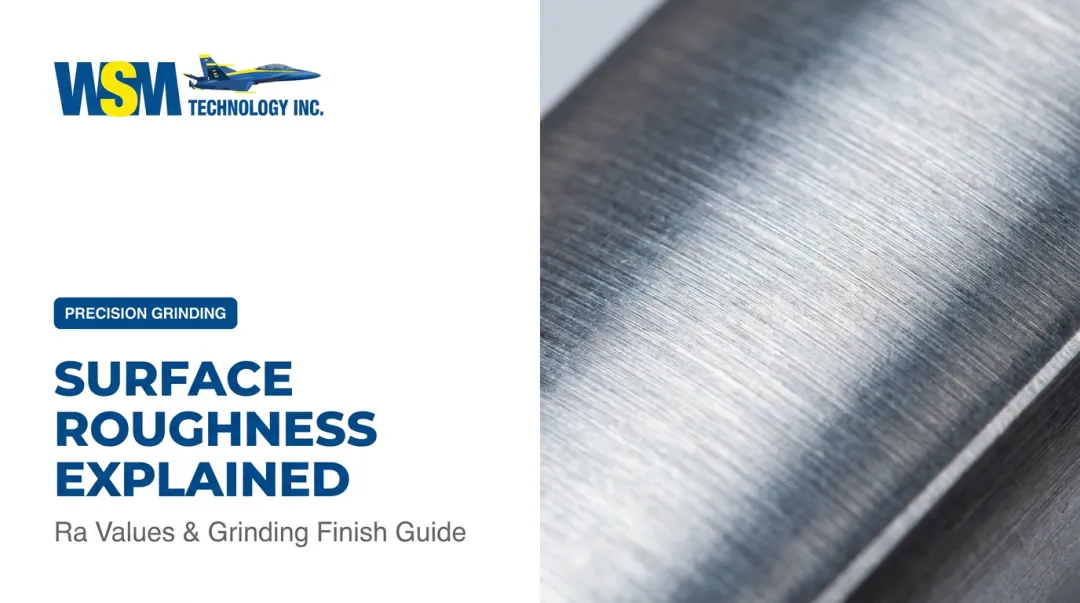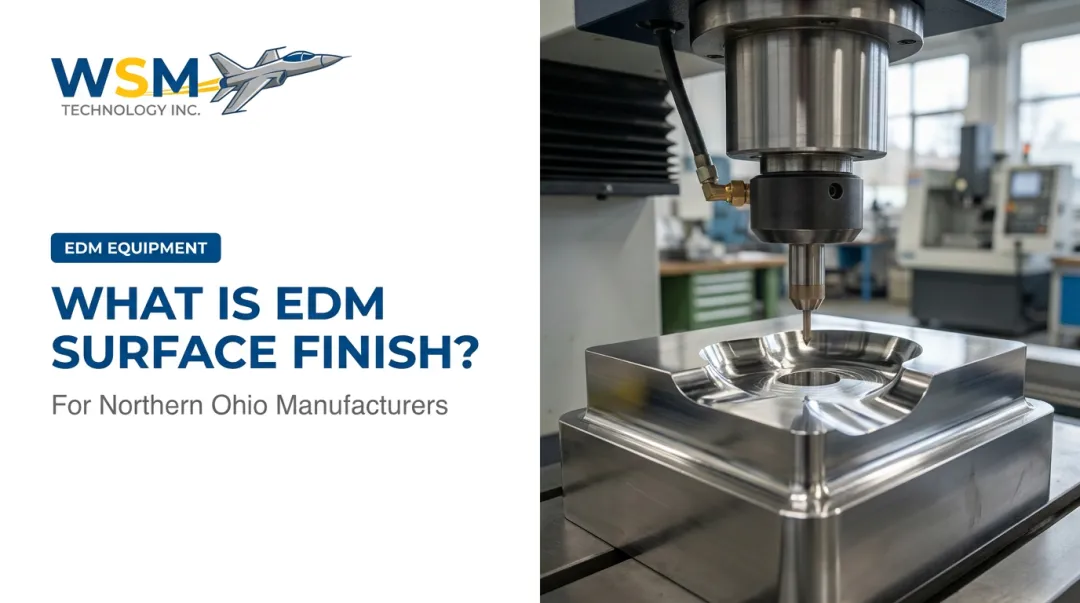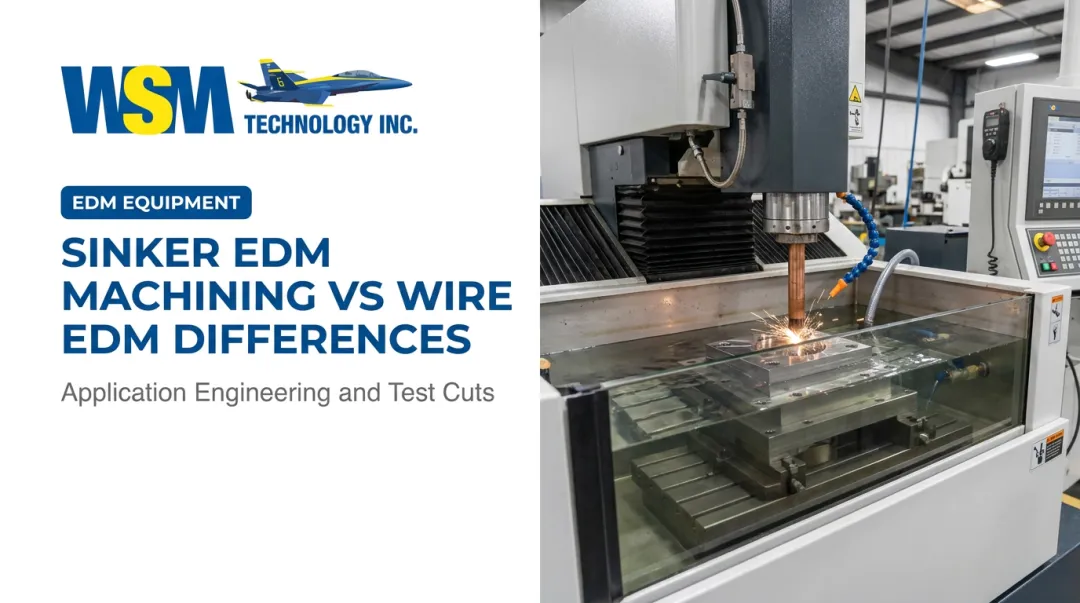

A persistent myth trips up a lot of engineers new to the process: EDM is a "burning" method, so it can't produce fine finishes. That's simply not true. Modern wire EDM can reach 4-5 microinches Ra with the right pass strategy, and sinker EDM machines have hit 1.0 microinch Ra in production settings.
This guide breaks down Ra values, the factors that control them, how wire and sinker EDM differ, and practical steps to dial in the finish your drawing calls for.
Key Takeaways
- Ra measures average roughness; EDM finish comes from thousands of microscopic discharge craters
- A moderate, non-cosmetic finish sits around Ra 3.2 µm (~125 µin)
- Skim passes are the biggest lever for improving wire EDM finish, but each pass adds time and cost
- Wire and sinker EDM leave different textures because each process erodes material differently
- Machine rigidity, flushing, and material properties all shape achievable Ra
What Is Surface Finish in EDM?
Surface finish, or roughness, describes the texture left on a machined surface. In EDM, that texture comes from a completely different mechanism than milling or turning: thousands of electrical discharges, each vaporizing a tiny crater of material. String enough craters together and you get a measurable surface profile.
Ra (roughness average) is the standard metric. Per ASME B46.1, it's the arithmetic average of the absolute profile-height deviations from the mean line across a defined evaluation length. Ra is expressed in microinches (µin) or micrometers (µm), and it's an average, not a description of the deepest crater.
You'll also see Rz or Rmax on some finish charts. Rz typically represents an average peak-to-valley height across sampling lengths, while Rmax captures the single deepest defect. These terms carry slightly different conventions under older ASME usage versus ISO profile standards. Always confirm the definition against the standard cited on your drawing.
Two Main Types of Surface Finishes
- Functional/as-machined finishes – Textures straight off the EDM machine, sufficient for mechanical or sealing function. No secondary work needed.
- Cosmetic/polished finishes – Extra passes or post-processing for a visual or tactile standard, common on mold cavities that imprint onto plastic parts.
EDM produces both. A rough cut alone gives you a functional but coarse surface. Add skim passes, and you move toward the polished end of the spectrum.
What Is Ra 3.2 Surface Finish?
Ra 3.2 µm converts to roughly 125-126 µin (the exact math is 3.2 × 39.37 = 125.98 µin). This is a moderate finish level: visible tool marks, a slightly matte feel, but nothing rough enough to catch a fingernail.
It's common on functional but non-cosmetic surfaces—structural mold components, fixture plates, or features that stay hidden or don't mate under tight tolerance. It isn't a universal EDM output. It's simply a reference point on the finish scale.
Factors That Affect EDM Surface Finish
Several variables interact to determine your final Ra value. Understanding each one helps you troubleshoot when a part doesn't hit spec.
Discharge energy. Pulse duration and current intensity directly control crater size. Higher energy per spark means bigger craters and rougher surfaces. Lower energy and more sparks produce smaller craters and a finer finish.
Number of passes. A rough cut prioritizes material removal speed, not finish. Skim cuts that follow progressively refine the surface. According to Modern Machine Shop, reaching 4-5 µin Ra on wire EDM may require six or seven skim passes.
Dielectric fluid and flushing. Debris removal matters more than most people expect. Sodick notes that submerged operation keeps flushing consistent, which stabilizes thermal conditions and spark behavior throughout the cut.
Wire or electrode condition. Wire diameter, tensile strength, tension, and wear all affect finish consistency. A worn wire section can leave streaking.
Workpiece material. Hardness, grain structure, and purity change what's achievable. Tool steel and carbide often finish more predictably than porous or impure aluminum stock. Some sources note that even 30 µin Ra can be difficult in certain aluminum grades.
Machine rigidity. Worktable flatness and vibration control keep the spark gap consistent. Any mechanical wander shows up as inconsistent texture across the part.

EDM Surface Finish Chart: Ra Values by Pass
There's no single universal chart for EDM finish by pass, since results depend heavily on machine, material, and process conditions. But published data points give a useful reference:
| Process Stage | Reported Ra | Approx. µin |
|---|---|---|
| Wire EDM, multi-skim (6-7 passes) | 0.10-0.13 µm | 4-5 |
| Mitsubishi MP series, 4 cuts | 0.28 µm | ~11.0 µin |
| Mitsubishi MP, fine finish | down to 0.05 µm | ~1.97 µin |
| Sodick wire EDM | as fine as 0.36 µm | ~14.2 µin |
| Makino sinker (micromachining) | 0.03 µm | 1.0 µin |
| Makino sinker (fine finish) | 0.05 µm | 2.0 µin |
| Makino sinker (general) | 0.3 µm | 12 µin |
Each additional skim pass in wire EDM incrementally tightens the Ra value, but every pass adds cycle time and machine cost.

Sinker EDM finish ranges differ because the process erodes with a shaped electrode instead of a continuously renewing wire, so wear pattern and finish uniformity behave differently.
When reading a drawing spec, always check which standard and cutoff length the Ra callout references. The number alone is not a complete finish callout.
Wire EDM vs. Sinker EDM: Surface Finish Differences
These two processes share the same discharge principle but produce noticeably different results.
Sinker EDM (die-sinking) uses a shaped electrode that erodes a cavity into the workpiece. It's the go-to method for mold and die cavities, blind features, and complex 3D geometry a wire can't reach. Finishes tend toward a textured, matte appearance—often desirable on mold surfaces when that texture should transfer to the molded part. Final Ra still depends on electrode condition, orbiting, and the last finish passes.
Wire EDM feeds a continuous wire through the material, and that constant renewal of the cutting edge helps avoid the streaking a worn electrode can cause. Combined with multiple skim passes, wire EDM typically delivers smoother, more uniform finishes along the cut path—well suited when consistency matters more than intentional texture.
| Sinker EDM | Wire EDM | |
|---|---|---|
| Typical finish character | Textured, matte cavity walls | Smoother, more uniform cut surfaces |
| Best-fit geometry | Blind cavities, complex 3D forms | Through-features a wire can path |
| Finish control levers | Electrode condition, orbiting, finish passes | Skim count, wire condition, power settings |

Choose based on finish intent and what the geometry allows:
- Geometry – Can a wire reach the feature, or do you need a shaped electrode?
- Application – Do you need mold-texture matte or near-optical smoothness?
- Finish target – How many microinches of Ra are worth the extra cycle time?
How to Optimize and Improve EDM Surface Finish
Getting the finish you need takes a sequence of deliberate choices.
- Plan your pass strategy – Start with a fast roughing cut, then layer in progressively lighter skim passes for critical surfaces. Each skim reduces current and narrows the voltage gap to refine the spark.
- Match wire or electrode to the job – Wire diameter, tensile strength, and tension all influence the finish you'll actually achieve, not just the finish you spec on paper.
- Control flushing and dielectric condition – Debris removal keeps spark behavior consistent from the first cut to the last skim pass.
- Consider post-processing when needed – Some ultra-critical surfaces still need polishing or electrochemical finishing after EDM, particularly for optical or cosmetic mold work.

Dialing in these variables takes experience, and the right settings rarely transfer job to job. That's where a hands-on equipment provider helps.
WSM Technology, based in Rootstown, Ohio, runs Mitsubishi and Sarix Micro EDM machines at its demonstration center. Manufacturers can run test cuts there and compare results before locking in a process plan.
With training support included, shops across Northern Ohio, Western Pennsylvania, and West Virginia can see what finish is realistic for their material and geometry instead of guessing from a spec sheet.
Frequently Asked Questions
What is Ra 3.2 surface finish?
Ra 3.2 µm converts to roughly 125-126 µin. It's a moderate finish—common on functional, non-cosmetic surfaces—and sits on the coarser side of fine EDM work.
What is an EDM sinker?
A sinker, or die-sinking EDM machine, uses a shaped electrode submerged in dielectric fluid to erode a cavity through spark discharge. It's built for complex mold cavities and blind features that wire EDM can't reach.
What are the two main types of EDM surface finishes?
Functional/as-machined finishes work straight off the machine with no extra processing. Cosmetic/polished finishes require additional skim passes or post-processing to hit a specific visual standard.
What is the smoothest surface finish achievable with wire EDM?
Under optimal conditions with multiple skim passes (six or seven), wire EDM can reach 4-5 µin Ra. Results vary significantly based on material, machine, and setup.
Does EDM surface finish require additional polishing?
Many EDM finishes work as-is for functional parts. Ultra-critical applications, like optical mold cavities, may still need secondary polishing or electrochemical finishing to hit spec.
How do I specify the right surface finish on my part drawing?
Call out Ra clearly in the title block along with the measurement standard and cutoff length. Consult with your machine shop or equipment provider to confirm the target is achievable for your material and geometry.