
Introduction
Walk into any shop running a horizontal machining center and you'll hear the same complaint. The spindle sits idle while operators reposition parts, swap fixtures, or wait for the next load. Every minute the tool isn't cutting is a minute you're not billing.
That's where CNC tombstones come in. These multi-sided fixture blocks let you load several parts or operations onto one pallet, then let the machine index through faces automatically.
One documented shop case nearly tripled throughput and hit close to 90% spindle utilization after switching to a tombstone strategy, according to a Modern Machine Shop case study.
This guide covers what tombstones are, the main types available, how to pick the right one, and what drives cost.
Key Takeaways
- Tombstones let you machine multiple parts or operations in a single setup, reducing non-cutting time
- Match solid, caged, modular, or rotating designs to volume, access, and changeover needs
- The right choice depends on machine capacity, part size, material, and existing tooling
- Strong fixturing and application guidance raise spindle utilization and CNC ROI
What Is a CNC Tombstone in Machining?
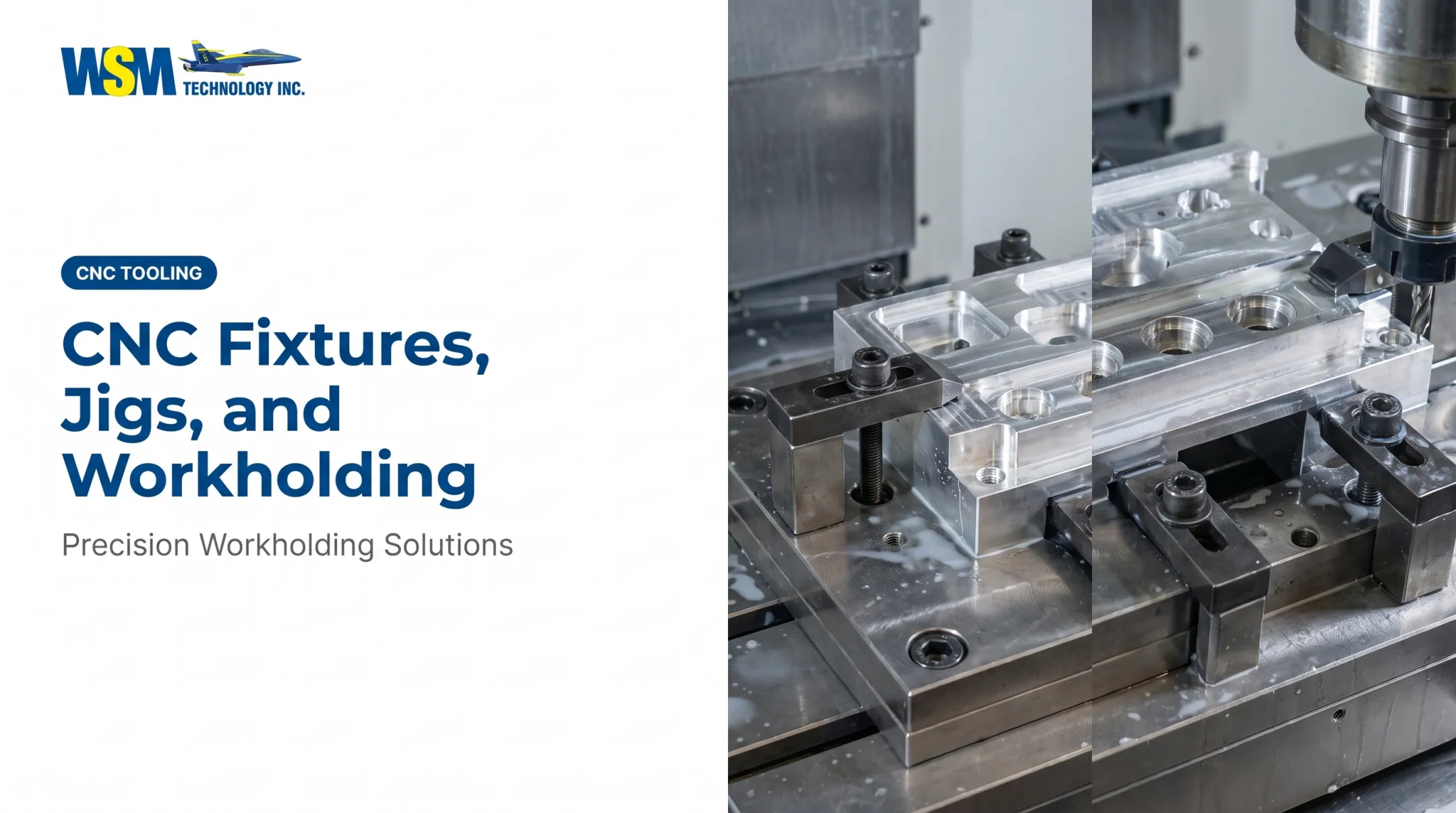
A CNC tombstone is an upright, multi-sided fixture block, sometimes called a pedestal fixture or tooling tower, mounted to a rotary table or horizontal machining center (HMC) pallet. Modern Machine Shop describes tombstones as fabrications with two to six or more faces, and four-sided designs are common on machines like Haas cells.
Parts mount directly to the tombstone or to fixture plates bolted to its faces. As the pallet indexes, the spindle works through each face in sequence. An automatic tool changer can also cycle through operations without operator intervention.
Why material and mass matter:
- Cast iron — the traditional choice for maximum rigidity and vibration damping
- Steel — used where high strength-to-weight matters
- Aluminum — lighter, often paired with hollow or caged designs
Jergens builds its tooling columns from stress-relieved Class 40 cast iron specifically for maximum-rigidity applications. Heavier isn't always better, though. Kurt's caged tombstones run over 30% lighter than comparable solid units when paired with aluminum subplates. That weight savings matters when pallet load limits or rotary-table capacity become the bottleneck.

Types of CNC Tombstones
CNC tombstones come in several body styles. The right pick depends on cutting load, changeover speed, and how much automation you need.
Solid Tombstones
Single-piece cast iron or steel blocks. No moving parts, no internal cavities, just mass and rigidity. These excel in heavy roughing operations where vibration control matters more than weight savings.
Caged/Hollow Tombstones
Hollow-body designs that route hydraulic or pneumatic lines internally, keeping hoses out of the tool path. They typically support quick-change subplates, so a fully loaded face can be swapped out in minutes rather than re-fixtured from scratch.
Modular Tombstones
Modular tombstones use tapped grids, bushed patterns, or quick-change interfaces (common grid spacings include 52 mm and 96 mm). Subplates swap between part families without rebuilding the entire fixture stack.
Rotating Tombstones
Rotating tombstones add programmable indexing for five-sided access. In the right cell setup, that indexing supports unattended lights-out runs.
Quick comparison:
| Type | Best for | Tradeoff |
|---|---|---|
| Solid | Heavy cutting, max rigidity | Fixed setup, heavier mass |
| Caged/hollow | Utility routing, lower mass | More engineering complexity |
| Modular | Fast changeovers between part families | Interface dependency |
| Rotating | Unattended, five-sided machining | Added integration cost |

Key Benefits of Using CNC Tombstones for Workholding
The core mechanism is simple: load more parts per pallet cycle, and the machine spends more time cutting and less time waiting on an operator.
Two common utilization strategies:
- One tombstone per setup: Load a batch of identical parts across all faces and run the full batch unattended. Best for repeat production runs.
- One setup per face: Dedicate each face to a different operation on the same part family, reducing repositioning. Best for high-mix, multi-operation parts.
Shops that match the fixture plan to the job see the payoff in throughput. In one documented case, a shop moved from one part every 8 minutes on old vertical mills to 12 parts in 18 minutes per batch after adopting tombstone fixturing, per Modern Machine Shop.
The same shop reported a 20% cycle-time improvement on engraving work and 95% fewer reworks.

Other benefits:
- Fewer repositioning errors: Parts stay locked on one fixture through multiple operations, improving batch repeatability
- Labor savings: Fewer operator interventions per shift supports unattended or lights-out machining
- Better spindle utilization: Less dead time between cuts
Treat published percentages as case benchmarks tied to specific loading plans, not guaranteed outcomes for every shop. Results depend heavily on how well the fixture matches your operation sequence.
How to Choose the Right CNC Tombstone for Your Shop
Start with the machine, not the part. Match brand, model, and pallet size first—then compare tombstone options against that envelope.
Checklist before you buy:
- Machine compatibility — base must match your rotary table, HMC pallet, or trunnion envelope
- Part size and quantity — count the faces you need; extra faces hurt if they block tool access
- Material and construction — solid for heavy cutting; caged for lighter loads or internal utilities
- Tooling and fixture plates — verify grid spacing, pull-stud pattern, or zero-point interface against your tooling
Cross-compatibility pays off on mixed floors. LANG, for example, lists a four-face tombstone at about 82 lb (37.1 kg) that fits 3- and 5-axis tables plus 4th-axis rotary or trunnion setups.
Don't skip the load math. Parts, fixture plates, and hardware must stay under your machine’s rated pallet or rotary limit—and leave margin for center-of-gravity shift as the tombstone indexes.

Custom Tombstone Solutions and Working with an Experienced Partner
Catalog tombstones work fine for simple, repeatable jobs. Complex or high-mix production usually needs something engineered around the actual part family, tool access, and clamping sequence.
Custom engineering makes sense when:
- Part geometry doesn't fit standard grid spacing
- Utilities (hydraulic, pneumatic) need internal routing
- High-variability, low-volume work demands flexible subplates
- Tool clearance is tight and generic layouts create collisions
A well-scoped custom request should spell out:
- Machine and pallet type
- Face count and part envelope
- Clamping forces
- Required flatness and perpendicularity
- Changeover goals
That level of detail is what separates a fixture that pays for itself from one that sits unused.
Those specs are also easier to get right with a partner who knows the machines and the shop floor. WSM Technology has spent over a decade helping manufacturers across Northern Ohio, Western Pennsylvania, and West Virginia improve CNC utilization and workholding results. Founded in 2012 by Blaise Buholzer, the team brings decades of application engineering on precision machine tools.
At its demonstration center in Rootstown, Ohio, WSM runs test cuts and time studies so you can validate a tombstone strategy before full deployment. You prove throughput gains first instead of guessing.

WSM also provides turnkey installation and training support. Once the fixturing approach is validated, your team can run it correctly from day one.
Frequently Asked Questions
What is a tombstone in machining?
A tombstone is a multi-sided fixture block mounted to a rotary table or HMC pallet. It holds multiple parts, or multiple operations on one part, so a machine can run several jobs in a single setup.
How much does a tombstone cost?
Cost varies widely based on size, material, number of faces, and customization. One published example listed a 400 mm cast-iron, four-face unit at $6,995, but that's a single product's price, not a market average. Request a quote based on your specific configuration.
What machines can use a tombstone?
Tombstones are primarily used on horizontal machining centers and on mills equipped with 4th- or 5th-axis rotary tables. Compatibility depends on pallet pattern, load rating, and interface type, so always verify against your specific machine.
Can a tombstone be customized for specific parts?
Yes. Custom fixture plates and subplates can be engineered around part geometry, clamping requirements, and production volume. This is common for high-mix or complex parts that don't fit standard grid layouts.
What is the difference between a solid and caged tombstone?
Solid tombstones are single-piece cast iron or steel, built for maximum rigidity in heavy cutting. Caged tombstones use a hollow design that routes hydraulic or pneumatic lines internally and often runs lighter overall.
How do I maintain a CNC tombstone for accuracy over time?
Clear chips from locating faces at every load and inspect for damage or contamination. Periodically check flatness, parallelism, and perpendicularity, and requalify the fixture after any crash or suspected impact.