
The stakes are real. Shops without proper jigs often see inconsistent part quality, higher scrap rates, and production speeds that never scale past a few pieces an hour. This guide breaks down what a jig machine actually is, the main jig types you'll encounter on a shop floor, how jigs differ from fixtures, and what it takes to manufacture a jig accurate enough to trust.
Key Takeaways
- Guides the cutting tool directly—drill, reamer, or tap—for repeatable hole accuracy
- Cycle times drop when jigs eliminate manual layout and marking on every part
- Drill, template, and modular jigs each match different production volumes
- Unlike fixtures (which only hold the workpiece), jigs actively guide the tool
- Precision milling and EDM equipment turn a jig design into a durable, accurate tool
What Is a Jig in Machining?
A jig is a specialized work-holding device that does two jobs at once:
- Locates the workpiece in a fixed position
- Directs the cutting tool's path during the operation
Most commonly you'll see this with a drill jig, where a hardened bushing physically guides the drill bit to the exact hole location—every time, on every part.
This isn't a new idea. Jigs have been central to tool-and-die making since the earliest days of mass production, alongside stamping dies and injection molds. Britannica describes tool-and-die making as the industrial craft behind producing jigs and fixtures for consistent, repeatable manufacturing at scale.
A quick clarification on terminology: in a machine shop context, "jig machine" typically refers to a jig used with machine tools, or to the machinery used to build the jig itself. It's not the same as the word "jig" used in other industries (mining or textiles, for instance).
Why This Matters on the Shop Floor
The core purpose of a jig is simple: eliminate manual layout and marking for every part. Instead of measuring, scribing, and center-punching each hole by hand, the machinist lets the jig handle positioning—and Protolabs notes that a drill bushing improves both quality and manufacturing speed as a result.
Consider a recent aerospace study on deep drilling in composite-metal stacks. Using a guide bushing to stabilize the drill, researchers achieved dimensional accuracy of ±0.06 mm, compared to ±0.6 mm for an unguided robotic setup, per a 2026 ScienceDirect study. That's a tenfold improvement, driven entirely by the jig's tool-guiding function.

Jig vs. Fixture: Understanding the Difference
This distinction trips up a lot of people new to machining, but it's straightforward once you see it in practice.
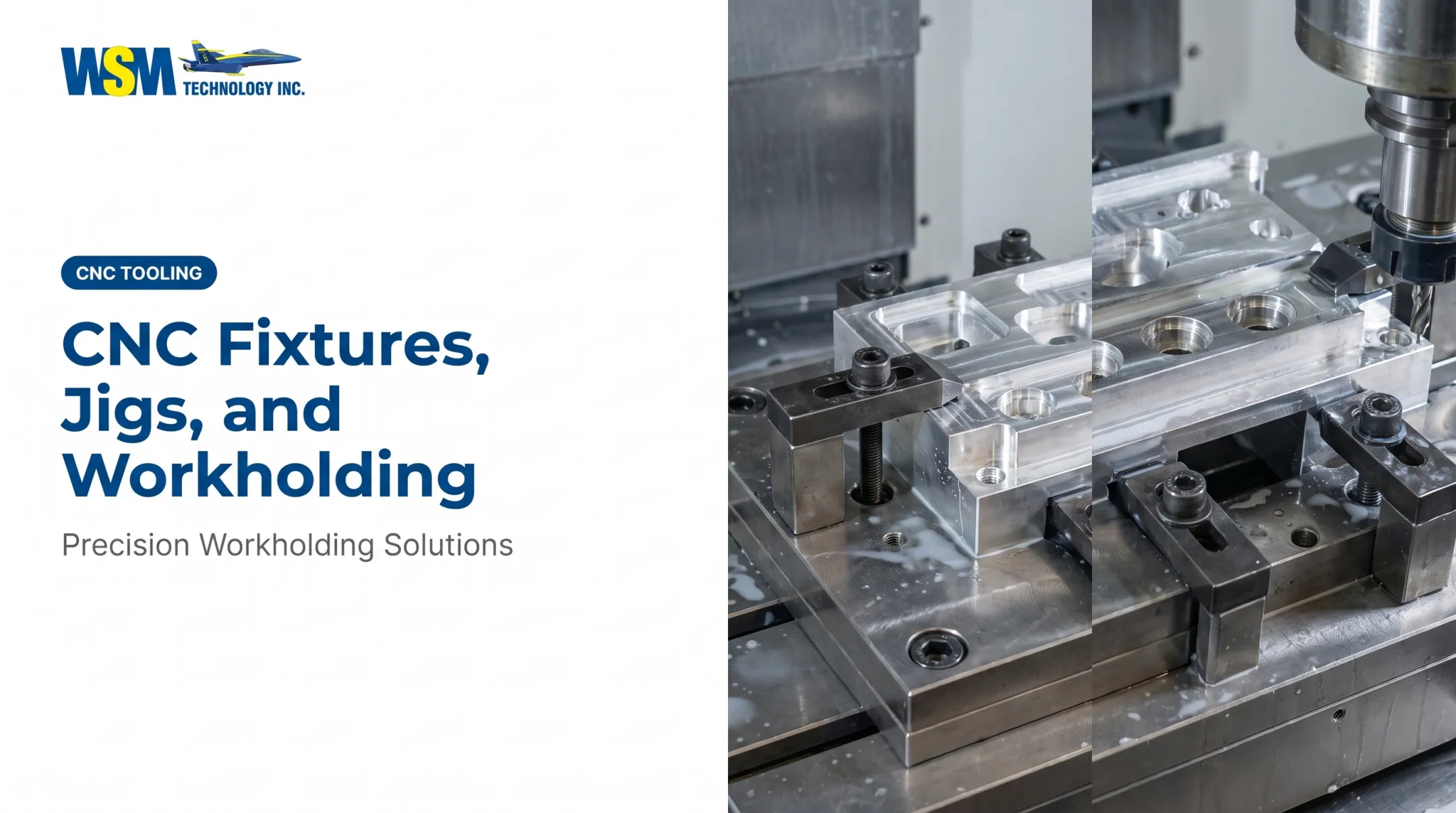
- A fixture holds and locates the workpiece. It does not touch or guide the cutting tool.
- A jig does both: it holds the workpiece and guides the tool through bushings or guide plates.
Simple example: a drill jig physically guides the drill bit through a hardened bushing, keeping it on-center and at the correct angle. A fixture just clamps the part in place. From there, tool positioning is left to the operator or the CNC program.
That's why the two show up in different operations:
- Jigs are common in drilling, reaming, and tapping
- Fixtures are common in milling, grinding, and welding
If the tool is riding through a bushing, you're looking at a jig. If the part is simply clamped and the operator (or CNC program) is doing all the tool positioning, that's a fixture.
Types of Jigs Used in Manufacturing
Jig design varies quite a bit depending on part geometry, tolerance needs, and production volume. Here's a rundown of the most common types.
Drill Jigs
Drill jigs use hardened bushings to guide the drill bit precisely to a target location. They're the workhorse jig type for high-volume drilling, tapping, reaming, and countersinking operations where repeatability matters more than flexibility.
Template Jigs
Template jigs are about as simple as it gets: flat plates with holes marking the desired points, used to guide the tool by hand or under light power. They're typically the most economical option, making them a solid fit for low-volume runs where a full drill-bushing setup isn't worth the investment.
Modular and Box Jigs
For shops juggling varied part geometries, rigid single-purpose jigs don't always make sense. Two alternatives:
- Modular jigs: reconfigurable systems built from standard components, ideal for job shops needing flexibility across multiple jobs
- Box jigs: fully enclosed jigs that hold a part from multiple sides, useful for complex, multi-face operations

A 2019 study on modular jig redesign found real gains from this approach. Takt time dropped from 4.6 to 2.6 minutes per part, the redesigned jig handled 12 parts per cycle, and daily output rose 32%. Projected savings exceeded $6,000 per year, according to a Procedia Manufacturing study.

Channel and Plate Jigs
Channel and plate jigs round out the family for specific geometries:
- Channel jigs: machine three sides without repositioning the part
- Plate jigs: add clamping and mounting features on top of a basic template design
Why Jigs Matter for Precision Manufacturing
Jigs earn their place in a shop because they change how work gets done on the floor.
They cut cycle time. No more measuring, marking, and center-punching for each individual part. The jig does that work once, in its design, and then repeats it indefinitely.
They tighten consistency across large runs. For aerospace, automotive, and mold-and-die work, where tolerances are unforgiving and volumes are high, that consistency separates a run of good parts from a run full of rework.
Skill dependency drops. A well-designed jig lets a less experienced machinist produce parts as accurate as a veteran working freehand. That matters more than ever with skilled labor stretched thin across the industry.
The aerospace drilling example from earlier makes this concrete: guided drilling achieved ±0.06 mm accuracy against ±0.6 mm unguided. That tenfold gap is the line between a part that passes inspection and one that gets scrapped.
How Jigs Are Designed and Manufactured
Jig design starts with the part, not the tool. Engineers work from the workpiece's geometry and tolerance requirements, then build a CAD model of the guiding and locating elements around that. Material selection matters too. Jigs are typically machined from hardened tool steel for wear resistance, or aluminum where weight and cost matter more than surface durability. Either way, cutting a jig accurate enough to trust requires high-precision milling and EDM equipment, not general-purpose machine tools. That accuracy bar is why shops rely on specialized machines such as WSM Technology's lineup. The ROKU-ROKU ANDROID II high-speed machining center holds ±1 micron machining accuracy, with capabilities built for jig work:
- Linear-motor drives for responsive, precise motion
- Thermal-growth compensation across 16 sensors
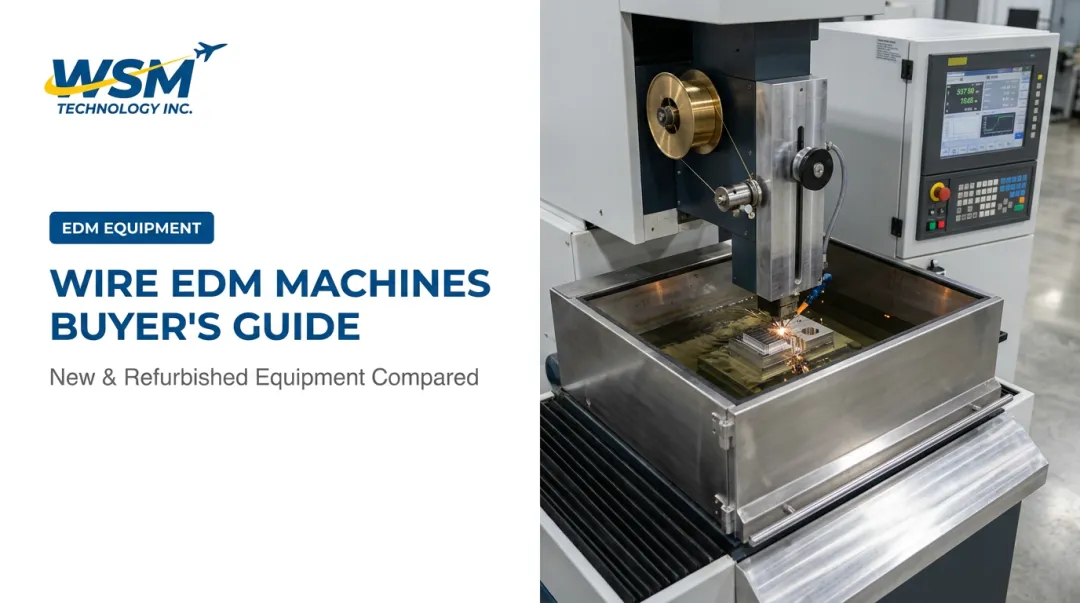
- Included jig-grinding option to keep bushing locations on spec On the EDM side, WSM's Mitsubishi wire EDM lines (including the MV1200S and MV2400) handle the tight-tolerance hole work hardened jig components often demand. For shops that aren't sure a given machine will hit their tolerance target, WSM's Rootstown, Ohio demonstration center offers test cuts and time studies. Rather than committing to a full production run on a guess, a shop can validate the process on their own part geometry first.

Frequently Asked Questions
What is a jig in machining?
A jig is a tool-guiding and workholding device that controls cutting tool motion, most often through a hardened bushing, to produce repeatable, accurate holes or cuts. It removes the need for manual layout on every part.
What is the difference between a jig and a fixture?
A jig guides the cutting tool directly, typically through a bushing, while a fixture only holds and locates the workpiece. Jigs suit drilling and tapping; fixtures suit milling, grinding, and welding.
What materials are jigs typically made from?
Most jigs are machined from hardened tool steel for durability, or aluminum when weight and cost matter more. Engineered plastics can also work for lower-volume or lighter-duty applications.
Why are jigs important in high-volume production?
Jigs keep parts consistent across thousands of cycles, cut cycle time by removing manual layout steps, and reduce dependence on operator skill. That combination is critical for aerospace and automotive volumes.
Can jigs be used with CNC machines?
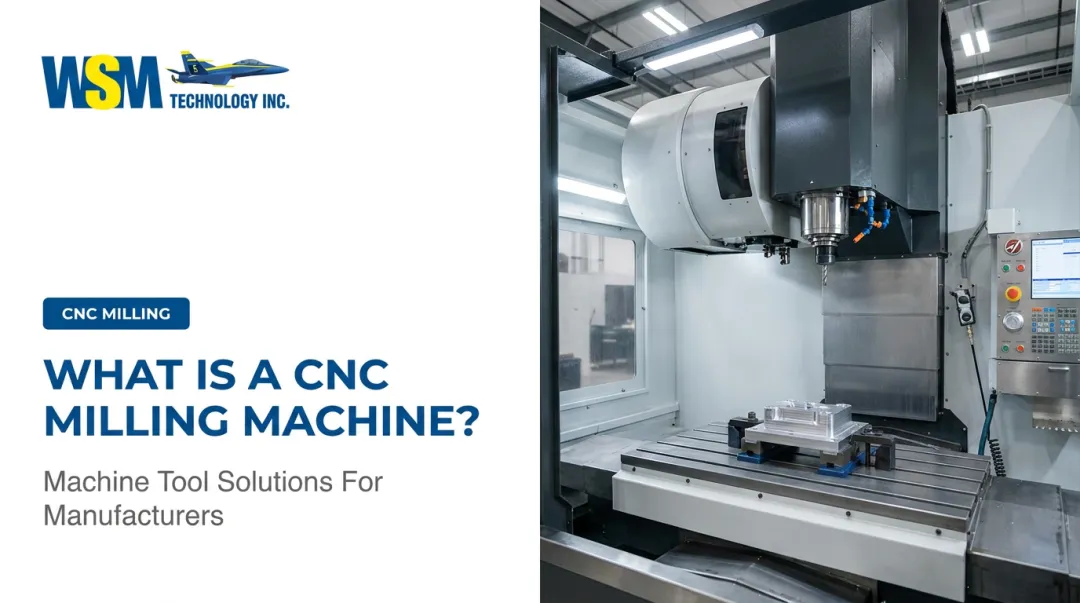
Yes. Jigs are often paired with CNC milling and EDM machines to hold the workpiece and guide the tool during specialized drilling, reaming, or hole-drilling operations that benefit from a physical guide.
How do I know which type of jig my shop needs?
Start by evaluating your part geometry, production volume, and tolerance requirements. From there, a precision machining equipment provider such as WSM Technology’s application engineering team can help match the right jig type to your process.