
The stakes are real. A published benchmark from Okuma, drawing on American Machinist and University of Michigan survey data, puts average HMC spindle utilization at 85% compared to just 25% for VMCs. That gap hits your cycle times, labor costs, and bottom line directly.
This guide breaks down the technical differences between VMCs and HMCs, where each type excels, and a practical framework for choosing the right machine for your parts, volume, and budget.
Key Takeaways
- VMCs offer a vertical spindle and lower upfront cost, ideal for high-mix, low-volume parts
- With pallet-based workholding and a horizontal spindle, HMCs support repeatable, multi-face production
- Utilization data reveals a stark gap: roughly 25% for VMCs versus 85% for HMCs
- Total cost of ownership, not sticker price, should guide your purchase decision
- Many shops end up owning both, guided by an experienced applications engineer
Vertical vs. Horizontal Machining Center: Quick Comparison
Here's how VMCs and HMCs stack up across the four factors that matter most to shop owners.
Cost
Standard 3-axis vertical machining centers start around $67,000 to $88,000 for a general-purpose 40-taper mill, based on current Haas VF-series pricing.
Twin-pallet 4-axis horizontal machining centers cost considerably more. The Haas EC-400 dual-pallet HMC lists at $244,995 — about 245% more than a comparable VF-2 VMC priced at $70,995. Some shop owners describe a single HMC costing roughly as much as three VMCs combined.
Spindle Orientation & Chip Evacuation
The physical layout drives everything else:
- VMC: Spindle points straight down at a horizontal worktable. Chips fall around the cutting zone and can pool in pockets or deep cavities, raising the risk of recutting and surface damage.
- HMC: Spindle runs parallel to the floor while the workpiece sits vertically. Gravity pulls chips down and away from the cut automatically, improving surface finish and extending tool life.
Workholding & Setup
This is where the two designs diverge most sharply. A VMC's flat table typically exposes only one face at a time, so complex parts often need 6 or more setups to machine every side.
An HMC uses tombstone or pallet fixturing that presents multiple faces to the spindle without re-clamping. One documented case from Modern Machine Shop tells the story well. A shop moved an elbow-shaped part from 7 operations across 3 VMCs down to just 2 HMC setups, cutting machining time from 14 hours to 6 hours.
Spindle Utilization
Fewer setups on the HMC side translate directly into higher spindle utilization. That same shop reported 75% utilization from a skilled operator tending two VMCs, versus over 90% utilization tending two HMCs. Less time reloading and reclamping means more time actually cutting metal.

Which Is Better for Your Shop?
There's no universal winner here. The right machine depends on part complexity, batch size, budget, and available floor space, not brand loyalty or industry tradition.
Choose a VMC if your shop runs:
- High-mix, low-volume work with frequent part-number changeovers
- Relatively simple geometries that don't require multi-face access
- A tighter capital budget or limited floor space
- Prototype or first-article work where setup flexibility matters more than raw throughput
Choose an HMC if your shop runs:
- Medium-to-high volume production of the same or similar parts
- Multi-face, box-type components requiring several machined surfaces
- Operations where unattended or lights-out running would cut labor costs
- Long-term contracts that justify the higher upfront investment
Many shops eventually land on both. A VMC handles the flexible, low-volume work while an HMC absorbs the repeatable production runs, and each machine spends more time doing what it does best. If you're weighing this decision for a specific part, WSM Technology's Rootstown demonstration center runs test cuts and time studies on both VMC and HMC platforms so you can compare results before committing capital.
What Is a Vertical Machining Center (VMC)?
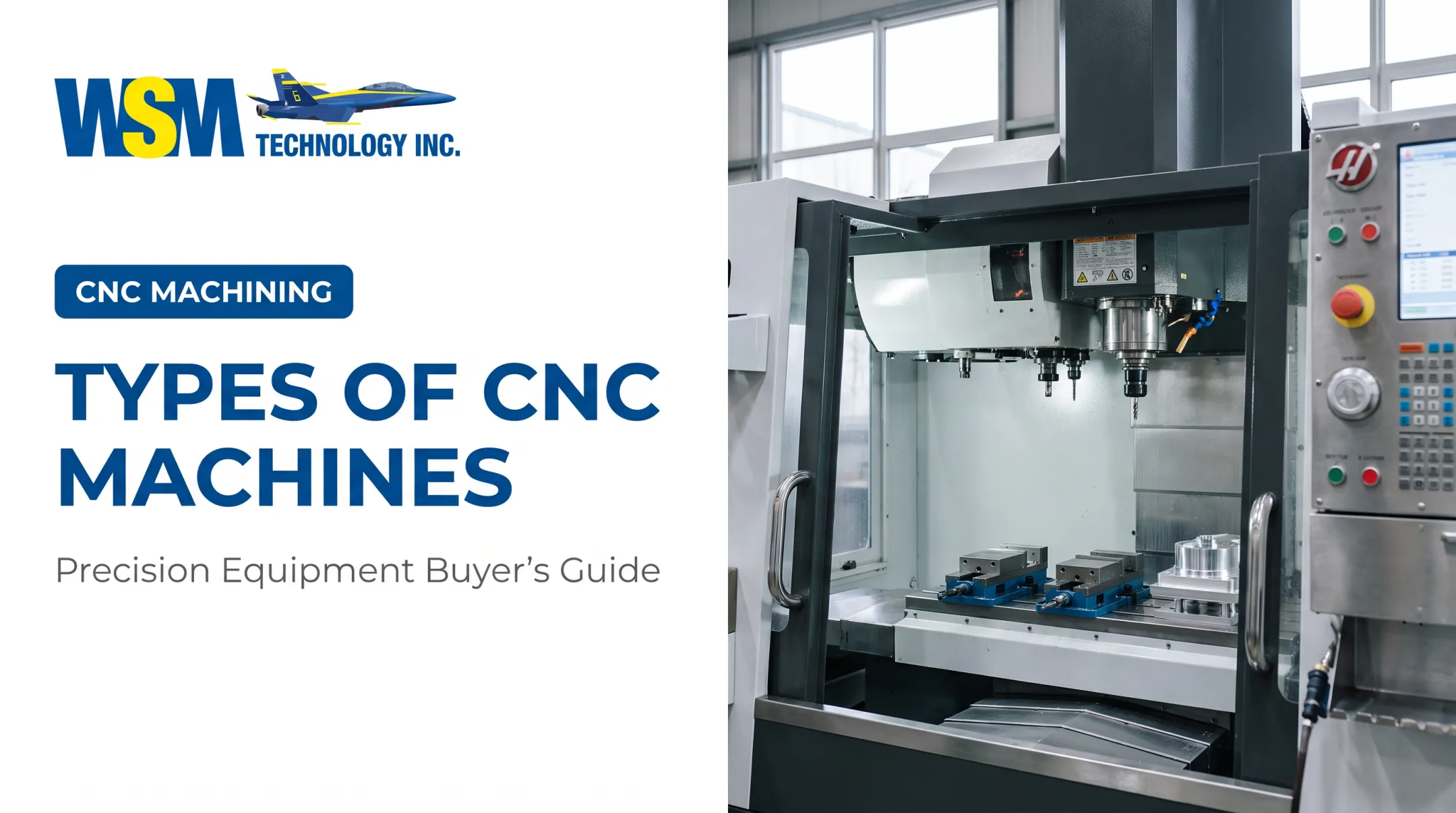
A VMC is a CNC mill with a vertically oriented spindle, perpendicular to the worktable. It's the most common entry-level machining center found in mold, die, and precision shops, and there's a reason for that. Operators can see directly into the cut, which simplifies training, troubleshooting, and program debugging. Lower per-machine cost also means faster ROI for smaller shops.
VMCs come in a few configurations:
- Turret-style VMCs for simpler, lower-cost applications
- Bed-type VMCs for heavier stock removal and larger parts
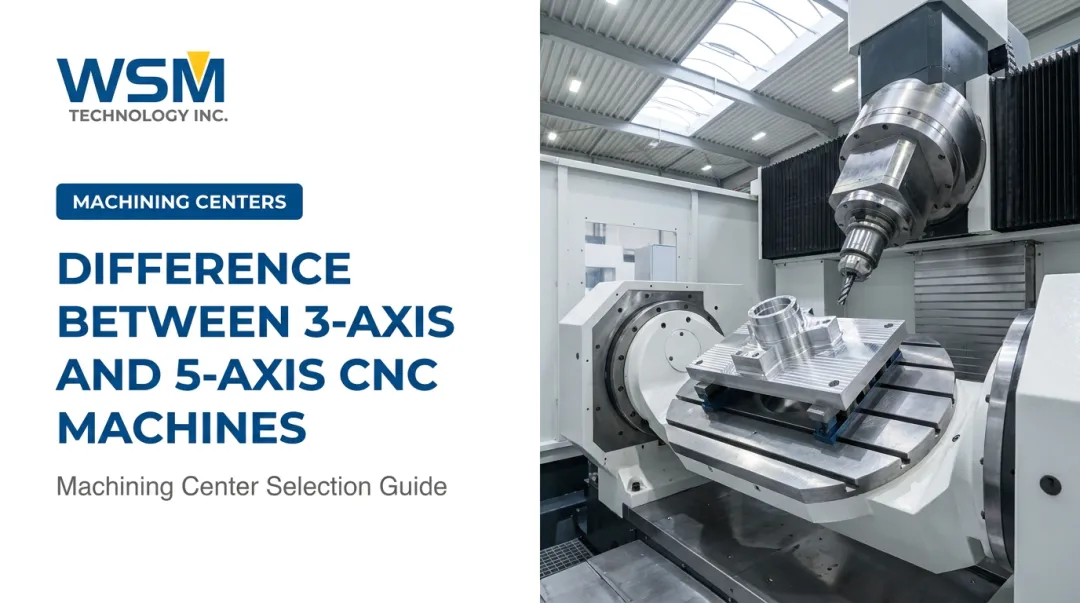
- High-speed multi-axis VMCs (3- and 5-axis) increasingly used for complex mold cavity work requiring tight tolerances and fine surface detail
Where VMCs Fit Best
VMCs dominate in prototyping, job-shop environments, and any operation with frequent changeovers between part numbers. Typical applications include mold and die cavities, aerospace brackets, and micro-mechanical components requiring micron-level accuracy.
This is exactly the space where WSM Technology's high-speed and multi-axis milling platforms operate:
- Roku-Roku Android II: ±1 micron accuracy and a 60,000 RPM spindle for cavity detail and micro-mechanical work prone to thermal drift and tool deflection
- JINGDIAO's 3- and 5-axis high-speed mills handle compound-angle aerospace brackets and complex mold contours in fewer setups
- Cheto's 7-axis platform combines multi-axis milling with integrated gun drilling to machine cooling channels and deep bores in one setup

What Is a Horizontal Machining Center (HMC)?
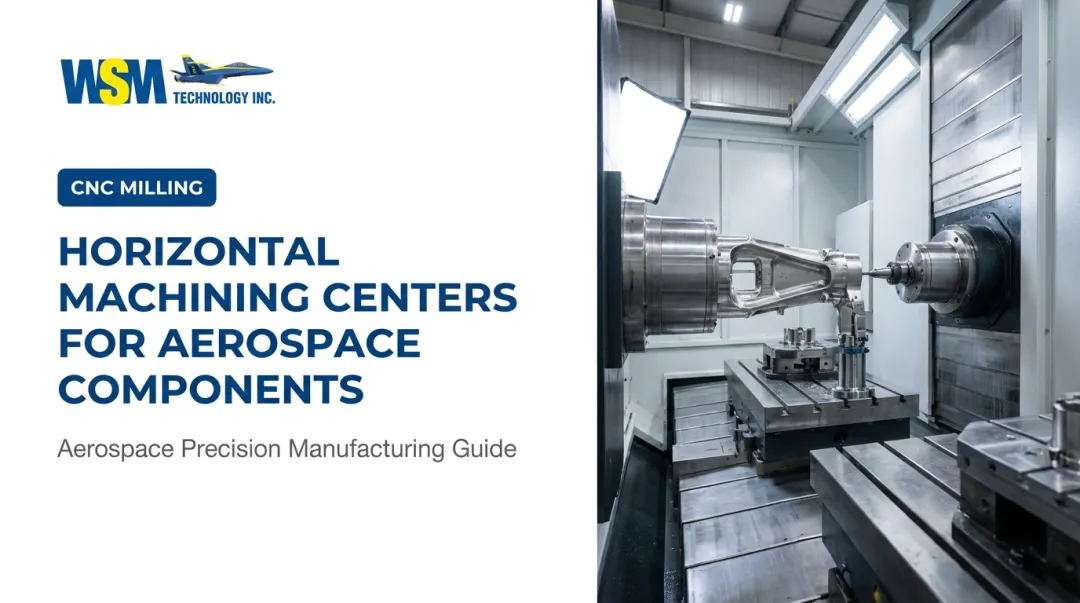
An HMC is a CNC mill with a horizontally oriented spindle, running parallel to the worktable rather than perpendicular to it. This orientation suits continuous, high-throughput production because the machine can keep cutting while an operator loads the next pallet outside the work envelope.
Core operational benefits include:
- Near-continuous spindle cutting through automatic pallet changers
- Reduced operator handling, since parts stay clamped through multiple operations
- Better surface finish from improved chip control and reduced recutting
Beyond these efficiency gains, common HMC variations include 4-axis pallet-based systems for general production and larger boring-mill style machines built for heavy, box-like parts in industries such as heavy equipment manufacturing.
Where HMCs Fit Best
HMCs excel in repeatable, medium-to-high volume runs and multi-face box-type parts. Automotive, heavy equipment, aerospace structural components, and large-batch tooling production all lean heavily on horizontal platforms.
The throughput gains can be dramatic. One shop profiled in Modern Machine Shop saw HMC hourly shop rates run 50% higher than VMC-only rates. Yet quoted prices came in 25% lower overall, because parts moved through the shop so much faster. That's the throughput math that makes an HMC's higher price tag worthwhile in the right application.
Real-World Example: Choosing the Right Machine for a Mold & Die Shop
Picture a mold and die shop wrestling with long setup times, inconsistent surface finish on cavity work, and labor costs creeping up every quarter. Leadership is torn: invest in an HMC to push throughput on repeatable components, or go with a high-precision multi-axis VMC that handles complex cavity detail without a six-figure jump in price?
This is precisely the kind of decision test cuts and time studies exist to answer. Rather than guessing, shops can bring representative parts to a facility like WSM Technology's Demonstration Center in Rootstown, Ohio, and run them on candidate machines side by side.
A structured test cut and time study process typically involves:
- Machining representative parts on the equipment under consideration, using the shop's actual materials and geometries
- Measuring cycle time, surface finish, and setup time for each machine option
- Comparing results against current production numbers to project real ROI

Setup time reductions on the scale documented in the earlier elbow-part case show what's possible: 7 operations across 3 machines dropped to just 2 setups. That kind of data reveals what's achievable before a shop commits capital.
For cavity-heavy mold work, a multi-axis VMC's ability to hold micron-level accuracy across complex 3D surfaces often outweighs raw throughput gains. A shop running simpler, repeatable box parts, on the other hand, may find the HMC's pallet system pays for itself faster.
The right choice depends on part complexity and batch size, not brand preference, verified with real cutting data rather than a sales brochure. If your shop is weighing this same decision, request a test cut or consultation with an experienced applications team before committing capital.
Conclusion
Neither a VMC nor an HMC is universally superior. The right choice depends on part geometry, production volume, budget, and available floor space, and plenty of shops ultimately benefit from owning both.
Whichever path you choose, what matters most is connecting the decision back to practical business outcomes: lower total cost of ownership, less downtime, and improved throughput on the parts that actually pay the bills. WSM Technology's team has run VMCs and HMCs on shop floors, not just sold them. At our demonstration center in Rootstown, Ohio, test cuts and time studies let you buy with confidence instead of guesswork.
Frequently Asked Questions
What is the difference between vertical and horizontal machining centers?
A VMC has a vertical spindle perpendicular to the table, while an HMC has a horizontal spindle parallel to it. HMCs offer better chip evacuation and multi-face pallet workholding, whereas VMCs cost less and suit simpler, lower-volume work.
What is a vertical machining center?
A VMC is a CNC mill with a vertically oriented spindle, ideal for prototyping, job-shop work, and mold or die cavity machining where visibility and lower cost matter most.
What is a horizontal machining center?
An HMC is a CNC mill with a horizontally oriented spindle and pallet-based fixturing, built for repeatable, multi-face production in automotive, aerospace, and heavy equipment manufacturing.
Which is more expensive, a VMC or an HMC?
HMCs typically cost more upfront, sometimes over 200% more than a comparable VMC, but they can lower cost-per-part substantially at higher production volumes.
Can a shop benefit from having both VMC and HMC equipment?
Yes. Many shops pair a VMC for flexible, low-volume work with an HMC for repeatable, multi-face production, letting each machine handle the jobs it's best suited for.
Which machine is better for a high-mix, low-volume mold and die shop?
VMCs, particularly high-speed multi-axis models, suit high-mix, low-volume mold and die work best. They offer the flexibility and cavity-detail precision this type of production demands.