
Introduction
A part leaves the lathe. It waits for a fixture on the machining center. Then it waits again for a grinder slot. Every transfer adds hours, invites alignment error, and ties up a machinist who could be running something else.
Many shops accept this as the cost of doing business with complex parts. It doesn't have to be.
Multitasking CNC machines combine turning, milling, drilling, and sometimes grinding into a single setup. A part goes in once and comes out finished, no repositioning, no second fixture, no accumulated error from moving between machines.
This guide breaks down what multitasking machines actually are, the main types on the market, where they pay off, and how to figure out if one belongs on your shop floor.
Key Takeaways
- Multitasking machines merge turning, milling, and grinding into one setup, cutting handling time
- Configurations include turn-mill centers, 5-axis mills, Swiss-type lathes, and multi-spindle hybrids
- Benefits include less setup, tighter tolerances, and better floor space use
- Fit depends on part mix and volume, not just complexity; dedicated machines still win for high-volume, single-op work
- Test cuts and time studies beat sales brochures for validating real ROI
What Is a Multitasking CNC Machine?
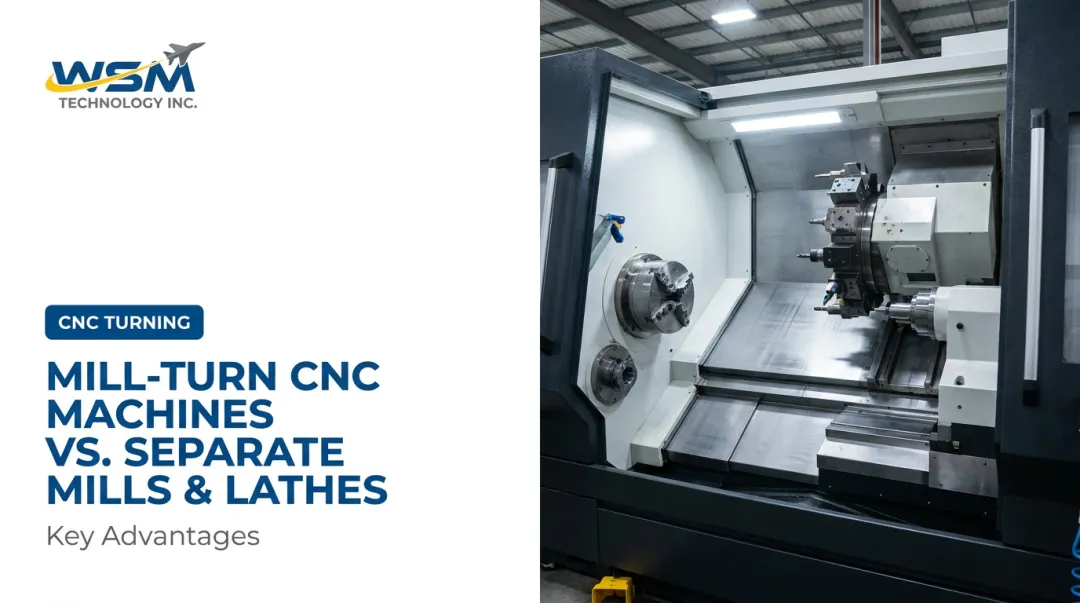
A multitasking CNC machine is a numerically controlled machine tool built with automatic tool changers, often including turret-style changers, that performs multiple operations, turning, milling, grinding, in one setup. The part never leaves the machine between processes.
That's the entire value proposition: you stop moving the workpiece. No refixturing between a lathe and a mill. No transfer to a separate grinder. No stacking of alignment errors across three or four machines.
Most multitasking platforms pair one or two lathe spindles with a machining-center-style head. Some extend further into gear cutting or laser-hybrid functions, though those additive configurations are less common in typical job shop work.
Difference From Standard CNC Lathes and Machining Centers
A standard CNC lathe turns. A standard machining center mills. Neither does both. Multitasking machines do.
Here's where it gets confusing: many shops assume a lathe with live tooling qualifies as "multitasking." It doesn't, not really.
| Type | Mechanism | Milling Capability |
|---|---|---|
| Live-tooling lathes | Rotary attachment bolted into a turret station | Limited by tool overhang and turret RPM |
| True multitasking machines | Independent machining-center-style head with its own spindle | Heavier cuts, higher RPMs, more rigidity |
In practice, a dedicated milling spindle simply takes deeper passes than a live-tool turret ever could. The distinction matters when you're quoting jobs with real milling requirements, not just a cross-drilled hole or two.
Core Components That Enable Multitasking
A handful of hardware features make true multitasking possible:
- Opposing or dual spindles that let one side finish a part while the other starts the next
- Swiveling milling heads (often B-axis) that angle into features without repositioning
- Automatic tool changers with expanded magazines, sometimes 40+ stations
- Lower turrets or gang tool blocks for secondary turning operations
- Y-axis travel that opens up off-center milling and drilling

Some builders push this further with superimposed machining, running two tools simultaneously on opposite sides of a turret to cut cycle time on Swiss-type parts. Others use oscillating cutting, where the machine deliberately breaks the chip through controlled air-cut intervals. Both approaches squeeze more work into less spindle time, but they only pay off when the programming and simulation behind them is solid.
Common Types of Multitasking CNC Machines
Not all multitasking machines are built the same. The right configuration depends entirely on your part geometry and production volume.
5-Axis Machining Centers Add two rotary axes to standard X, Y, Z travel, giving tool or workpiece access from nearly every angle without repositioning. Best for complex, contoured, multi-face parts: think impellers, housings, or mold cavities with angled features.
Turn-Mill Centers Combine a rotating workpiece (turning) with rotating-tool milling and cross-drilling. These shine on parts that genuinely need both operations: shafts with milled flats, cross-holes, or keyways.
Swiss-Type Lathes Use a sliding headstock that feeds bar stock through a guide bushing close to the cutting zone. This design supports long, slender, small-diameter parts common in medical and aerospace work.
Hybrid/Multi-Spindle Machines Advance multiple workpieces through stations that cut concurrently. Production Machining reports that for suitable parts under 1.25 inches, CNC multi-spindles can outpace Swiss-type lathes by up to six times, with quick-change tooling supporting lot sizes as low as 2,500 pieces.
That threshold matters: below it, the setup cost may not justify the equipment.
WSM Technology's lineup reflects this range, from Jingdiao's 5-axis high-speed mills to Schaublin's Swiss-precision turning platforms and Cheto's 7-axis milling and gun-drilling machines. Each is suited to a different production profile, not one universally "better" option.
Key Benefits of Multitasking CNC Machines
The advantages of multitasking equipment go beyond "fewer machines." Here's what actually changes on the shop floor:
- Increased efficiency: Parts finish on one machine instead of queuing across a lathe, mill, and grinder, removing transfer time entirely
- Improved accuracy: Fewer mounting and dismounting cycles mean less opportunity for cumulative error between features
- Reduced setup time: Consolidating operations cuts the number of times a part gets fixtured and re-referenced
- Greater flexibility: One machine can handle varied bar stock sizes and part geometries without retooling an entire cell
- Better space utilization: Fewer standalone machines free up floor space for other work
- Fewer operator interventions: Longer, uninterrupted cycles let one operator run multiple machines or prep the next job
These aren't hypothetical numbers. Real-world shops back them up:
- Metri-Tech: Documented 30-50% cycle-time reductions and setup-time cuts of up to 75% after moving complex turned parts to multitasking equipment with integrated five-axis milling — one company's result, not an industry average, but it shows the ceiling when the part family fits.
- Reata Engineering: Eliminated flips and refixturing, resolving a repeatability problem that had been delaying production and generating scrap.

For Reata, that meant no more recurring scrap issues, a win harder to quantify but just as real.
Industries and Parts Best Suited for Multitasking Machines
Multitasking equipment earns its keep in sectors where parts combine turning, milling, and tight tolerances in one component.
Aerospace relies on multitasking for turbine components and engine housings, parts that traditionally moved between multiple machines for multiface work. Medical manufacturing leans on Swiss-type and multitasking platforms for surgical instruments and implants, where a single micron of misalignment can mean a rejected part.
Automotive shops use these machines for drive shafts and valve components, parts that mix turned diameters with milled flats or cross-holes. Mold and die work benefits similarly: one shop moved mold insert production from 10-25 separate three-axis operations down to just two setups on a five-axis platform.
Typical multitasking workpieces include:
- Drive shafts requiring turned diameters plus milled keyways
- Pump covers combining bore work with drilled ports
- Aerospace housings needing multiface access without refixturing
This lines up closely with the sectors WSM Technology already serves across Northern Ohio, Western Pennsylvania, and West Virginia. The company regularly works with aerospace, medical, mold and die, and automotive shops that quote parts requiring more than one machining discipline.
Is a Multitasking CNC Machine Right for Your Shop?
Not every shop needs one. That's simply the honest answer, not a sales pitch.
Weigh these factors before you commit:
- Part complexity and mix: Does your work genuinely combine turning, milling, and drilling, or could a live-tooling lathe handle it?
- Production volume: High-mix, mid-volume work favors multitasking. Repetitive, high-volume single-operation runs often don't.
- Floor space and machine capacity: Are you replacing three machines with one, or adding capability you won't fully use?
- Programming and software complexity: Multitasking machines demand more from CAM and collision simulation than standard equipment.
For heavy, single-operation turning at high volume, a standard 2-axis lathe or dedicated machining center may still be the more cost-effective choice. Multitasking earns its premium on complexity and setup reduction, not raw throughput on simple parts.
The upfront investment is real. So is the learning curve on programming and simulation. Neither should be a surprise after the machine arrives.
This is exactly why test cuts matter more than spec sheets. WSM Technology's Demonstration Center in Rootstown, Ohio gives shops a place to run actual parts across milling, EDM, and turning equipment before committing capital.

Time studies and test cuts turn a sales pitch into measured data — cycle times, setup hours, and tolerance results you can compare against your current process.
Frequently Asked Questions
What is a multitasking machine?
A multitasking machine is a CNC machine that performs multiple operations, such as turning, milling, and grinding, in one setup. This eliminates the transfers required between standalone lathes and mills.
What are the 5 common types of CNC machines?
Common types include CNC mills, CNC lathes, CNC routers, CNC plasma or laser cutters, and multitasking or turn-mill centers. Each is built around a different combination of tooling and workpiece motion.
How much more does a multitasking CNC machine cost compared to a standard CNC machine?
Multitasking machines carry a higher upfront investment due to added axes, tool magazines, and more complex controls. That cost is often offset over time by reduced labor, fewer setups, and eliminated secondary operations.
What industries benefit most from multitasking CNC machines?
Aerospace, medical, automotive, and mold and die sectors see the strongest returns since their parts often combine turned and milled features with tight tolerances. High-mix, complex-part shops in these industries gain the most from setup consolidation.
Can a multitasking machine completely replace standalone CNC equipment in a shop?
Not usually. Multitasking machines complement standalone equipment rather than replacing it outright, especially for high-volume, single-operation work where a dedicated lathe or mill remains more cost-effective.
How can I determine if my shop needs a multitasking machine?
Evaluate your part complexity, current setup times, and available floor space first. Test cuts and time studies, like those offered at WSM Technology's Rootstown Demonstration Center, give you real performance data before you invest.