
This is the daily grind that pushes many shops toward CNC machining centers. These machines combine milling, drilling, boring, and tapping into one automated platform, cutting out the repeated clamping and guesswork that slow manual processes down.
This article breaks down what a machining center actually is, the main configurations on the market, what they cost to run, and how to pick the right one for your shop's specific work.
Key Takeaways
- CNC machining centers unite milling, drilling, boring, and tapping into one automated setup, cutting reclamping.
- VMC, HMC, and 5-axis configurations fit different part geometries and production volumes.
- Machining centers rotate the tool while turning centers rotate the workpiece instead.
- Matching machine type to your parts, plus dealer-provided demos and training, drives long-term ROI.
What Is a CNC Machining Center?
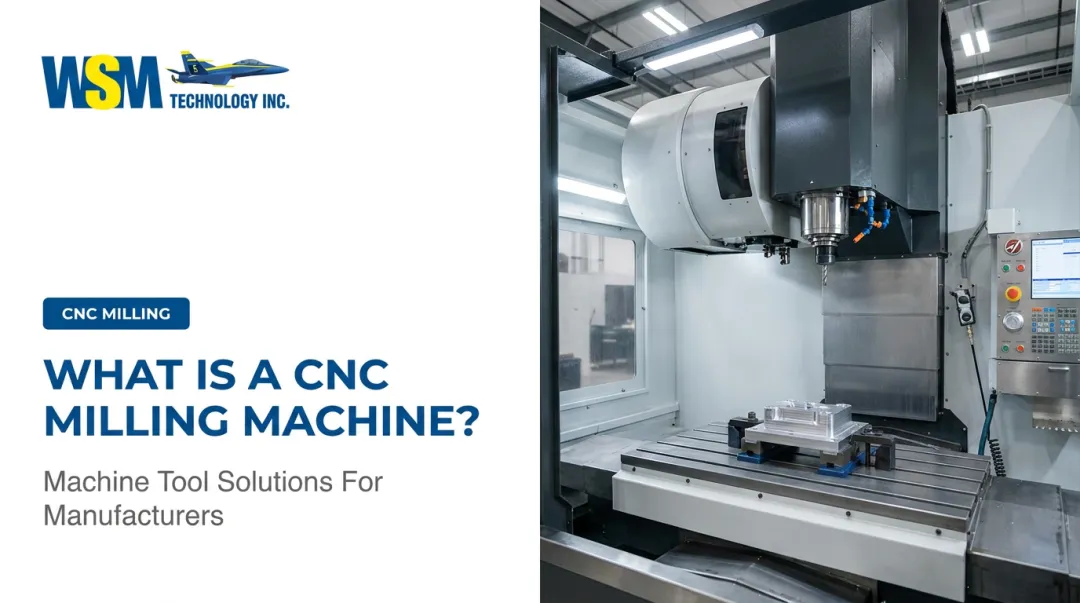
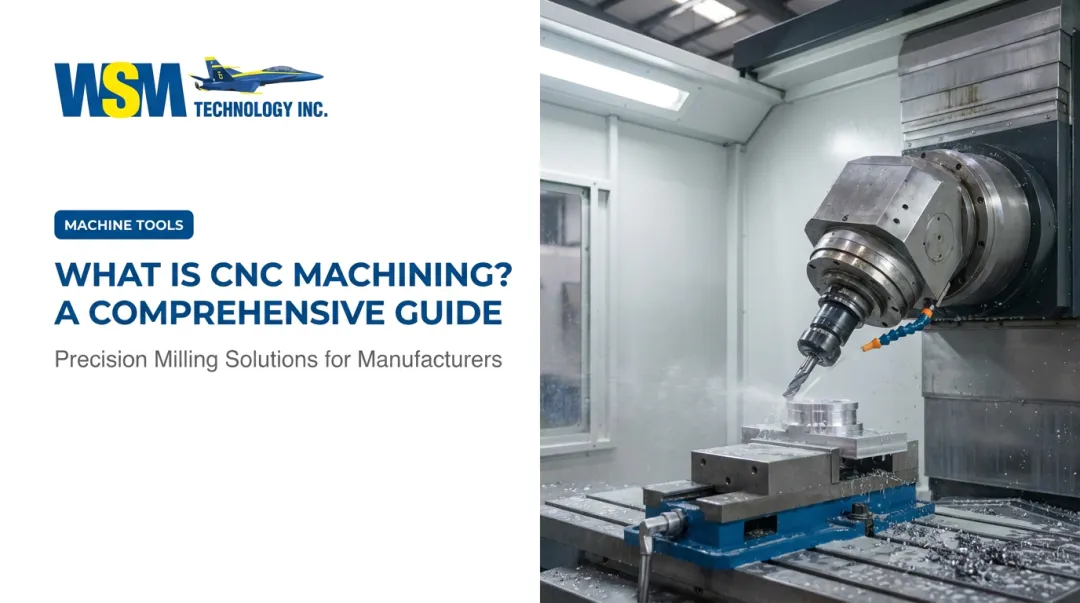
A CNC machining center is a computer-controlled machine tool that performs multiple operations, including milling, drilling, boring, tapping, and reaming, all in a single workpiece setup. Instead of manually swapping tools between operations, the machine does it automatically.
That automation is the defining feature. According to Modern Machine Shop, a machining center is specifically a CNC milling or drilling machine with an automatic tool changer and a table that clamps the workpiece while the cutting tool rotates. Take away the automatic tool changer, and you're left with a standard CNC mill, not a machining center.
Core Components That Drive Performance
Three systems work together to make a machining center accurate and productive:
- Spindle: Delivers the rotational speed and torque that spin the cutting tool. Torque, power, RPM, and duty rating must be weighed together, since running below rated capacity often costs roughing productivity.
- Ball screws and linear guides: Translate digital G-code instructions into precise axis movement. Lead accuracy and thermal stability drive positioning error, and even small temperature swings can shift a screw's length over a one-meter span.
- CNC control system: Interprets the programmed G-code and M-code instructions that coordinate spindle rotation, axis movement, and tool changes throughout the cycle.

None of these components work in isolation. A high-torque spindle paired with a poorly maintained ball screw won't hold tight tolerances any better than a mediocre spindle would.
Machining Center vs. CNC Turning Center
This distinction trips up a lot of people new to the industry, so here's the short version.
A machining center keeps the workpiece fixed on a table while the cutting tool rotates. A turning center does the reverse: the workpiece spins in a chuck while the tool stays largely stationary.
That single difference dictates what each machine is good at:
| Feature | Machining Center | Turning Center |
|---|---|---|
| What rotates | The cutting tool | The workpiece |
| Best-suited parts | Flat, prismatic, or complex 3D geometries | Cylindrical, axisymmetric parts |
| Typical operations | Milling, drilling, tapping, pocketing | Turning ODs, IDs, facing |
If your parts are mold bases, cavity blocks, or brackets with multiple faces, you're in machining center territory. Round shafts and bushings belong on a lathe.
Types of CNC Machining Centers
Shops generally categorize machining centers by spindle orientation (vertical, horizontal, gantry) and by axis count (3-axis, 4-axis, 5-axis). Each configuration trades off differently on cost, complexity, and part suitability.
Vertical Machining Centers (VMC)
VMCs mount the spindle vertically above the table, giving them a compact footprint and straightforward operation. They're the workhorse for mold and die shops handling flat or prismatic parts.
Job shops gravitate toward VMCs for a few reasons:
- Lower upfront cost compared to horizontal or 5-axis machines
- Simpler programming and operation for shops without dedicated CNC programmers
- Broad application range across prototyping and small-to-medium production runs
The tradeoff is that gravity leaves chips sitting on upward-facing surfaces, and VMCs aren't inherently built for the palletized automation that horizontal machines handle well.
Horizontal Machining Centers (HMC)
HMCs orient the spindle sideways, changing chip behavior in a key way: chips fall away from the cutting zone instead of collecting on the part, reducing re-cutting and improving finish consistency.
HMCs typically pair with tombstone fixtures and pallet systems, which lets an operator load the next part while the current one is still cutting. That setup delivers real gains for repeat production:
- Faster workpiece exchange between cycles
- Reduced setup time on multi-face parts
- Strong fit for box-type components common in automotive and aerospace work
Shops that convert from vertical to horizontal machining often report substantial gains, sometimes cutting cycle time by 50% and lead times down to just five days. Those gains can come with sticker shock, since HMCs typically cost more upfront than shops initially budget for. HMCs make the most sense when volume justifies the investment, not for one-off job shop work.
5-Axis and Multi-Axis Machining Centers
Adding two rotary axes to the standard three linear axes lets the tool or workpiece tilt into position, exposing complex geometries without repositioning the part. That single-setup capability eliminates the stacked tolerance errors that come from multiple reclamping steps.
Industries that lean on 5-axis capability include:
- Aerospace: Complex turbine and structural components with compound angles
- Medical device manufacturing: Orthopedic implants requiring tight tolerances on curved surfaces
- Precision mold and die work: Cavities and cores with undercuts that 3-axis machines can't reach
The results can be dramatic. Makino documents a case at Abipa Canada, where 5-axis machining and automation cut the cycle time on a complex aerospace engine component from 300 minutes to just 48 minutes. That's a specific application, not an industry-wide average, but it illustrates what setup consolidation can do.
The tradeoff worth knowing: extra axes can compromise rigidity if the machine's kinematic design isn't well engineered. Not every 5-axis machine handles heavy roughing the way a rigid 3-axis VMC does.
Gantry Machining Centers
Gantry machines use a bridge-style structure spanning the work zone, which suits oversized or heavy workpieces that won't fit on a standard table. DMG MORI's DMU 340 Gantry, for example, offers a 12 cubic meter work-area volume, built for large aerospace and structural components.
These machines are specialized. If your parts fit comfortably on a standard VMC or HMC table, a gantry machine is overkill.

Key Benefits and Applications of CNC Machining Centers
The core value of a machining center comes down to three things: precision, productivity, and versatility.
Precision and repeatability. Programmed instructions remove the variability that comes with manual operation. That consistency matters most where tolerances are unforgiving, such as aerospace fasteners, medical implants, or micro mold components where a few microns of drift ruins the part.
Productivity and reduced labor costs. Automatic tool changing and unattended cycle time free up skilled machinists for higher-value work like programming and quality inspection.
Makino's case study on MacKay Manufacturing documents two flexible machining cells running 24/7 with 24 pallets, keeping the spindle cutting around the clock while operators focus elsewhere. That's an automation-cell result built around pallets and process control, not something every standalone machining center delivers out of the box.
Versatility across industries. A single well-configured machining center can carry a shop from prototyping through full production runs. Sectors that depend heavily on this flexibility include:
- Mold and die manufacturing
- Aerospace components
- Automotive parts production
- Micro mechanics and micro molding
Shops serving multiple industries often find that one solid 3-axis or 4-axis VMC, like the Mitsubishi and OPS Ingersoll models WSM Technology supplies, covers 80% of their work, with a 5-axis machine reserved for the complex jobs that actually need it.
How Much Does CNC Machining Cost Per Hour?
Hourly machining rates vary widely based on machine type, material, part complexity, and required tolerances. A 3-axis VMC running aluminum brackets costs far less per hour to operate than a 5-axis machine holding micron tolerances on a titanium aerospace part.
There isn't a single, authoritative national rate that applies across the board. Rates depend heavily on your region, your overhead structure, and the specific job. What's better documented are the cost drivers that shape a job's total price beyond simple machine run time:
- Programming and process planning: Extra programming time upfront can cut setup time by 25% on complex parts, lowering total job cost
- Setup and changeover: Reclamping and re-zeroing between operations adds non-cutting time that still needs to be billed
- Tooling wear: Cutter life and tool choice affect both cost and cycle time, especially in hard materials
- Machine type: 5-axis machines generally carry higher hourly rates than 3-axis machines due to higher acquisition cost and maintenance complexity

Shops without this data in-house often lean on their equipment distributor for help. WSM Technology's application engineers run test cuts and time studies to help shops establish realistic per-part costs before committing to a job.
The takeaway for shop owners: don't quote jobs off machine run time alone. Programming hours, setup, and tooling wear all factor into what a job actually costs to produce.
Choosing the Right CNC Machining Center for Your Shop
Picking a machining center isn't just about specs on a sales sheet. Before you commit, walk through these factors:
- Production volume: High-volume repeat work justifies an HMC's pallet automation; low-volume prototyping usually doesn't
- Part complexity: Simple prismatic parts need a 3-axis VMC; complex compound-angle geometries need 5-axis capability
- Required axis count: More axes mean more setup consolidation, but also more cost and complexity to maintain
- Available floor space: Gantry and large HMC configurations need more room than a compact VMC
Specs only tell part of the story, though. The dealer behind the machine matters just as much.
WSM Technology, based in Rootstown, Ohio, represents a lineup that spans this whole spectrum. Its brands include Mitsubishi/MC Machinery, OPS Ingersoll, and Roku-Roku.
That lineup covers everything from general-purpose VMCs to the Roku-Roku Android II, a high-speed machining center holding ±1 micron accuracy at 60,000 RPM. This range lets shops match the machine to the actual job instead of settling for whatever's on the lot.
Buying blind off a spec sheet is a risk you don't need to take. WSM's Demonstration Center gives shops hands-on proof before they commit:
- Run test cuts on your own parts to see real performance on your material and geometry
- Get turnkey installation so the machine starts production sooner
- Complete training programs that get operators up to speed without idle downtime

What separates a good purchase from a genuinely optimized one is what happens after the machine arrives. Time studies help identify where cycle time is being lost, and immediate access to OEM replacement parts keeps unplanned downtime from turning into a lost week of production.
Frequently Asked Questions
What is the difference between CNC and a machining center?
"CNC" refers broadly to any computer-numerically-controlled machine, including mills, lathes, and routers. A machining center is a specific type of CNC machine that automates tool changes to perform multiple operations in one setup.
How much does CNC machining cost per hour?
Rates depend on machine type, material, and part complexity, with 5-axis machines generally costing more per hour than 3-axis machines. Programming, setup time, and tooling wear also factor into total job cost beyond machine run time.
What's the difference between a machining center and a milling machine?
A standard milling machine typically requires manual tool changes and setup between operations. A machining center automates tool changes through a tool magazine and changer, often adding capability for multiple operations without operator intervention.
How many axes does a CNC machining center have?
Common configurations are 3-axis (X, Y, Z linear movement), 4-axis (adding one rotary axis), and 5-axis (adding a second rotary or tilting axis). More axes mean access to complex geometries in fewer setups.
What industries benefit most from CNC machining centers?
Aerospace, medical device manufacturing, automotive, and mold and die making rely heavily on machining centers because precision and repeatability directly affect part function and safety.
How do I choose the right CNC machining center for my shop?
The choice comes down to part complexity, production volume, and available floor space. Working with a dealer like WSM Technology, which offers hands-on demonstrations at its Rootstown, Ohio center along with test cuts and turnkey training, makes the decision far less risky.