
Introduction
Picture a mold shop quoting a new die job. The engineer pulls up the CAD model, checks the cavity depth, and asks the question that shapes the entire project: copper or graphite?
For most sinker EDM work today, the answer is graphite. Shops that skip this decision often pay for it later, with slower burns, more electrode changes, and inconsistent finishes. In North America, at least 95% of EDM electrodes are made from graphite, according to a comparison report from POCO/Entegris.
This guide covers what EDM graphite actually is, how it stacks up against copper, and how to machine and maintain it correctly. We'll also touch on why pairing the right electrode material with the right EDM machine, sinker or wire, determines whether a job runs smoothly or eats your margin.
Key Takeaways
- Graphite dominates modern EDM shops, making up over 70% of the global electrode market
- Machining time drops 30-50% versus copper in most applications
- Grain size and density determine which graphite grade fits your job
- Copper still wins for small, intricate cavities requiring an inert, non-porous surface
- Proper dust control isn't optional; graphite dust poses real health and equipment risks
What Is EDM Graphite?
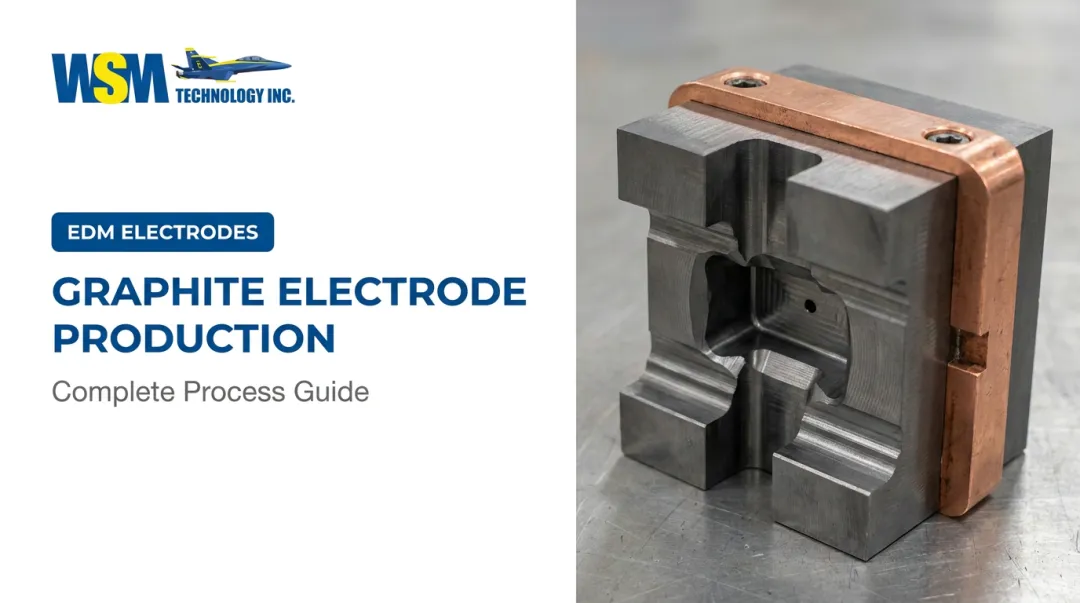
EDM graphite is a manufactured, high-purity, fine-grain carbon material engineered specifically to serve as an electrode in Electrical Discharge Machining. It isn't the graphite you'd find in a pencil. It's produced through controlled isostatic pressing and baking processes that create a dense, uniform structure suited to repeated electrical sparking.
How It Fits Into the EDM Process
EDM works by generating rapid electrical sparks between an electrode and a workpiece, both submerged in a dielectric fluid. Each spark reaches temperatures hot enough to vaporize tiny amounts of metal, and the electrode's shape gets replicated into the workpiece over thousands of discharge cycles. Between pulses, the dielectric fluid flushes away eroded debris, keeping the gap clean for the next spark.
The graphite electrode is the tool doing the eroding, without ever physically touching the part. This non-contact erosion is what allows the process to reproduce fine mold cavities, thin ribs, and complex geometries with tight tolerances, cavity after cavity.
Why Graphite Works
Three properties make graphite uniquely suited to this job:
- High electrical conductivity: allows current to flow efficiently through the electrode during sparking
- Extreme heat resistance: graphite sublimes, converting directly from solid to gas, at roughly 3,400°C, far beyond copper's limits, according to Mersen's technical data on graphite advantages
- Low thermal expansion: graphite expands about one-quarter as much as copper when heated, which keeps electrode dimensions stable during long burns
Graphite is non-metallic, yet electrically conductive enough to erode a workpiece without melting or warping under sparking conditions. That combination is rare, and it's exactly why the material became the industry default.

Shops across mold and die, aerospace, medical device, and automotive manufacturing rely on graphite electrodes to produce fine details, thin ribs, and complex cavities that would be difficult to achieve with other materials.
Benefits of Graphite in EDM Machining
Graphite's advantages go beyond heat resistance. In practice, it changes how a shop plans and executes EDM work.
Accuracy, Wear, and Finish
Graphite faithfully replicates electrode geometry onto the workpiece, giving die-sinking operations high dimensional accuracy even on complex cavity shapes. Its low wear rate means fewer electrode replacements mid-job, which translates directly into less downtime and lower per-part cost.
Surface finish is another win. Graphite produces fine, consistent finishes that often reduce or eliminate secondary polishing, saving a step that used to eat into delivery schedules.
Material Compatibility and Cleanliness
That consistency isn't limited to finish quality alone. Graphite handles a wide range of work materials:
- Hardened and soft steels
- Aluminum alloys
- Copper
- Tungsten carbide
- Titanium alloys
Its chemical stability also minimizes contamination risk, a real concern for medical or aerospace components where material purity matters as much as dimensional tolerance.
Where Modern Equipment Fits In
None of this matters if the machine can't keep up. Modern sinker EDM platforms, including the Mitsubishi machines WSM Technology supplies, pair well with graphite electrodes through automatic tool changers and robotic electrode exchange. That automation keeps unattended runs moving overnight instead of stalling on a manual swap.
Shops evaluating a new process don't have to guess. WSM Technology's demonstration center in Rootstown, Ohio, lets teams run test cuts on their own geometry before committing to a machine or electrode strategy.
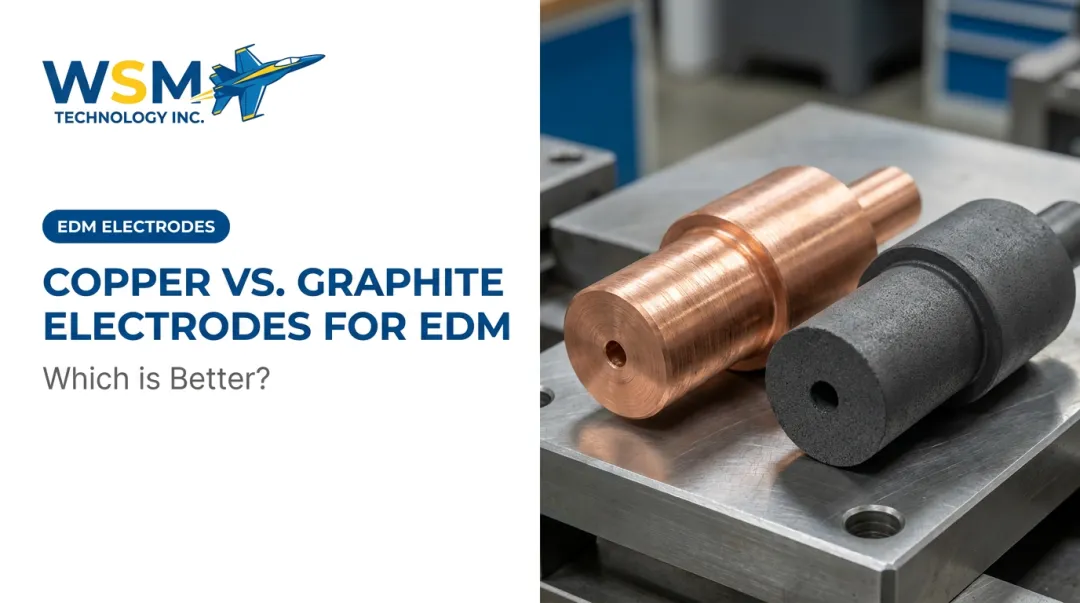
Graphite vs. Copper Electrodes
Both materials still have a place in EDM shops, but the trade-offs are clear once you line them up.
| Criteria | Graphite | Copper |
|---|---|---|
| Electrical conductivity | Handles up to 600 amps | Typically limited to under 100 amps |
| Wear rate | Wear drops as peak current rises | Wear increases with peak current |
| Machining speed | Metal removal rate roughly double copper's | Slower burn times |
| Cost per electrode | Lower material and machining cost | Higher, especially on large volumes |
A POCO rib-test comparison illustrates the gap well. Graphite (EDM-3 grade) averaged 1 hour 54 minutes of burn time versus 4 hours 29 minutes for C110 copper, at roughly half the total production cost, according to the POCO/Entegris comparison report.
When Copper Still Makes Sense
Copper hasn't disappeared. It remains the better choice for:
- Small, intricate cavities requiring mirror-like finishes (down to 2 microinch Ra)
- Complex geometries needing an inert, non-porous electrode material
- Jobs where polarity and surface integrity outweigh speed
Quick comparison:
- Graphite pros: Easier to mill in bulk, ideal for roughing and large-cavity work
- Graphite cons: Coarser finish without added processing, requires dust management
- Copper pros: Superior fine finishes, no dust hazard, well-suited to delicate details

Machining & Selecting EDM Graphite Electrodes
Getting good results from graphite starts before the electrode ever touches a workpiece. Choosing the right grade and machining it correctly make all the difference.
Choosing the Right Graphite Grade
Graphite grades differ by grain size and density, and that difference drives performance. Fine-grain and ultra-fine-grain grades (some under 1 micron) deliver better surface finish and lower wear, ideal for detailed cavity work. Coarser, higher-density grades hold up better under heavy roughing where sheer material removal matters more than finish.
When selecting a grade, weigh:
- Electrode size and geometry
- Required surface finish
- Desired machining speed
- Your EDM machine's power and current specifications
Inconsistent or lower-quality graphite increases wear unpredictably and hurts accuracy, making a reputable supplier essential to a predictable, repeatable process rather than a guessing game.
Milling and Wire EDM of Graphite Electrodes
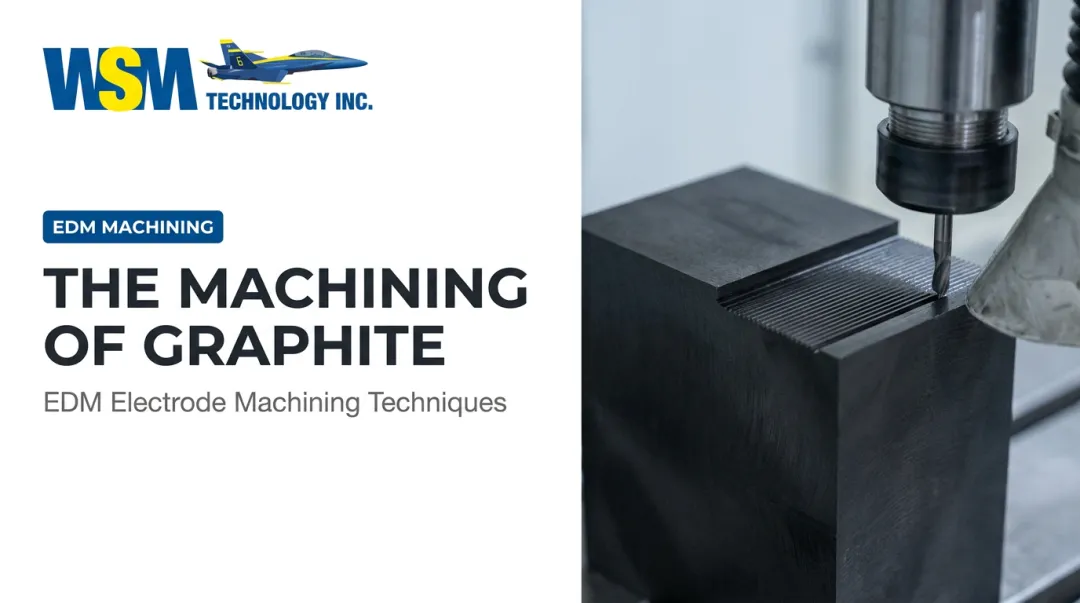
Graphite electrodes are typically produced through high-speed CNC milling, running spindle speeds between 20,000 and 40,000 RPM with carbide or diamond-coated tooling designed to handle the material's abrasiveness. WSM Technology supports this side of the process through OPS Ingersoll and Mitsubishi graphite mills, along with high-speed platforms like the Roku-Roku Android II.
Can graphite be wire EDM'd? Yes. When milling can't achieve the required geometry or finish, wire EDM becomes the fallback. It's slower than milling, so it's usually reserved for complex, tight-tolerance electrode features rather than full production runs.
One more thing shops can't skip: dust collection. Graphite dust is fine, conductive, and abrasive, which means enclosed machining with HEPA-filtered systems isn't optional. It protects both machine components and the people running them.

Electrode Wear, Lifespan & Maintenance
Electrode lifespan varies widely depending on grade, current settings, and application. A fine-grain electrode running light finishing passes might handle hundreds of discharges before replacement, while a coarse-grain roughing electrode under high current may wear out much faster.
There's no single benchmark number that applies across every shop, which is why tracking wear per job matters more than chasing an industry average.
Storage and Handling Best Practices
Simple habits extend usable electrode life:
- Store electrodes in stable temperature and humidity conditions
- Keep graphite away from sulfur- or halogen-containing materials, which can affect surface reactions
- Handle electrodes with clean gloves to avoid oil or contaminant transfer
Where Ongoing Support Helps
Storage habits only go so far, though. Sourcing consistent replacement stock matters just as much as the machining itself, and WSM Technology supplies EDM consumables, including wire, filters, and resin tanks, through its CPG Department and its Encore Group partnership, giving shops a local channel for keeping machines running.
Combined with local and advanced training programs, this support helps shops fine-tune electrode usage instead of relying on trial and error.
Frequently Asked Questions
What are EDM graphite electrodes?
EDM graphite electrodes are fine-grain, high-purity graphite tools used to erode material from a workpiece through electrical sparks during the EDM process. Manufacturers engineer them specifically for conductivity and heat resistance, unlike standard graphite.
How long do EDM graphite electrodes last?
Lifespan depends heavily on grade, application, and current settings, so there's no universal number. Proper storage, handling, and machine parameters can meaningfully extend usable electrode life.
Can you wire EDM graphite?
Yes, graphite can be wire EDM'd, typically for complex geometries or tight-tolerance features that milling can't achieve. It's slower than conventional milling, so it's usually reserved for intricate details rather than full production.
Is graphite better than copper for EDM electrodes?
Graphite generally machines faster and wears less, making it the default for roughing and high-volume work. Copper remains preferred for small, intricate cavities requiring an inert, mirror-finish surface.
What graphite grade should I use for fine-detail EDM work?
Fine or ultra-fine grain graphite grades, some with grain sizes under 1 micron, deliver the surface finish and low wear needed for intricate cavity detail. Coarser grades are better reserved for heavy roughing.
What industries rely most on EDM graphite electrodes?
Mold and die making, aerospace, medical device manufacturing, and automotive production are the heaviest users of graphite electrodes. All four depend on producing fine details and complex cavities reliably at scale.