
Shops running mold, aerospace, or precision mechanics work across Ohio, Pennsylvania, and West Virginia know this tension well. Tight tolerances demand repeatable setups, but fixturing decisions often get made in a hurry, based on habit rather than analysis.
This guide breaks down what CNC fixtures and jigs actually are, how to classify the main types, common design mistakes that eat into margins, and how to pick the right workholding for your shop's specific mix of parts.
Key Takeaways
- Fixtures hold the workpiece; jigs also guide the cutting tool (rare in CNC, since G-code handles that job)
- Three fixture classifications matter: by operation, by purpose/mechanism, and by power source
- Overbuilt and underbuilt workholding both hurt profitability, just from opposite directions
- Regular fixture inspection prevents the wear and drift that erode repeatability
What Is a CNC Fixture, Jig, and Workholding?
A CNC fixture is a mechanical device that locates and stabilizes a workpiece during machining, keeping it in position so the machine can follow its programmed path accurately. It doesn't guide the tool. It just makes sure the part stays put.
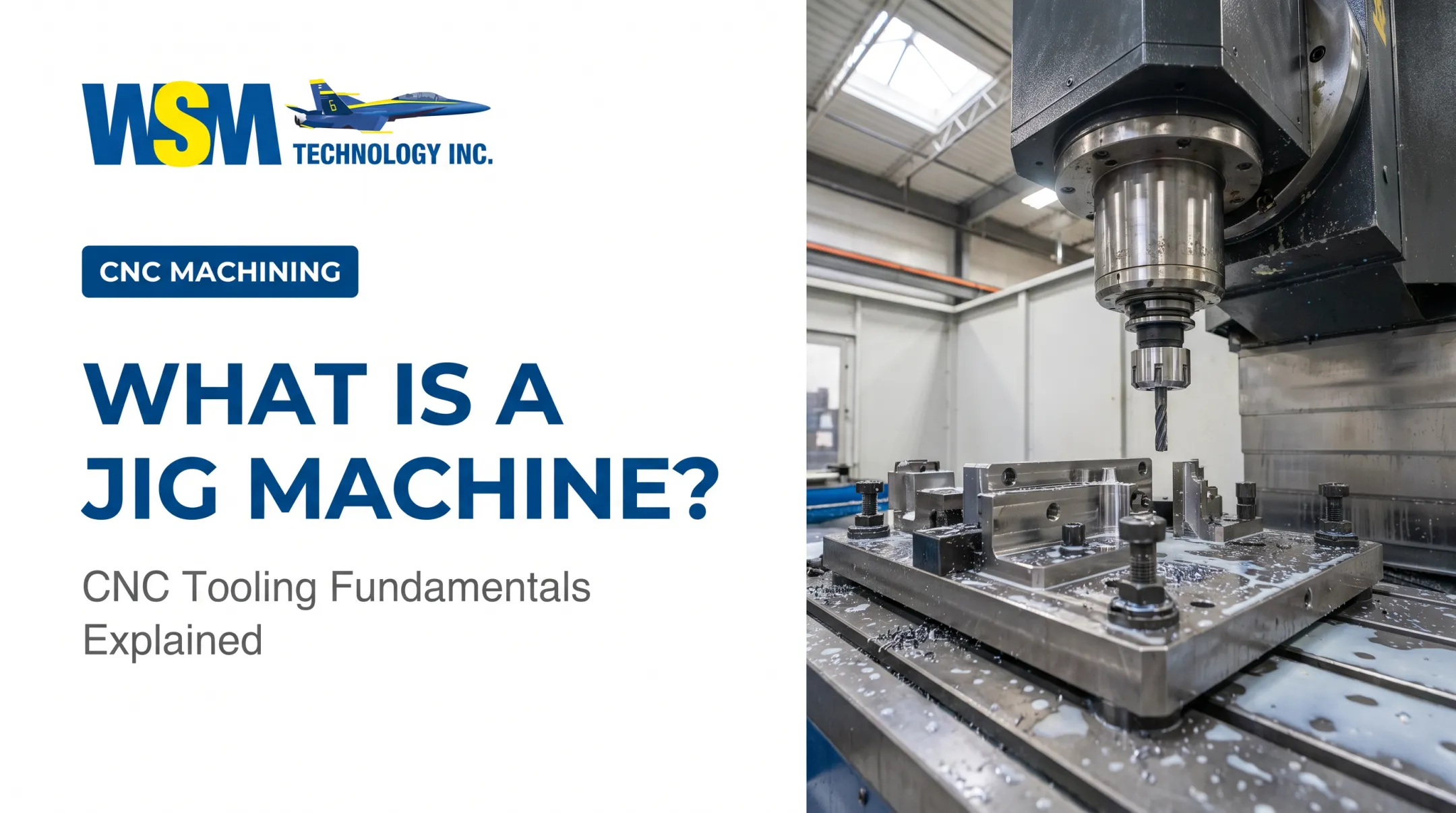
A jig, by contrast, does both jobs: it holds the part and physically guides the cutting tool. Carr Lane's engineering resources draw this distinction clearly.
That split matters on CNC equipment. G-code already tells the tool where to go, so traditional jigs are rarely needed. They show up more in manual machining, where a drill bushing or guide plate compensates for the absence of programmed motion.
Workholding is the umbrella term covering both fixtures and jigs, plus the mounting method used to secure them to the machine table: T-slots, tooling plates, or pallet systems.
In short:
- Fixture — Locates and holds the part; does not guide the tool
- Jig — Holds the part and guides the tool
- Workholding — Fixtures, jigs, and how they mount to the machine
Why This Matters for CNC Accuracy
CNC stands for Computer Numerical Control, meaning the machine executes a pre-programmed toolpath with no manual steering. That precision is only as good as the fixed reference point beneath the part. If the workpiece moves, twists, or sits at the wrong angle, the program doesn't know. It just keeps cutting.
That's the whole argument for taking workholding seriously. A machine capable of ±0.0002 in. accuracy is wasted if the fixture underneath the part can't match it.
For shops weighing a new fixture design against a machine investment, WSM Technology's demonstration center in Rootstown, Ohio, lets manufacturers run test cuts before committing either way.
Which Are the Three Types of Fixtures? Classifying CNC Fixtures
There's no single universal standard for fixture classification, but three practical axes—by operation, by purpose, and by power source—cover almost every workholding decision you'll make.
By Operation
Each machining process creates different forces and needs a fixture built for that specific load:
- Milling fixtures — resist lateral cutting forces and vibration
- Turning fixtures — chucks, collets, and mandrels that secure rotating stock against cutting torque
- Drilling fixtures/jigs — manage axial thrust and breakout; jigs also guide the tool
- Grinding fixtures — hold parts steady against light but continuous abrasive contact
By Purpose or Mechanism
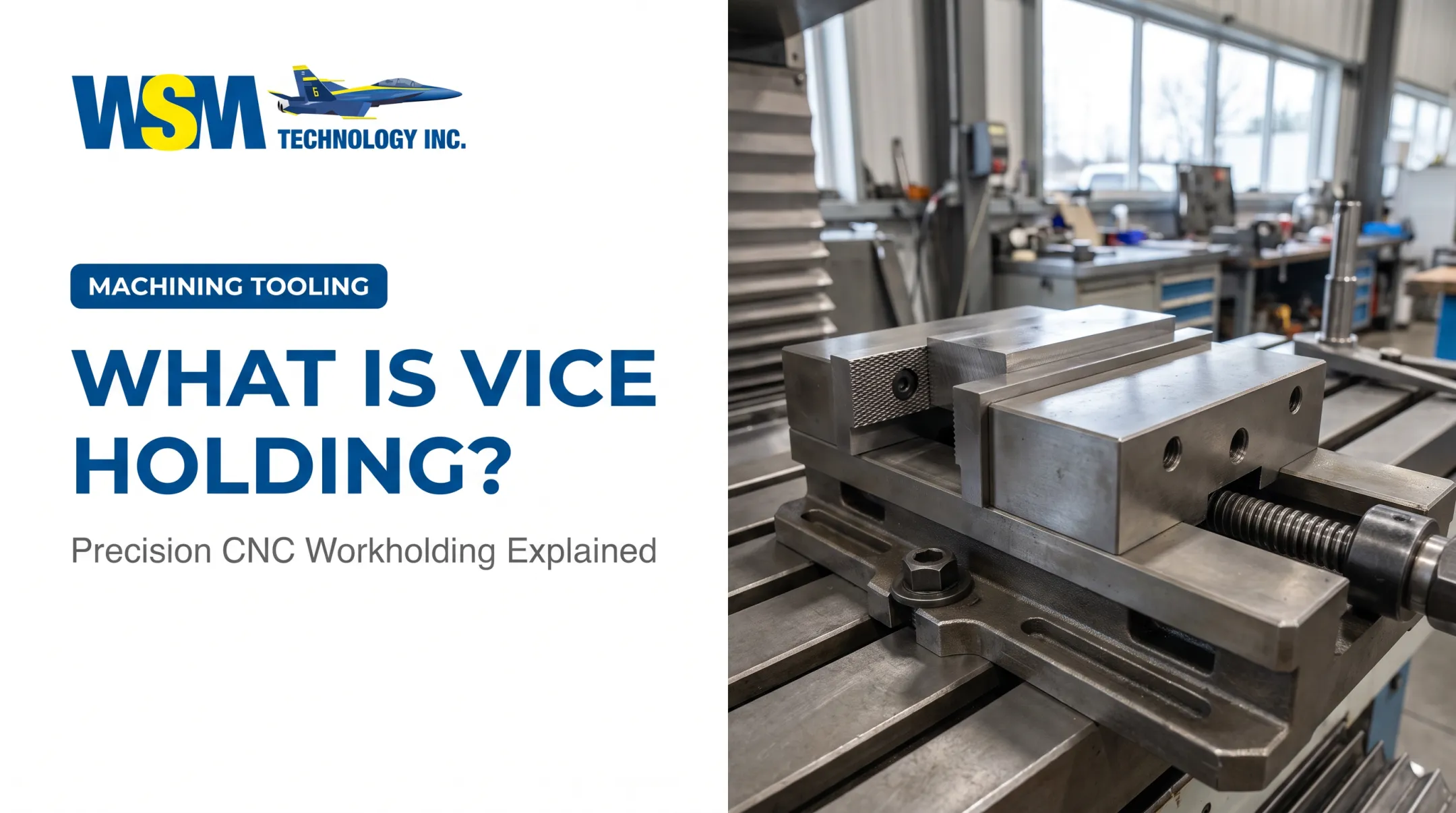
- Vise fixtures — simple, flexible, good for low-volume work
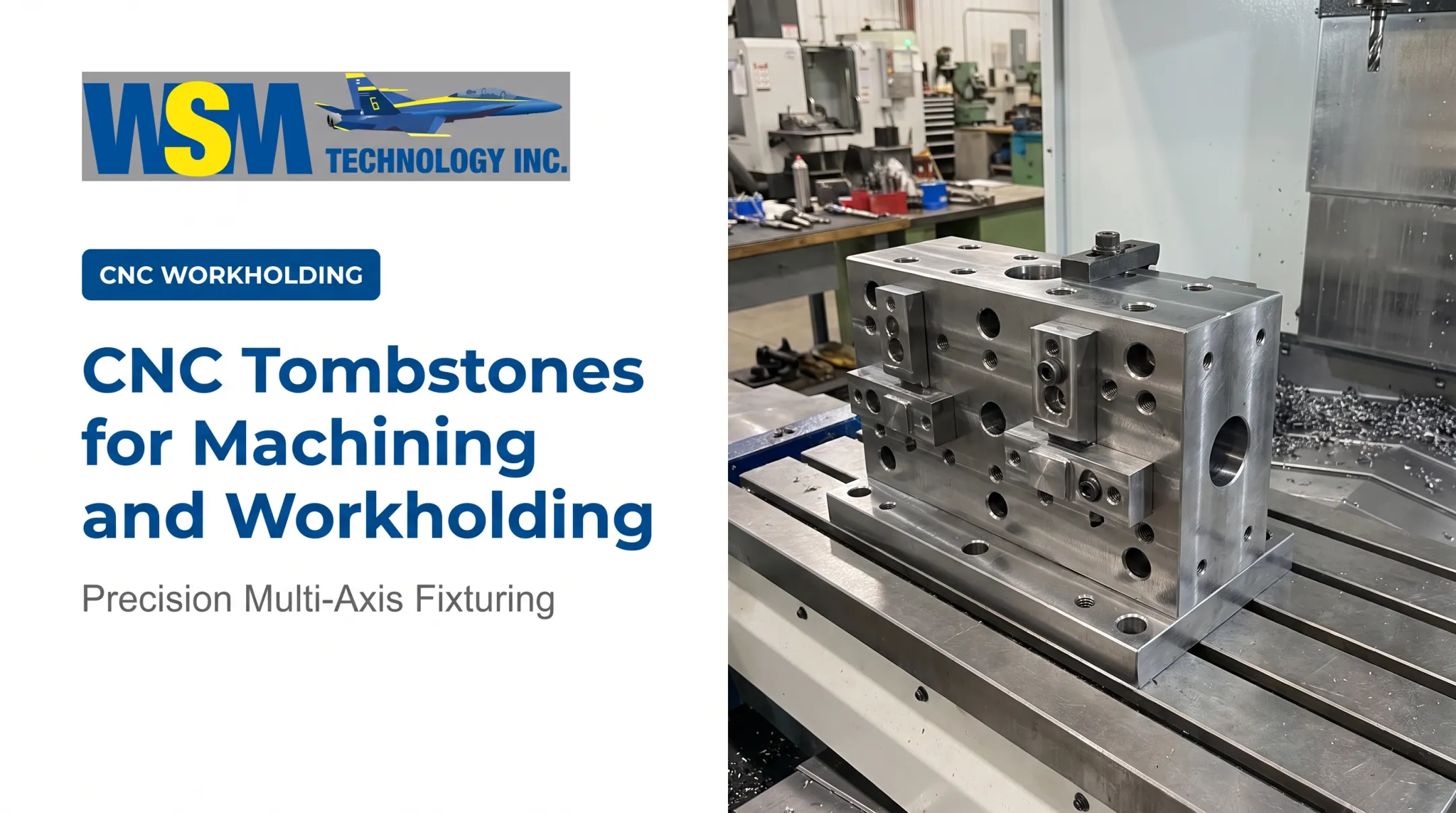
- Modular fixtures — reconfigurable base plates and components for varied part geometry
- Angle fixtures — hold parts at a fixed non-standard angle for multi-face access
- Dedicated clamping fixtures — custom clamps and locators built around one part's geometry
By Power Source
- Manual/mechanical — screw and toggle clamps; low cost and flexible, but slower to actuate
- Hydraulic — consistent force, common in high-volume production
- Pneumatic — fast actuation, favored in automated cells
- Magnetic — used heavily in grinding on ferromagnetic materials
- Vacuum — thin or delicate parts with a suitable sealing surface
| Fixture Type | Typical Material | Best-Fit Application |
|---|---|---|
| Milling fixture | Steel, cast iron | Aerospace structural components |
| Modular fixture | Steel/aluminum modules | Mixed-part mold & die shops |
| Vacuum fixture | Aluminum, composite | Thin-wall micro molding parts |
| Magnetic chuck | Steel base | Precision grinding on ferrous stock |
| Hydraulic chuck | Steel | High-volume CNC turning |

Use the axes above to match the fixture to the cut, the part mix, and the cell—not to a catalog label alone.
Carr Lane's modular MF50 system, for example, targets high-force milling, drilling, and grinding where rigidity comes first. EROWA's ITS interface takes the other path: one standard reference across EDM, milling, and grinding so a part does not need re-indicating every time it changes machines. Same classification exercise, two different shop problems.
CNC Fixturing Best Practices and Common Design Mistakes
Fixturing decisions tend to fail in one of two directions.
Overbuilding adds complexity that isn't justified by the job. More moving parts mean more points of failure, longer setup, and cost that never gets recovered on a short production run.
Underbuilding is worse. A cheap fixture on a high-precision or high-volume job leads to warpage, chatter, and scrap that costs far more than the fixture would have.
Datum Referencing: Less Is Often More
Locking down every surface on a part feels safe, but it kills flexibility. If part stock varies even slightly, an over-referenced fixture fights the part instead of holding it. Reference only the critical datums the drawing actually calls out. Everything else should float.
Clamping Force and Warpage
There's no universal clamping-force chart that applies across materials. Force requirements depend on cutting parameters, tool geometry, depth of cut, and how the load is directed.
Carr Lane's clamping force methodology recommends calculating the minimum force needed from a free-body diagram, then applying roughly a 2-to-1 safety factor above that number.
The design principle that matters more than any specific number:
- Clamps should hold the part against locators, not resist the cutting force itself
- Primary cutting loads belong on solid locators and supports
- Over-tightening thin or aluminum parts causes distortion that shows up only after the part comes off the fixture

Tolerance Stacking
A fixture has to be more accurate than the part tolerance it's producing. If it isn't, errors from the machine, the tool, and the fixture all compound on top of each other.
A 2017 ASME study on tolerance analysis confirms what most shop floors already know: manufacturing errors accumulate at nearly every step, and location misalignment is one of the biggest contributors.
Trace the datum chain from the machine table through the fixture to the finished feature before assuming a tight-tolerance job is dialed in.
Modern Workholding Solutions: Fixture Plates, Pallets, and Modular Systems
Traditional T-slot mounting works, but it's slow. Fixture plates with dowel-pin grids solve that by giving every setup a repeatable reference point, so a part goes back in the same position every time without re-indicating.
Quick-change systems push this further:
- Ball lock shanks let a pre-set plate drop onto the table in seconds rather than minutes
- Pallet changers keep spindle time focused on cutting instead of setup
- Zero-point references (common in EDM) let a part move between processes without re-establishing a datum
Jergens' published Ball Lock examples show setup changes dropping from 15 minutes to 60 seconds on one cast-part job, and from 12 minutes to 45 seconds on an aircraft-valve setup.
Those are vendor figures from specific applications, not guarantees, but they illustrate the mechanism: a repeatable interface removes the re-indicating step entirely.

For shops running EDM, milling, and CNC turning across varied part geometries, that flexibility matters. Mold and die, aerospace, and micro molding work rarely involves one process in isolation, and every time a part moves between machines without a shared reference, someone's re-establishing zero by hand.
Choosing the Right CNC Fixture for Your Shop
Before buying any fixture, plate, or pallet system, run through these compatibility checks:
- Machine envelope — table size, travel, spindle clearance, and collision zones
- Mounting geometry — T-slot width, center distance, bolt pattern, or plate interface
- Part geometry — access needs, orientation, and how many sides need machining
- Production volume — dedicated fixtures rarely pay off on short runs (for example, ~20 pieces)
- Required tolerance — build in fixture headroom above the part spec, not equal to it

Common Buying Mistakes
- Ignoring machine-specific T-slot specs and assuming a plate will just "fit"
- Underestimating total cost of ownership: maintenance, wear replacement, requalification
- Buying a single-purpose fixture when a modular system could cover several future jobs
When you evaluate new CNC milling, EDM, or turning equipment, treat workholding compatibility as part of the machine decision—not an afterthought.
WSM Technology's turnkey installations pair machine setup with training and application support so fixture layouts get dialed in with the new equipment, not through trial and error after it is already running.
Frequently Asked Questions
What is a CNC fixture?
A CNC fixture is a device that locates and holds a workpiece securely during machining, ensuring the machine cuts accurately along its programmed path. It doesn't guide the tool, only the part.
Which are the three types of fixtures?
The three types most shops mean are milling, turning, and drilling fixtures—grouped by the operation they support. Fixtures are also sorted by design (dedicated, modular, vise-based) and by power source (manual, hydraulic, pneumatic, magnetic).
What does CNC stand for?
CNC stands for Computer Numerical Control, meaning the machine follows a pre-programmed toolpath without manual steering. That precision only holds up if the workholding underneath the part is equally accurate.
What is the difference between a jig and a fixture?
A fixture only holds the workpiece in place. A jig holds the workpiece and also guides the cutting tool. In CNC work, jigs are far less common since G-code already directs the tool.
How do I choose the best material for CNC jigs and fixtures?
Alloy steel handles high-wear, high-force applications well, while aluminum suits lighter-duty or weight-sensitive setups. Factor in machinability and cost alongside expected fixture lifespan.
What are the benefits of using a clamp or fixture in CNC machining?
Proper workholding improves dimensional accuracy, speeds up setup between runs, and keeps quality consistent across an entire production batch. Better holding also cuts scrap and rework on repeat jobs.